Mastering New FAFSA Changes 2026: Your Essential Guide to Student Aid

Anúncios
Navigating the New FAFSA Changes for 2026: A Step-by-Step Guide for Student Aid
The landscape of federal student aid is constantly evolving, and for those planning to attend college in the 2026-2027 academic year and beyond, significant FAFSA changes 2026 are on the horizon. These updates, part of the broader FAFSA Simplification Act, aim to streamline the application process, expand eligibility for federal student aid, and provide a more transparent experience for students and families. Understanding these changes now is crucial for maximizing your financial aid potential and planning your educational journey effectively.
Anúncios
This comprehensive guide will walk you through the key FAFSA changes 2026, explain new terminology, highlight how these updates might impact your eligibility, and offer actionable steps to prepare. Whether you’re a prospective student, a parent, or a high school counselor, this information is designed to empower you with the knowledge needed to navigate the new FAFSA landscape with confidence.
Understanding the FAFSA Simplification Act: The Foundation of FAFSA Changes 2026
The FAFSA Simplification Act, enacted as part of the Consolidated Appropriations Act, 2021, represents the most significant overhaul of the federal student aid system in decades. While many of its provisions began phasing in with the 2024-2025 FAFSA cycle, the full impact and a deeper understanding of the FAFSA changes 2026 are essential for future applicants. The primary goals of this act are to:
Anúncios
- Simplify the Application Process: Reduce the number of questions and make the form more user-friendly.
- Expand Federal Pell Grant Eligibility: Make more students eligible for Pell Grants and increase the amount some students receive.
- Improve the Student Experience: Provide clearer communication and more straightforward aid calculations.
These objectives directly translate into the FAFSA changes 2026 that you will encounter. Gone are some of the complexities, replaced by a more intuitive system designed to better serve students from all socioeconomic backgrounds. The shift aims to ensure that financial barriers do not prevent deserving students from pursuing higher education.
Key Terminology Updates: From EFC to SAI
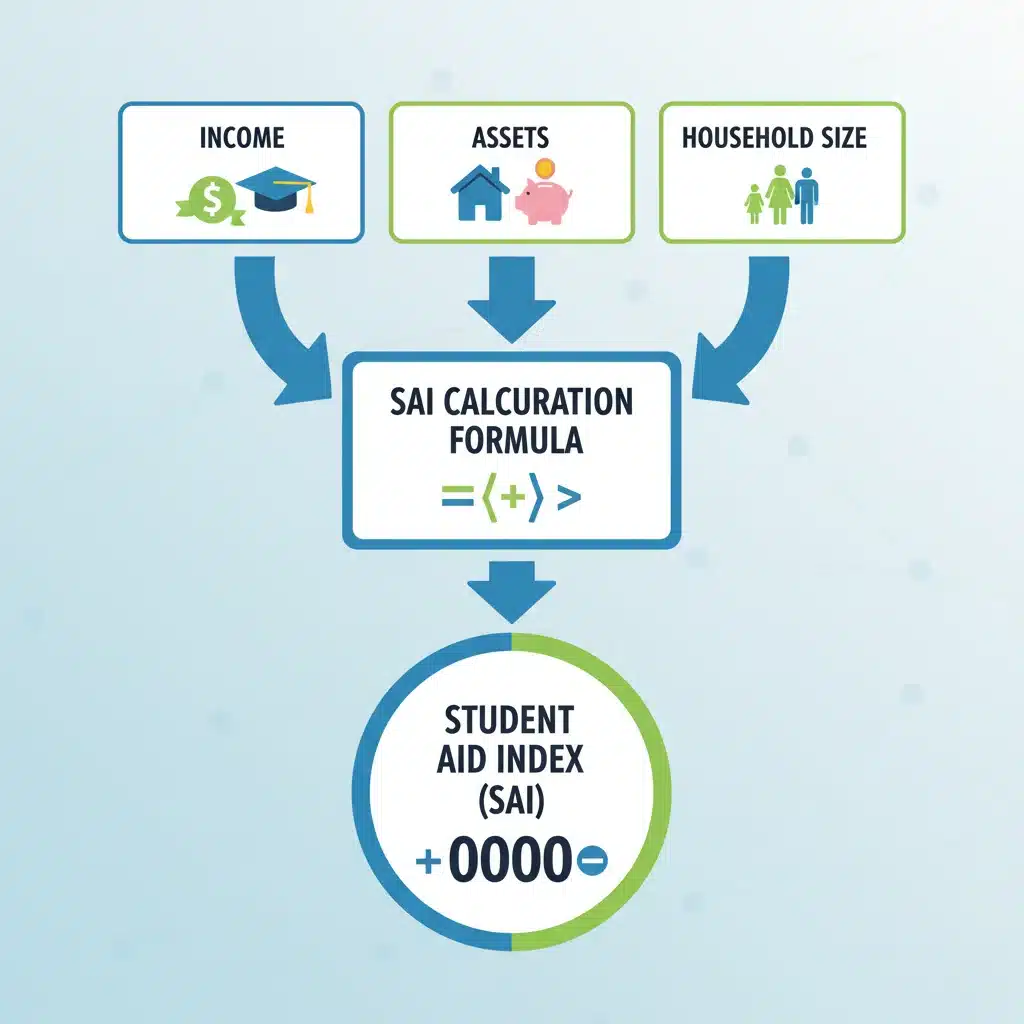
One of the most significant FAFSA changes 2026 is the replacement of the Expected Family Contribution (EFC) with the Student Aid Index (SAI). While both are indices used to determine a student’s financial need, the SAI calculation is fundamentally different and, in many cases, more generous.
What is the Student Aid Index (SAI)?
The SAI is an eligibility index number that financial aid administrators use to determine how much federal student aid a student is eligible to receive. Unlike the EFC, the SAI:
- Can be a negative number: This is a crucial change. A negative SAI (down to -1500) signifies a higher level of financial need, allowing more students with significant need to qualify for maximum Pell Grant awards.
- Removes the number of family members in college from the calculation: This is a major departure from the previous EFC methodology. Previously, the EFC was divided by the number of children in college, effectively reducing the EFC for families with multiple children pursuing higher education simultaneously. Under the new FAFSA changes 2026, this factor is removed from the SAI calculation, which could impact families with multiple college students.
- Uses updated poverty guidelines: The SAI calculation incorporates updated federal poverty guidelines, which can lead to more students from low-income backgrounds qualifying for federal aid.
Understanding the SAI is paramount when considering the FAFSA changes 2026, as it directly influences the amount of need-based aid you can receive. Colleges will use your SAI, along with their Cost of Attendance (COA), to determine your financial aid package. Your financial need is calculated as COA – SAI = Financial Need.
Impact on Pell Grant Eligibility: Expanding Access
The FAFSA changes 2026 are particularly impactful for Pell Grant eligibility. The Pell Grant is federal aid that does not need to be repaid, making it a cornerstone of financial assistance for many students. The FAFSA Simplification Act introduces several mechanisms to expand Pell Grant access:
- Maximum Pell Grant Eligibility Tied to Poverty Guidelines: Students whose adjusted gross income (AGI) falls below 175% of the federal poverty level (or 225% for single-parent households) will automatically qualify for the maximum Pell Grant award. This simplified approach aims to ensure that the lowest-income students receive the most significant support.
- Minimum Pell Grant Eligibility: Students whose AGI falls between 175% and 275% of the poverty level (or 225% and 325% for single-parent households) will be eligible for a minimum Pell Grant, provided their SAI is less than the maximum Pell Grant award.
- Expanded Eligibility for Incarcerated Students: The FAFSA changes 2026 will also restore Pell Grant eligibility for incarcerated students, a significant step towards educational equity.
These changes mean that more students will likely be eligible for Pell Grants, and some may receive higher awards than under the previous system. This is a crucial aspect of the FAFSA changes 2026, directly addressing affordability for higher education.
The New FAFSA Form: What to Expect
The FAFSA form itself has undergone a significant redesign as part of the FAFSA changes 2026. The goal is to make it shorter, simpler, and more intuitive. Here’s what you can expect:
- Fewer Questions: The number of questions on the FAFSA has been substantially reduced, making the application process quicker and less daunting.
- Direct Data Exchange with the IRS: This is perhaps the most significant simplification. Under the FAFSA changes 2026, applicants will be required to provide consent for the IRS to directly share their federal tax information with the Department of Education. This eliminates the need for manual income entry and reduces errors, streamlining the process significantly. This consent is mandatory; without it, applicants will not be eligible for federal student aid.
- Expanded Role of Contributors: The FAFSA changes 2026 introduce the concept of “contributors.” A contributor is anyone required to provide information on the FAFSA, which could include the student, their spouse, a biological or adoptive parent, or a parent’s spouse. Each contributor will receive an email inviting them to provide their information on the FAFSA.
- Simplified Dependency Determination: The FAFSA changes 2026 aim to simplify how dependency status is determined, aligning more closely with IRS rules.

The new form is designed to be mobile-friendly and more accessible, ensuring that students can complete it from various devices. The emphasis on direct data exchange from the IRS is a game-changer, reducing the burden on families to manually input complex financial information.
Who is a Contributor? Understanding the New Roles
The concept of a “contributor” is central to the FAFSA changes 2026. It’s vital to understand who qualifies as a contributor because their information will be required to complete your FAFSA application. A contributor is defined as anyone who is required to provide financial information on the FAFSA. This typically includes:
- The student: Always a contributor.
- The student’s spouse: If the student is married.
- A biological or adoptive parent: If the student is dependent.
- The parent’s spouse (stepparent): If the dependent student’s parent is married.
It’s important to note that the FAFSA changes 2026 also clarify who is NOT a contributor. For instance, grandparents, foster parents, and legal guardians are generally not considered contributors unless they have legally adopted the student. The FAFSA will guide you through identifying the correct contributors based on your specific circumstances.
What About Divorced or Separated Parents?
For dependent students whose parents are divorced or separated, the FAFSA changes 2026 introduce a key modification to which parent’s information is reported. Previously, the parent who provided the most financial support was typically the one whose information was used. Under the new rules:
- The parent who provided the most financial support in the past 12 months will be the primary contributor. This is a shift from the previous rule that often focused on the parent the student lived with more.
- If both parents provided equal support, or if neither parent provided support, the parent with the higher income will be the primary contributor.
This change can significantly impact the SAI calculation for students from divorced or separated families, as the financial situation of one parent might differ substantially from the other. It’s crucial for these families to understand this specific aspect of the FAFSA changes 2026 to accurately prepare their application.
How Assets Are Treated Under FAFSA Changes 2026
The treatment of assets also sees some modifications with the FAFSA changes 2026, though not as dramatic as the EFC to SAI conversion. Key points include:
- Small Business and Farm Exemption Removed: Previously, small businesses (with fewer than 100 full-time employees) and family farms were exempt from being reported as assets. Under the FAFSA changes 2026, the value of these assets must now be reported, which could potentially increase a family’s SAI. This is a significant point for families who own small businesses or farms.
- Cash, Savings, and Checking Accounts: These remain reportable assets.
- Investments: Non-retirement investment accounts (e.g., brokerage accounts, mutual funds) are still reported.
- Retirement Accounts: Funds held in qualified retirement accounts (e.g., 401(k)s, IRAs) continue to be excluded from assets.
- Home Equity: The value of your primary residence still does not count as an asset.
Families with small businesses or farms should pay close attention to these FAFSA changes 2026, as reporting these assets could affect their overall financial aid eligibility. It’s wise to consult with a financial advisor to understand the full implications.
The “Cost of Attendance” (COA) and Its Role
While the FAFSA changes 2026 primarily focus on the application and eligibility side, the “Cost of Attendance” (COA) remains a critical component in determining your financial need. The COA is an estimate of what it will cost to attend a particular college for one academic year. It includes more than just tuition and fees; it also covers:
- Tuition and Fees
- Room and Board
- Books and Supplies
- Transportation
- Personal Expenses
Each college sets its own COA. Your financial need is determined by subtracting your Student Aid Index (SAI) from the college’s COA (COA – SAI = Financial Need). Understanding your potential COA at various institutions is vital for comparing financial aid offers and making informed decisions, especially in light of the new FAFSA changes 2026.
Preparing for the FAFSA Changes 2026: A Proactive Approach
Even though the full implementation of the FAFSA changes 2026 is still some time away, there are proactive steps you can take now to ensure a smooth application process and maximize your aid eligibility:
- Understand the New Terminology: Familiarize yourself with “Student Aid Index (SAI)” and “contributors.” Knowing these terms will make the application process much clearer.
- Gather Required Documents: While the IRS data exchange will simplify things, you’ll still need access to certain documents. This includes your Social Security number, federal tax returns (for the relevant tax year), records of untaxed income, and information on cash, savings, and checking account balances.
- Create an FSA ID: Both the student and one parent (if the student is dependent) will need an FSA ID. This is your username and password for federal student aid websites and is required to sign the FAFSA electronically. If you don’t have one, create it well in advance. If you do, ensure you remember your login credentials.
- Discuss Financial Support with Divorced/Separated Parents: If your parents are divorced or separated, have an open conversation about who will be the primary contributor based on the new FAFSA changes 2026 rules. This will help avoid confusion and delays during the application process.
- Monitor Official Announcements: Stay updated with announcements from the Department of Education and Federal Student Aid. The FAFSA changes 2026 are complex, and further clarifications or minor adjustments may occur.
- Consider Professional Advice: If your financial situation is complex (e.g., small business owners, multiple dependents), consider consulting a financial aid advisor or a tax professional to understand how the FAFSA changes 2026 might specifically impact your family.
Being prepared is the best strategy. The more you understand about the upcoming FAFSA changes 2026, the better equipped you’ll be to navigate the application and secure the financial aid you need.
Potential Challenges and How to Address Them
While the FAFSA changes 2026 aim to simplify and expand access, some challenges might arise:
- The “Multiple Children in College” Impact: As mentioned, the removal of the “number in college” factor from the SAI calculation could mean less aid for families with multiple children attending college simultaneously. These families should plan accordingly and explore other aid options, such as institutional grants and scholarships.
- Mandatory IRS Data Exchange Consent: While beneficial for simplification, the mandatory consent for IRS data exchange means that applicants who are hesitant or unable to provide this consent will be ineligible for federal aid. It’s crucial to understand that this consent is a requirement.
- Timelines for the 2026-2027 FAFSA: While the goal is to open the FAFSA in October, as it traditionally did before recent delays, it’s wise to remain flexible. Keep an eye on official announcements for the exact opening date for the 2026-2027 FAFSA cycle.
Addressing these potential challenges requires proactive planning and staying informed. Financial aid offices at prospective colleges are excellent resources for specific questions related to their institutions and how the FAFSA changes 2026 might affect their aid packaging.
Beyond Federal Aid: Exploring Other Funding Options
While understanding the FAFSA changes 2026 is critical for federal aid, remember that it’s just one piece of the financial aid puzzle. Students should also actively pursue other funding opportunities:
- Institutional Aid: Many colleges and universities offer their own grants and scholarships, often based on both need and merit. Be sure to check each school’s financial aid website for specific application requirements and deadlines.
- Scholarships: Billions of dollars in scholarships are available from private organizations, foundations, and local community groups. Start your scholarship search early and apply for as many as you qualify for.
- State Aid: Most states offer their own financial aid programs. Check your state’s higher education agency website for details.
- Work-Study Programs: Federal Work-Study allows students to earn money to help pay for educational expenses through part-time employment.
- Student Loans: While federal grants and scholarships are preferred, federal student loans offer favorable terms compared to private loans. Understand the differences between subsidized and unsubsidized loans.
A diversified approach to funding your education is often the most successful. The FAFSA changes 2026 will determine your federal aid eligibility, but a comprehensive financial plan includes exploring all available avenues.
Conclusion: Embracing the Future of Student Aid with FAFSA Changes 2026
The FAFSA changes 2026 represent a significant evolution in federal student aid, designed to make college more accessible and affordable for a wider range of students. While the transition may involve a learning curve, the ultimate goal is a simpler, more equitable system. By familiarizing yourself with the new terminology, understanding the impact on Pell Grants and asset reporting, and proactively preparing for the application process, you can confidently navigate these updates.
Remember that resources are available to help you: college financial aid offices, high school counselors, and the Federal Student Aid website (StudentAid.gov) are invaluable sources of information. Don’t hesitate to reach out for assistance as you prepare for the 2026-2027 FAFSA cycle. With a clear understanding of the FAFSA changes 2026, you’ll be well-positioned to secure the financial support needed to achieve your educational dreams.
Stay informed, prepare thoroughly, and embrace the opportunities that these new FAFSA changes 2026 bring to the world of higher education funding.