Unveiling the Future: Top 5 Tech Trends Shaping 2024
Anúncios
Unveiling the Future: Top 5 Tech Trends Shaping 2024
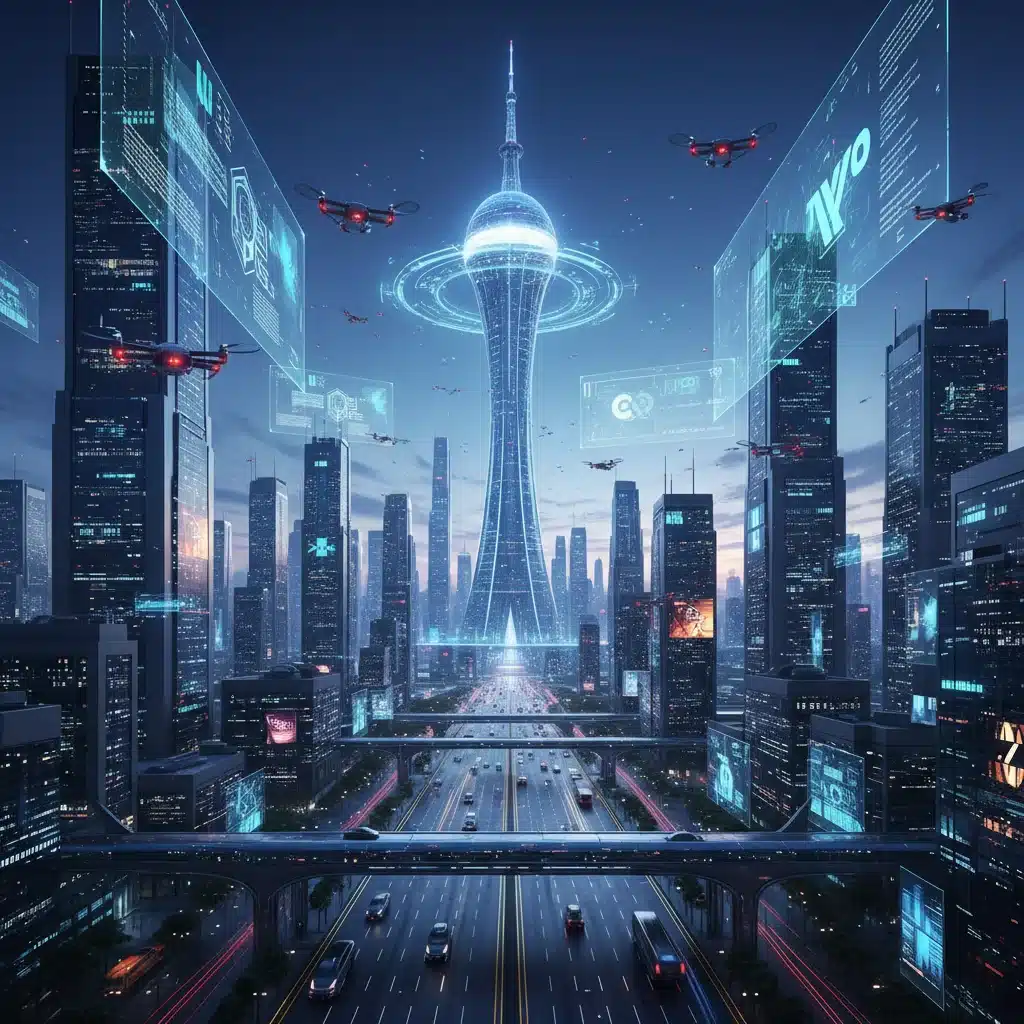
The technological landscape is a dynamic tapestry, constantly weaving new threads of innovation and progress. As we navigate through 2024, a handful of pivotal future tech trends are not just emerging but actively redefining our world, challenging conventional norms, and opening up unprecedented opportunities. From the intricate algorithms powering artificial intelligence to the groundbreaking potential of quantum computing, these advancements promise to reshape industries, alter societal structures, and fundamentally change how we interact with our environment and each other. Understanding these trends is not merely an exercise in foresight; it is a necessity for anyone looking to stay relevant, competitive, and informed in an increasingly tech-driven era. This comprehensive exploration delves into the five most impactful technological shifts poised to dominate 2024 and beyond, offering insights into their mechanisms, applications, and the profound implications they hold for humanity.
Anúncios
The pace of technological evolution has never been faster. What was once considered science fiction is now on the cusp of becoming mainstream reality. The convergence of various disciplines—from computer science and engineering to biology and material science—is accelerating this transformation, leading to synergistic breakthroughs that amplify their individual impacts. This article aims to demystify these complex shifts, presenting them in an accessible yet thorough manner, ensuring that readers grasp not only what these technologies are but also why they matter. We will explore how these future tech trends are not isolated phenomena but interconnected forces, each influencing and enhancing the others, creating a powerful wave of innovation that is both exciting and challenging.
Anúncios
1. The Ascendancy of Artificial Intelligence (AI) and Machine Learning (ML)
Artificial Intelligence (AI) is no longer a futuristic concept confined to research labs; it is an omnipresent force, deeply embedded in our daily lives and rapidly expanding its reach. In 2024, AI and Machine Learning (ML) continue their meteoric rise, evolving from specialized tools to indispensable components across virtually every sector. This year marks a significant leap in AI’s capabilities, moving beyond predictive analytics to more sophisticated generative models, enhanced decision-making systems, and increasingly nuanced human-AI interaction. The focus is shifting towards more autonomous, adaptive, and context-aware AI systems that can learn and perform complex tasks with minimal human intervention.
Generative AI: Creating the Future
One of the most captivating facets of AI’s evolution is generative AI. This technology, exemplified by models like GPT-4 and advanced image generators, is revolutionizing creative industries, software development, and even scientific research. Generative AI can produce original content—be it text, images, music, or even code—that is often indistinguishable from human-created work. This capability has profound implications for content creation, marketing, and design, enabling faster prototyping, personalized experiences, and entirely new forms of artistic expression. Businesses are leveraging generative AI to automate content generation, develop innovative product designs, and create highly targeted marketing campaigns, demonstrating its potential to significantly boost productivity and foster creativity.
AI in Healthcare: Precision and Personalization
The healthcare sector is experiencing a profound transformation thanks to AI. From accelerating drug discovery and development to enhancing diagnostic accuracy and personalizing treatment plans, AI is at the forefront of medical innovation. Machine learning algorithms can analyze vast datasets of patient information, identifying patterns and correlations that human experts might miss, leading to earlier disease detection and more effective interventions. AI-powered tools are assisting surgeons, monitoring patient vitals in real-time, and even predicting disease outbreaks. This integration promises a future of more precise, proactive, and personalized healthcare, ultimately improving patient outcomes and streamlining medical processes.
Ethical AI and Regulation: A Growing Imperative
As AI becomes more powerful and pervasive, the ethical considerations surrounding its development and deployment are gaining critical importance. Issues such as algorithmic bias, data privacy, accountability, and the potential for job displacement are at the forefront of public discourse. In 2024, there is a heightened emphasis on developing ethical AI frameworks, robust regulatory guidelines, and responsible AI practices. Governments and organizations worldwide are working to establish standards that ensure AI technologies are developed and used in a way that benefits society, respects human rights, and minimizes potential harms. This focus on ethical AI is crucial for building public trust and ensuring the sustainable growth of this transformative technology.

2. Sustainable Technology and Green Innovation
Climate change and environmental degradation pose some of the most pressing challenges of our time. In response, sustainable technology, often referred to as green innovation, is emerging as a critical future tech trend. This trend encompasses a broad spectrum of technologies and approaches designed to mitigate environmental impact, conserve resources, and promote ecological balance. From renewable energy solutions to advanced recycling techniques and sustainable manufacturing processes, technology is playing a pivotal role in the global effort to create a more sustainable future.
Renewable Energy Advancements: Powering a Cleaner World
The transition to renewable energy sources is accelerating, driven by technological breakthroughs and increasing global demand for cleaner power. Solar and wind energy technologies are becoming more efficient, affordable, and scalable. Innovations in energy storage, particularly advanced battery technologies, are addressing the intermittency challenges of renewables, making them more reliable and accessible. Furthermore, advancements in smart grids are optimizing energy distribution, reducing waste, and integrating diverse energy sources seamlessly. These developments are crucial for reducing carbon emissions and achieving energy independence, marking a significant step towards a sustainable energy future.
Circular Economy Technologies: Waste Not, Want Not
The concept of a circular economy—where resources are kept in use for as long as possible, extracting the maximum value from them whilst in use, then recovering and regenerating products and materials at the end of each service life—is gaining traction. Technology is instrumental in enabling this shift. Advanced recycling technologies, such as chemical recycling for plastics and urban mining for valuable metals, are transforming waste into valuable resources. IoT devices and AI are optimizing supply chains to reduce waste, track materials, and facilitate product longevity and repair. This move away from a linear ‘take-make-dispose’ model is essential for resource conservation and pollution reduction, making it a cornerstone of future sustainable development.
Sustainable Agriculture and Food Tech: Feeding the Future
Feeding a growing global population sustainably is a monumental challenge. Sustainable agriculture and food tech innovations are addressing this by increasing food production efficiency while minimizing environmental impact. Vertical farming, precision agriculture utilizing drones and AI, and alternative protein sources (e.g., lab-grown meat, plant-based proteins) are revolutionizing how we produce and consume food. These technologies reduce land and water usage, decrease reliance on pesticides, and lower greenhouse gas emissions associated with traditional farming. The integration of technology into agriculture is not only enhancing food security but also promoting healthier, more environmentally friendly dietary practices.
3. Extended Reality (XR): Immersive Experiences Redefined
Extended Reality (XR), an umbrella term encompassing Virtual Reality (VR), Augmented Reality (AR), and Mixed Reality (MR), is set to transform how we interact with digital content and the physical world. In 2024, XR technologies are moving beyond niche applications, becoming more accessible and integrated into everyday life, promising immersive experiences that redefine entertainment, education, work, and social interaction. The advancements in hardware, software, and content creation are paving the way for a truly spatial internet.
The Metaverse: A New Digital Frontier
The concept of the metaverse, a persistent, interconnected virtual world, is rapidly evolving from a theoretical construct to a tangible reality. While still in its nascent stages, 2024 sees significant strides in building the foundational infrastructure and interoperability standards necessary for a truly expansive metaverse. This digital realm promises to offer immersive social experiences, virtual commerce, and new avenues for work and collaboration. Companies are investing heavily in creating metaverse platforms, tools, and content, anticipating a future where digital and physical realities seamlessly merge, opening up new economic models and social paradigms. The metaverse is not just a game; it’s a new dimension of human experience.
AR and VR in Enterprise: Boosting Productivity and Training
Beyond entertainment, AR and VR are proving to be powerful tools for enterprise applications. In manufacturing, AR overlays instructions onto real-world objects, guiding workers through complex assembly processes and maintenance tasks, significantly reducing errors and improving efficiency. In healthcare, VR is used for surgical training, pain management, and therapy, offering realistic simulations and immersive therapeutic environments. Remote collaboration is also being revolutionized by XR, allowing teams to interact in virtual spaces, share 3D models, and conduct meetings with a sense of presence that traditional video conferencing cannot match. These applications highlight XR’s potential to enhance productivity, facilitate learning, and transform professional workflows.
Immersive Entertainment and Education: Engaging New Audiences
The entertainment and education sectors are being profoundly reshaped by XR. VR gaming offers unparalleled immersion, transporting players into richly detailed virtual worlds. AR applications are enhancing live events, sports broadcasts, and museum exhibits by overlaying digital information onto the real world, providing interactive and engaging experiences. In education, VR field trips can take students to historical sites or distant galaxies, making learning more experiential and memorable. These immersive technologies are not just passive consumption but active engagement, fostering deeper understanding and more profound connections with content, making them a key part of future educational and entertainment landscapes.
4. Quantum Computing: Unlocking Unprecedented Computational Power
Quantum computing, once a theoretical frontier, is rapidly progressing towards practical applications, representing one of the most profound future tech trends. Unlike classical computers that store information as bits (0s or 1s), quantum computers use qubits, which can exist in multiple states simultaneously (superposition) and be interconnected (entanglement). This fundamental difference allows quantum computers to perform calculations exponentially faster for certain types of problems, unlocking computational power previously unimaginable.
Solving Intractable Problems: A New Era of Discovery
The immense power of quantum computing holds the key to solving problems that are currently intractable for even the most powerful supercomputers. This includes complex simulations in materials science, leading to the discovery of new drugs, more efficient catalysts, and novel materials with unprecedented properties. In finance, quantum algorithms could optimize investment strategies and model market fluctuations with greater accuracy. Cryptography is another area poised for significant disruption, as quantum computers could potentially break current encryption standards, necessitating the development of new quantum-resistant cryptographic methods. These capabilities promise to accelerate scientific discovery and technological innovation across a multitude of fields.
Challenges and Progress: The Road Ahead
Despite its immense promise, quantum computing is still in its early stages of development. Significant challenges remain, including maintaining qubit stability (decoherence), error correction, and scaling quantum systems to a practical size. However, 2024 is witnessing rapid progress in overcoming these hurdles. Researchers are developing more stable qubits, improving error correction techniques, and building increasingly powerful quantum processors. Major tech companies and research institutions are investing heavily in quantum R&D, fostering a collaborative environment that is accelerating breakthroughs. While widespread commercial applications are still some years away, the foundational work being done now is laying the groundwork for a quantum-powered future.
Hybrid Quantum-Classical Computing: Bridging the Gap
In the near term, the most practical applications of quantum computing are likely to involve hybrid quantum-classical approaches. This model combines the strengths of quantum processors for specific, computationally intensive tasks with classical computers handling the overall workflow and data management. This allows researchers and developers to leverage the unique capabilities of quantum computers for specific sub-problems while relying on the maturity and stability of classical computing for the rest. This hybrid approach is expected to facilitate the gradual integration of quantum computing into existing computational infrastructures, enabling early practical applications and demonstrating its value before fully fault-tolerant quantum computers become a reality.
5. Advanced Biotechnology and Personalized Medicine
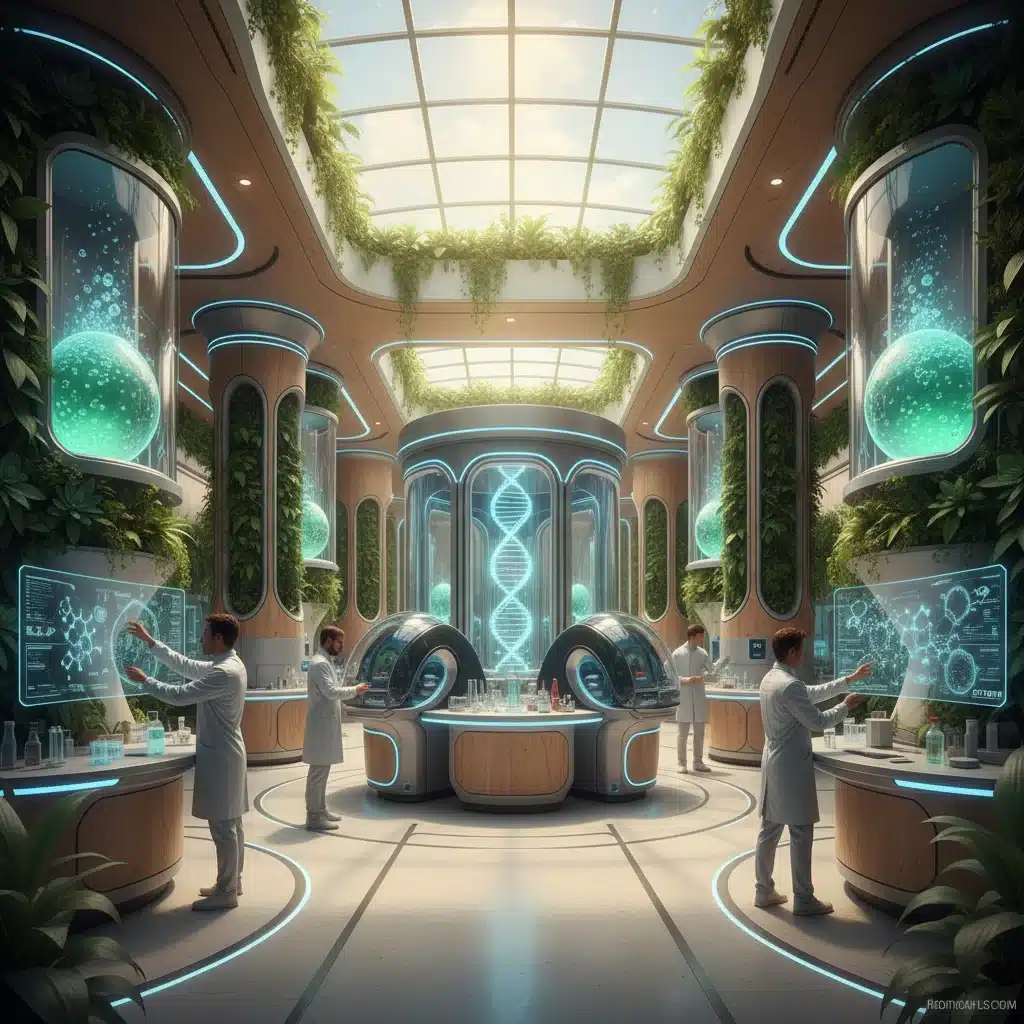
The intersection of biology and technology is giving rise to advanced biotechnology, a transformative future tech trend that is revolutionizing medicine, agriculture, and environmental science. In 2024, breakthroughs in gene editing, synthetic biology, and personalized medicine are offering unprecedented control over biological systems, promising solutions to some of humanity’s most persistent challenges.
Gene Editing and CRISPR: Rewriting the Code of Life
Gene editing technologies, particularly CRISPR-Cas9, have moved from experimental tools to powerful instruments with therapeutic potential. CRISPR allows scientists to precisely modify DNA sequences, offering the ability to correct genetic mutations responsible for inherited diseases like cystic fibrosis, sickle cell anemia, and Huntington’s disease. Beyond disease treatment, gene editing is also being explored for enhancing crop resilience, developing new biofuels, and even engineering organisms for bioremediation. While ethical considerations surrounding germline editing remain a significant topic of discussion, somatic gene therapies are progressing rapidly, offering hope for patients with previously untreatable conditions.
Synthetic Biology: Engineering New Biological Functions
Synthetic biology takes a design-based approach to biology, aiming to engineer new biological parts, devices, and systems, or to redesign existing natural biological systems. This field is enabling the creation of microorganisms that can produce biofuels, pharmaceuticals, and novel materials. For instance, synthetic biology is being used to engineer yeasts to produce cannabinoids or insulin more efficiently, and to develop bacteria that can detect pollutants or degrade plastics. This capability to design and build biological systems from the ground up holds immense potential for addressing challenges in health, energy, and environmental sustainability, marking a new era of bio-engineering.
Personalized Medicine: Tailoring Treatment to the Individual
The concept of personalized medicine, also known as precision medicine, is gaining significant momentum. This approach tails medical treatment to the individual characteristics of each patient, including their genetic makeup, lifestyle, and environment. Advances in genomics, proteomics, and bioinformatics are making personalized medicine a reality. By analyzing an individual’s unique biological profile, doctors can prescribe more effective drugs, optimize dosages, and identify patients who are most likely to respond to specific therapies. This minimizes adverse drug reactions and maximizes treatment efficacy, moving away from a ‘one-size-fits-all’ approach to a highly individualized and data-driven healthcare model. The integration of AI and big data analytics is crucial for processing the vast amounts of biological information required for truly personalized therapeutic strategies.
The Interconnectedness of Future Tech Trends
It is crucial to recognize that these five future tech trends do not operate in isolation; rather, they are deeply interconnected, forming a complex web of innovation that amplifies their collective impact. For instance, AI and Machine Learning are indispensable tools for accelerating breakthroughs in biotechnology, enabling faster analysis of genomic data and the design of novel proteins. Similarly, sustainable technology initiatives often leverage AI for optimizing energy grids or predicting environmental changes. Extended Reality, particularly the metaverse, will require immense computational power, potentially drawing on quantum computing for complex simulations and secure transactions. The synergy between these trends means that progress in one area often sparks advancements in others, creating a virtuous cycle of innovation that propels technological evolution forward at an unprecedented pace.
Consider how AI-powered algorithms are essential for processing the massive datasets generated by genomic sequencing in personalized medicine. Without advanced AI, the sheer volume of information would be overwhelming, making it impossible to identify the subtle patterns and correlations that lead to tailored treatments. In turn, breakthroughs in biotechnology, such as the development of new sensors or genetic engineering techniques, can provide richer and more precise data for AI models to learn from, leading to even more sophisticated and accurate AI applications. This symbiotic relationship is a hallmark of the current technological era.
Furthermore, the drive towards sustainable technology is often enabled by other advanced tech. For example, the development of more efficient solar cells or advanced battery materials can be significantly accelerated by quantum computing simulations, which can model molecular interactions at a level of detail impossible for classical computers. The smart grids that are central to renewable energy integration rely heavily on AI for demand forecasting and optimal energy distribution. Even within the realm of XR, particularly the metaverse, the energy consumption required for such vast digital environments necessitates sustainable computing practices and infrastructure, further intertwining these trends.
Challenges and Opportunities on the Horizon
While the prospects presented by these future tech trends are incredibly exciting, they also come with a unique set of challenges. Ethical dilemmas, regulatory complexities, data security concerns, and the potential for widening the digital divide are all issues that demand careful consideration and proactive solutions. As technology becomes more powerful, the responsibility to use it wisely and equitably grows proportionally. Ensuring that these advancements benefit all of humanity, rather than just a select few, will require concerted efforts from policymakers, technologists, ethicists, and civil society.
However, the opportunities these trends unlock are immense. They promise to transform industries, create new job markets, improve quality of life, and address some of the world’s most pressing problems, from climate change and disease to poverty and inequality. Businesses that embrace these technologies and adapt their strategies accordingly will be best positioned for success in the coming years. Individuals who acquire skills relevant to these emerging fields will find themselves at the forefront of innovation, contributing to a future that is both technologically advanced and socially responsible.
The rapid evolution of these technologies also means that continuous learning and adaptation are no longer optional but essential. The workforce of the future will need to be agile, capable of understanding and integrating new tools and concepts as they emerge. Educational systems will need to evolve to prepare individuals for roles that may not even exist today, fostering creativity, critical thinking, and a strong foundation in STEM fields. This ongoing process of learning and development will be key to harnessing the full potential of these transformative trends.
Conclusion: Navigating the Future of Technology
The year 2024 is proving to be a pivotal moment in the trajectory of technological advancement. The five future tech trends—Artificial Intelligence and Machine Learning, Sustainable Technology and Green Innovation, Extended Reality, Quantum Computing, and Advanced Biotechnology—are not just buzzwords; they are foundational shifts that will reshape our world in profound ways. Each trend, while powerful on its own, gains even greater significance through its interconnections with the others, creating a synergistic force that is driving unprecedented innovation.
As we stand on the cusp of this new technological era, it is imperative to approach these developments with both optimism and caution. The potential for positive impact is enormous, offering solutions to some of humanity’s most enduring problems. However, realizing this potential requires thoughtful consideration of ethical implications, robust regulatory frameworks, and a commitment to inclusive development. By understanding these trends, engaging in informed discussions, and proactively shaping their trajectory, we can ensure that the future of technology is one that benefits everyone, leading to a more prosperous, equitable, and sustainable world for generations to come. The journey into the future is not just about what technology can do, but about what we choose to do with it.
The coming years will undoubtedly bring further surprises and innovations, but the groundwork laid by these five key trends will define the landscape for the foreseeable future. Staying informed, adaptable, and ethically grounded will be paramount for individuals, businesses, and governments alike as we collectively navigate this exciting and challenging period of rapid technological transformation. The future is not something that happens to us; it is something we create, and these technological trends provide us with powerful new tools to shape that creation.