Understanding capital gains tax is a cornerstone of effective financial planning for any investor. As we approach 2026, it’s critical to be aware of potential changes, current regulations, and strategic approaches to optimize your investment returns. This comprehensive guide will delve deep into everything you need to know about capital gains tax 2026, empowering you to make informed decisions and minimize your tax liabilities.
Anúncios
Capital gains are the profits you make from selling an asset that has increased in value. This could be anything from stocks, bonds, and mutual funds to real estate, collectibles, and even cryptocurrencies. While realizing a gain is generally a positive outcome, the associated tax can significantly impact your net returns if not properly managed. The landscape of tax laws is ever-evolving, and staying ahead of the curve is paramount for savvy investors.
What Exactly Are Capital Gains?
Before we dive into the intricacies of capital gains tax 2026, let’s establish a clear understanding of what capital gains are. In simple terms, a capital gain occurs when you sell a capital asset for more than you paid for it. The difference between the selling price and your adjusted cost basis (what you paid plus any improvements or commissions) is your capital gain.
Anúncios
For example, if you bought shares of a company for $1,000 and sold them for $1,500, you have a capital gain of $500. Conversely, if you sold them for $800, you would have a capital loss of $200. Capital losses can often be used to offset capital gains, and in some cases, even a limited amount of ordinary income, which is a key component of smart tax planning.
Short-Term vs. Long-Term Capital Gains
The distinction between short-term and long-term capital gains is crucial because they are taxed at different rates. This classification depends on how long you held the asset before selling it:
- Short-Term Capital Gains: These are gains from assets you held for one year or less. They are typically taxed at your ordinary income tax rates, which can be significantly higher than long-term rates.
- Long-Term Capital Gains: These are gains from assets you held for more than one year. These gains generally benefit from preferential tax rates, which are often lower than ordinary income tax rates.
The one-year holding period is calculated from the day after you acquire the asset up to and including the day you sell it. Even a single day can make a difference in how your gain is taxed, highlighting the importance of precise record-keeping and timing in your investment strategy.
The Current Landscape of Capital Gains Tax (Leading into 2026)
While specific changes for 2026 are always subject to legislative action, we can analyze the current framework to anticipate what might be in store. The tax rates for long-term capital gains and qualified dividends are generally 0%, 15%, or 20%, depending on your taxable income. Short-term capital gains, as mentioned, are taxed at ordinary income rates, which currently range from 10% to 37%.
Income Brackets and Long-Term Capital Gains Rates (Illustrative for 2026)
It’s important to note that these brackets are adjusted annually for inflation. The following table provides an illustrative overview of how these rates might look in 2026, based on current law and expected inflation adjustments. (Please consult a tax professional for the most up-to-date figures as 2026 approaches.)
| Tax Rate | Single Filers (Approx. Income) | Married Filing Jointly (Approx. Income) |
|---|---|---|
| 0% | Up to ~$47,000 | Up to ~$94,000 |
| 15% | ~$47,001 to ~$518,000 | ~$94,001 to ~$583,000 |
| 20% | Over ~$518,000 | Over ~$583,000 |
These thresholds can shift, so staying informed about IRS announcements is vital. The 0% rate for long-term capital gains is a powerful tool for lower-income individuals or those who can strategically manage their income in a given year, perhaps in retirement or during a sabbatical.
Net Investment Income Tax (NIIT)
Beyond the standard capital gains rates, high-income earners also need to consider the Net Investment Income Tax (NIIT). This 3.8% tax applies to the lesser of your net investment income or the amount by which your modified adjusted gross income (MAGI) exceeds certain thresholds. For 2026, these thresholds are likely to be around $200,000 for single filers and $250,000 for married couples filing jointly. This tax can significantly increase the effective rate on capital gains for affluent investors.
Potential Changes and Considerations for Capital Gains Tax 2026
While predicting future tax legislation with absolute certainty is impossible, investors should be aware of potential areas of discussion and reform that could impact capital gains tax 2026.
- Legislative Priorities: Depending on the political landscape, there could be proposals to increase capital gains rates, especially for high-income earners, to help fund government programs or reduce the national debt. Conversely, there might be efforts to maintain or even lower rates to stimulate investment.
- Step-Up in Basis: The ‘step-up in basis’ rule at death allows heirs to receive inherited assets at their fair market value on the date of the decedent’s death, effectively erasing any capital gains that occurred during the original owner’s lifetime. This rule has been a subject of debate and could be targeted for reform or elimination, which would have significant implications for estate planning and inherited wealth.
- Qualified Opportunity Zones (QOZs): The tax benefits associated with Qualified Opportunity Zones are set to expire at the end of 2026. Investors who have capital gains invested in QOZs can defer or even exclude a portion of those gains if they meet specific holding periods. The sunset of these provisions will be a critical consideration for investors with QOZ investments.
- Inflation Adjustments: As mentioned, tax brackets and thresholds are typically adjusted for inflation. While this is a regular occurrence, it’s worth monitoring how these adjustments might affect your personal capital gains tax liability.
Staying abreast of these potential changes through reliable financial news sources and consulting with tax professionals will be key to navigating the 2026 tax environment.
Strategies for Minimizing Your Capital Gains Tax 2026
Proactive tax planning can significantly reduce your capital gains tax burden. Here are several strategies investors should consider implementing:
1. Hold Assets for More Than a Year (Long-Term Gains)
This is perhaps the most fundamental strategy. By holding investments for more than 365 days, you qualify for the lower long-term capital gains tax rates. The difference between short-term (taxed at ordinary income rates, up to 37%) and long-term (0%, 15%, or 20%) can be substantial. This encourages a buy-and-hold investing philosophy, which often aligns with sound investment principles anyway.
2. Tax-Loss Harvesting
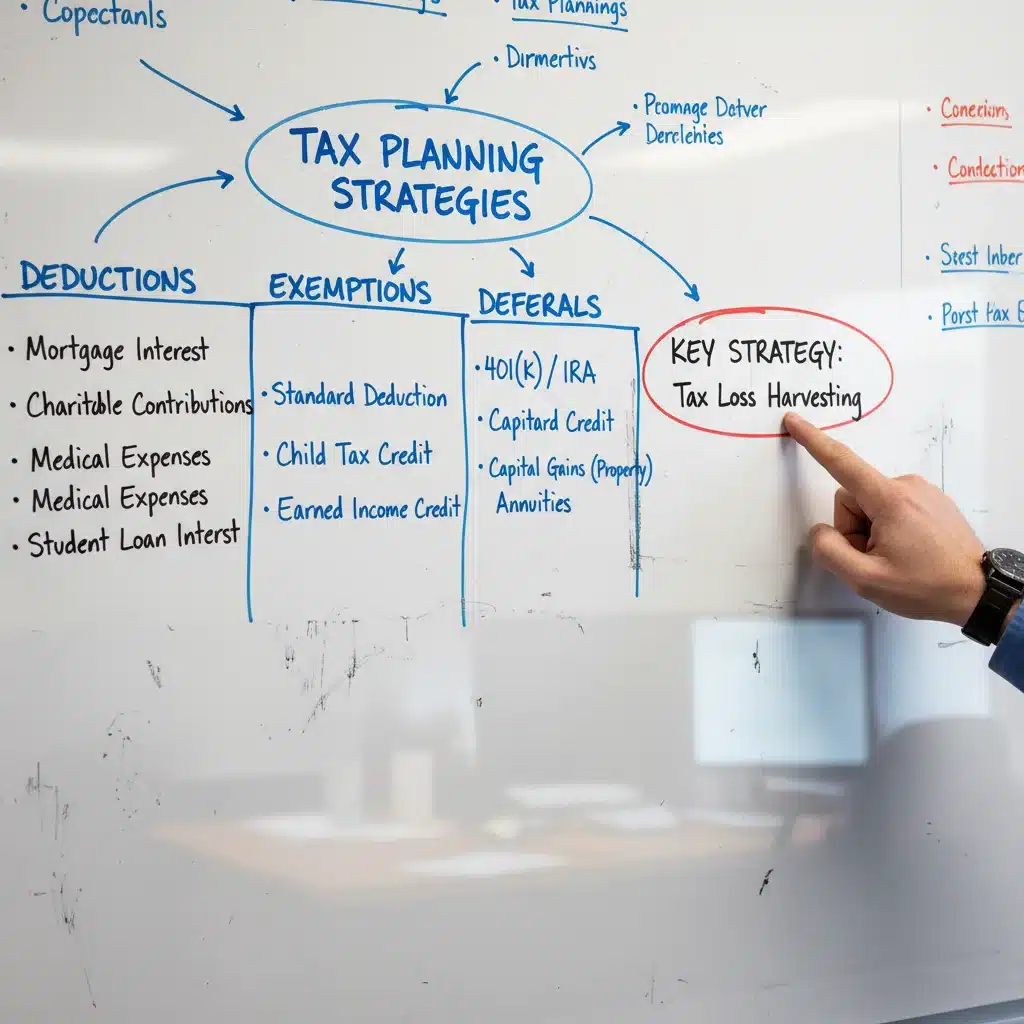
Tax-loss harvesting involves selling investments at a loss to offset capital gains. If you have realized capital gains during the year, you can sell other investments that have declined in value to generate capital losses. These losses can first offset any capital gains dollar-for-dollar. If your capital losses exceed your capital gains, you can deduct up to $3,000 of the remaining loss against your ordinary income. Any excess loss can be carried forward indefinitely to future tax years.
For example, if you have $10,000 in capital gains and $7,000 in capital losses, your net capital gain is $3,000. If you have $10,000 in capital gains and $12,000 in capital losses, your net capital loss is $2,000. You would pay no tax on capital gains and could deduct $2,000 against ordinary income.
3. Utilize Tax-Advantaged Accounts
Investing within tax-advantaged accounts like 401(k)s, IRAs (Traditional and Roth), and 529 plans can significantly reduce or eliminate capital gains tax.
- Traditional IRAs/401(k)s: Contributions are often tax-deductible, and investments grow tax-deferred. You won’t pay capital gains tax until you withdraw funds in retirement, at which point withdrawals are taxed as ordinary income.
- Roth IRAs/401(k)s: Contributions are made with after-tax dollars, but qualified withdrawals in retirement are entirely tax-free, including all capital gains. This makes Roth accounts incredibly powerful for long-term growth.
- 529 Plans: Designed for educational expenses, these plans offer tax-free growth and tax-free withdrawals for qualified education costs. Capital gains within these accounts are never taxed if used for their intended purpose.
4. Charitable Giving Strategies
If you’re charitably inclined, donating appreciated assets (like stocks or mutual funds you’ve held for more than a year) directly to a qualified charity can be a highly tax-efficient strategy. You can typically deduct the fair market value of the asset on the date of donation, and you avoid paying capital gains tax on the appreciation. This allows you to receive a tax deduction for the full value of the asset without ever realizing the gain yourself.
5. Gifting Appreciated Assets
Gifting appreciated assets to individuals in lower tax brackets (e.g., adult children or grandchildren) can also be a viable strategy, provided they sell the asset after holding it for the required long-term period. The recipient would then pay capital gains tax at their potentially lower rate. However, be mindful of gift tax rules and annual exclusion limits.
6. Qualified Opportunity Funds (QOFs) (Consider Expiration)
As mentioned, QOFs offer significant tax benefits for investors who reinvest capital gains into designated low-income communities. While the program’s primary tax deferral benefits are tied to investments made by the end of 2026, the 10-year holding period for complete tax exclusion on the appreciation of the QOF investment means that understanding these rules remains relevant for existing investors. If you’re considering new QOF investments, be acutely aware of the 2026 expiration date for certain benefits.
7. Residence Exclusion for Home Sales
For homeowners, a significant capital gains exclusion exists for the sale of a primary residence. You can exclude up to $250,000 of capital gains ($500,000 for married couples filing jointly) if you’ve owned and lived in the home for at least two of the five years preceding the sale. This exclusion can be used multiple times, but not more than once every two years.
Record-Keeping: Your Best Defense Against Tax Headaches
Meticulous record-keeping is not just good practice; it’s essential for accurately calculating your capital gains and losses and for defending your tax positions if questioned by the IRS. Keep detailed records of:
- Purchase date and cost basis: This includes the purchase price, commissions, and any other costs associated with acquiring the asset.
- Sale date and proceeds: The selling price minus any commissions or selling fees.
- Holding period: Crucial for distinguishing between short-term and long-term gains.
- Improvements: For real estate, keep records of any significant improvements that add to the property’s value, as these can be added to your cost basis.
- Dividends and reinvestments: If dividends are reinvested, they increase your cost basis.
Many brokerage firms provide excellent year-end statements (Form 1099-B) that summarize your sales and cost basis, but it’s always wise to maintain your own records as a backup and for verification.
The Role of a Financial Advisor in Capital Gains Planning
Navigating the complexities of capital gains tax 2026 can be challenging, especially with a diverse investment portfolio. This is where a qualified financial advisor or tax professional becomes invaluable. They can help you:
- Develop a personalized tax strategy: Tailored to your specific financial situation, goals, and risk tolerance.
- Identify tax-efficient investment vehicles: Guiding you toward investments that align with your tax planning objectives.
- Optimize tax-loss harvesting: Timing sales to maximize tax benefits.
- Understand state-specific capital gains taxes: Many states also impose their own capital gains taxes, which can vary significantly.
- Stay informed about legislative changes: Providing timely updates on new tax laws and regulations.
While this article provides a comprehensive overview, it is not a substitute for professional tax advice. Tax laws are complex and can have significant personal implications.
Looking Ahead: Preparing for 2026 and Beyond
As 2026 approaches, market conditions, economic policies, and legislative actions will continue to shape the tax landscape for investors. Here are some key actions you can take to prepare:
- Review your portfolio regularly: Understand your unrealized gains and losses. This foresight allows you to plan strategic sales or tax-loss harvesting opportunities.
- Educate yourself: Stay updated on proposed tax legislation and economic forecasts. Financial news outlets, government websites (like the IRS), and reputable financial publications are excellent resources.
- Consult with professionals: Establish a relationship with a tax advisor and/or financial planner who can provide ongoing guidance and help you adapt your strategies as circumstances change.
- Consider your future income: If you anticipate a year with significantly lower income (e.g., retirement, sabbatical), that might be an opportune time to realize long-term capital gains at the 0% or 15% rate.
The goal is not to avoid taxes entirely, which is generally not possible or legal, but rather to minimize your tax liability through legitimate and strategic planning. By understanding the rules surrounding capital gains tax 2026 and employing sound strategies, you can retain more of your investment profits and accelerate your journey toward financial independence.
Conclusion
The world of investments and taxation is dynamic, and capital gains tax 2026 will undoubtedly present both challenges and opportunities for investors. By grasping the fundamental concepts of capital gains, understanding the distinction between short-term and long-term assets, and proactively implementing tax-efficient strategies such as tax-loss harvesting, utilizing tax-advantaged accounts, and strategic charitable giving, you can significantly enhance your after-tax returns.
Remember, the best approach is a personalized one. What works for one investor may not be ideal for another. Therefore, continuous learning, diligent record-keeping, and professional guidance are your most valuable assets in navigating the ever-evolving tax landscape. As you plan your investments for 2026 and beyond, make tax efficiency an integral part of your overall financial planning strategy. This foresight will not only save you money but also provide peace of mind, knowing that your wealth is growing in the most tax-advantageous way possible.