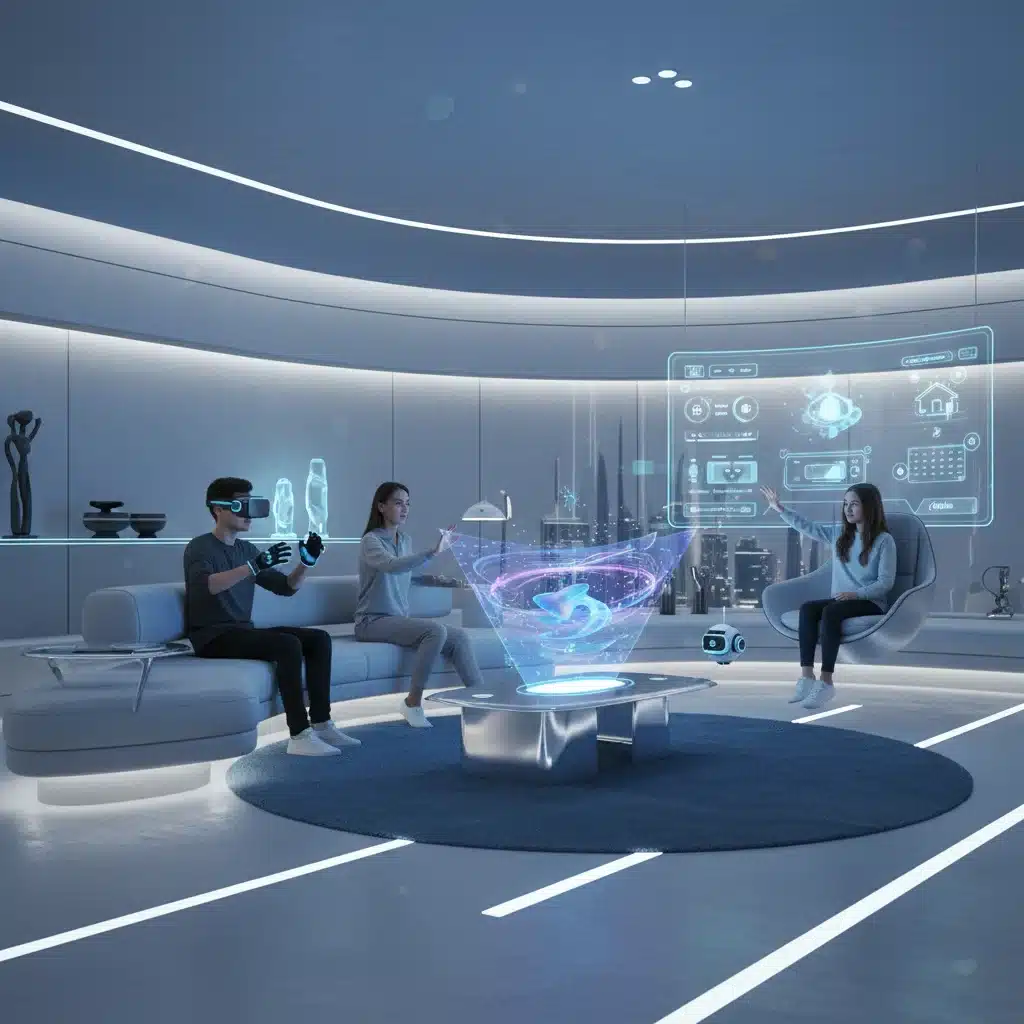
The Future of Home Entertainment: 4 Technologies to Watch in 2026
The landscape of home entertainment is in a constant state of flux, evolving at an exhilarating pace. What once seemed like science fiction is rapidly becoming our everyday reality. As we hurtle towards 2026, several groundbreaking technologies are poised to fundamentally reshape how we consume content, interact with media, and experience leisure within the confines of our homes. This article delves into four pivotal areas that will define the future home entertainment experience, offering a glimpse into a world where immersion, personalization, and seamless integration are not just buzzwords, but tangible realities.
Anúncios
Forget passive viewing; the next generation of home entertainment is about active participation, intelligent customization, and a blurring of lines between the digital and physical worlds. From hyper-realistic virtual environments to content that knows what you want before you do, the innovations on the horizon promise to make our living rooms more dynamic, engaging, and personalized than ever before. Understanding these trends isn’t just for tech enthusiasts; it’s for anyone who wants to stay ahead of the curve and prepare for the incredible experiences that await.
Anúncios
1. Immersive Virtual and Augmented Reality (VR/AR) Experiences
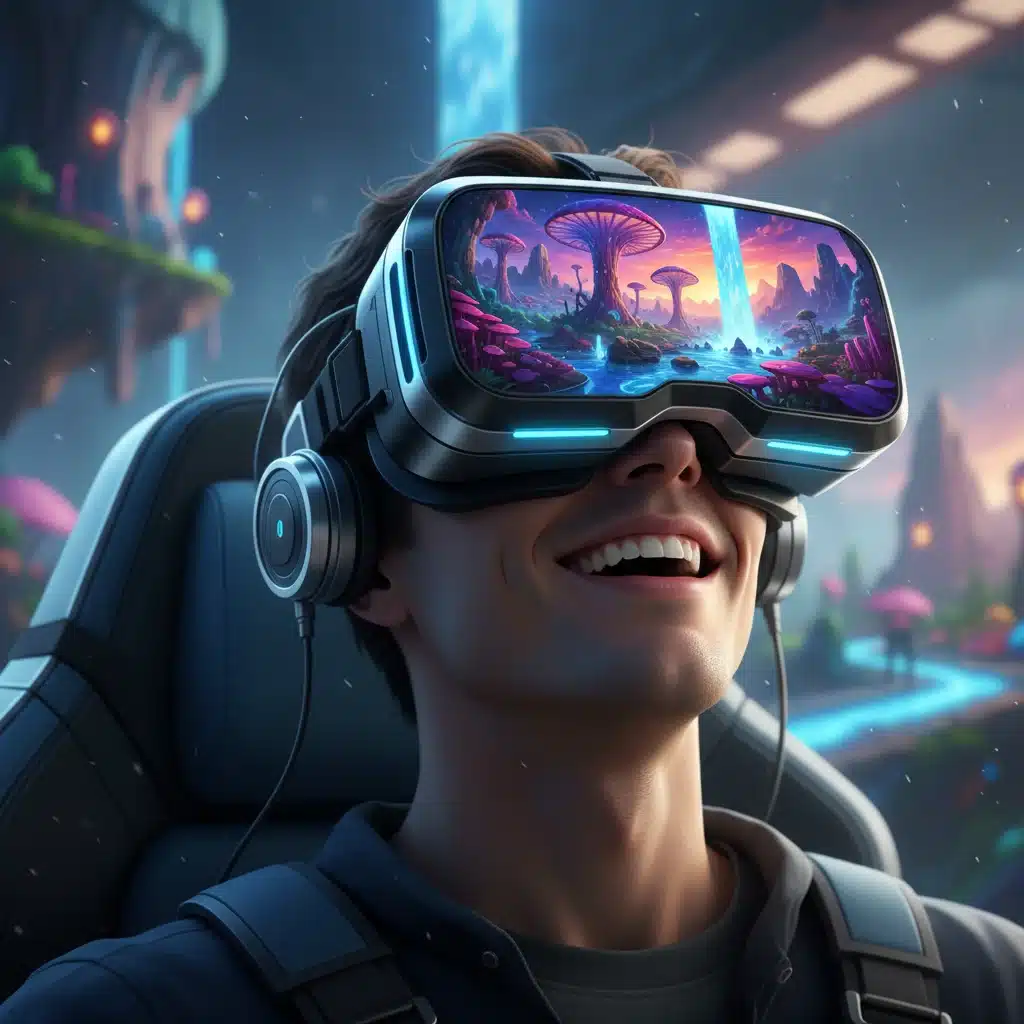
When we talk about the future home entertainment, it’s impossible to ignore the burgeoning power of Virtual Reality (VR) and Augmented Reality (AR). While VR has been around for some time, the technology is now maturing rapidly, moving beyond niche gaming applications to offer truly immersive and accessible experiences for the masses. By 2026, expect VR headsets to be lighter, more comfortable, and boast significantly higher resolutions, making extended use a genuine pleasure rather than a chore. The days of bulky, pixelated visuals are quickly fading, replaced by breathtakingly realistic virtual worlds that can transport you anywhere, from the depths of the ocean to the surface of Mars, or even into the heart of a live concert.
The applications for VR in home entertainment are vast. Imagine attending a virtual concert with friends from across the globe, feeling as if you’re right there in the crowd, experiencing the music in 360 degrees. Picture yourself exploring historical sites with photorealistic detail, guided by AI, or even participating in interactive narratives where your choices genuinely impact the storyline. Gaming will, of course, continue to be a significant driver, with VR games offering unparalleled levels of immersion and interaction. The tactile feedback systems, haptic suits, and advanced motion controllers will further blur the lines between the virtual and physical, making every action feel real.
Augmented Reality, while often overshadowed by VR, holds equally transformative potential for future home entertainment. Instead of completely immersing you in a digital world, AR overlays digital information onto your real-world environment. Think about watching a sporting event in your living room, but with live statistics, player profiles, and interactive replays appearing seamlessly on your coffee table or wall. Imagine redecorating your entire home virtually before buying a single piece of furniture, or hosting a virtual board game night where the game board materializes on your actual table, complete with animated pieces and effects. AR glasses, becoming increasingly sleek and powerful, will enable these experiences without the need for cumbersome handheld devices.
The convergence of VR and AR, often referred to as Mixed Reality (MR), will unlock even more profound possibilities. Imagine a virtual character from a movie stepping into your living room to interact with you, or using virtual tools to sculpt a digital model that feels tangible in your hands. This blend of realities will create hybrid entertainment experiences that are dynamic, personalized, and deeply engaging, fundamentally redefining what it means to be entertained at home. The accessibility of these technologies will be key, with more affordable and user-friendly devices hitting the market, making immersive experiences a standard feature of the future home entertainment landscape.
2. AI-Driven Personalization and Content Curation
The sheer volume of content available today is staggering, and it’s only going to increase. Navigating this ocean of movies, TV shows, music, podcasts, and games can be overwhelming. This is where Artificial Intelligence (AI) steps in as a game-changer for the future home entertainment. By 2026, AI will move beyond simple recommendation algorithms to become an indispensable personal curator, understanding your tastes, moods, and even your schedule to deliver hyper-personalized entertainment experiences.
Imagine a streaming platform that doesn’t just suggest content based on your past viewing history, but also considers the time of day, your current mood (detected through subtle cues or direct input), and even the preferences of others in your household. AI will be able to cross-reference data from all your entertainment platforms – music, gaming, video – to create truly holistic recommendations. It could suggest a calming ambient playlist for your evening wind-down, an action-packed movie for a Friday night with friends, or an educational documentary when it senses you’re in a learning mood.
Beyond recommendations, AI will enhance content itself. We’re already seeing generative AI tools capable of creating music, art, and even short video clips. In the future home entertainment, AI could dynamically adjust storylines in interactive narratives based on your choices, or even generate personalized endings to movies. Imagine an AI-powered director that subtly tweaks scenes or character dialogues to better align with your preferences, creating a truly unique viewing experience every time. This level of dynamic content generation will make entertainment more engaging and replayable, moving away from static, one-size-fits-all narratives.
AI will also play a crucial role in optimizing the viewing experience. It can automatically adjust picture and sound settings based on the content type, your room’s acoustics, and ambient lighting conditions. Voice assistants will become even more sophisticated, allowing for natural language commands to control every aspect of your entertainment system, from finding obscure films to creating custom playlists and even managing parental controls with nuanced understanding. The goal is to make the technology disappear, leaving you with an effortless, perfectly tailored entertainment experience that feels intuitive and anticipatory.
3. Next-Generation Streaming and Interactive Content
Streaming has already revolutionized home entertainment, but the evolution is far from over. By 2026, we’ll witness the rise of next-generation streaming services that push the boundaries of quality, interactivity, and accessibility. 8K resolution will become more commonplace, offering unparalleled clarity and detail, especially on larger screens. High Dynamic Range (HDR) and advanced audio formats like Dolby Atmos will provide a cinematic experience that rivals or even surpasses traditional theaters, bringing truly immersive sights and sounds directly into your living room.
However, the biggest shift will be towards interactive content. While choose-your-own-adventure narratives have had limited success, the future home entertainment will leverage advanced technology to make these experiences genuinely compelling. Imagine live-streamed events where you can vote on outcomes, participate in polls, or even influence the camera angles. Sports broadcasts could offer personalized data overlays, multiple camera feeds, and the ability to jump into a player’s perspective using VR. Educational content will become more engaging, allowing viewers to interact with virtual objects, participate in experiments, or ask AI-powered tutors questions in real-time.
Cloud gaming, already gaining traction, will become a dominant force. With powerful servers handling the heavy processing, users will be able to stream high-fidelity games to any device – smart TVs, tablets, even budget laptops – without the need for expensive consoles or gaming PCs. This democratizes access to cutting-edge gaming experiences and further blurrs the lines between different forms of entertainment. The integration of gaming platforms with traditional streaming services will create comprehensive entertainment hubs, allowing seamless transitions between watching a movie and playing a game, all within the same interface.
Furthermore, the concept of a “metaverse” will begin to influence streaming. While a fully realized metaverse might be further off, elements of it will emerge in streaming platforms. This could involve virtual watch parties where you and your friends, represented by avatars, can gather in a virtual cinema to watch a movie together, reacting and interacting as if you were in the same room. These social aspects will add a new dimension to streaming, transforming it from a solitary activity into a communal experience, regardless of physical distance. The future home entertainment will be as much about connection as it is about consumption.
4. Seamless Smart Home Integration and Ambient Entertainment
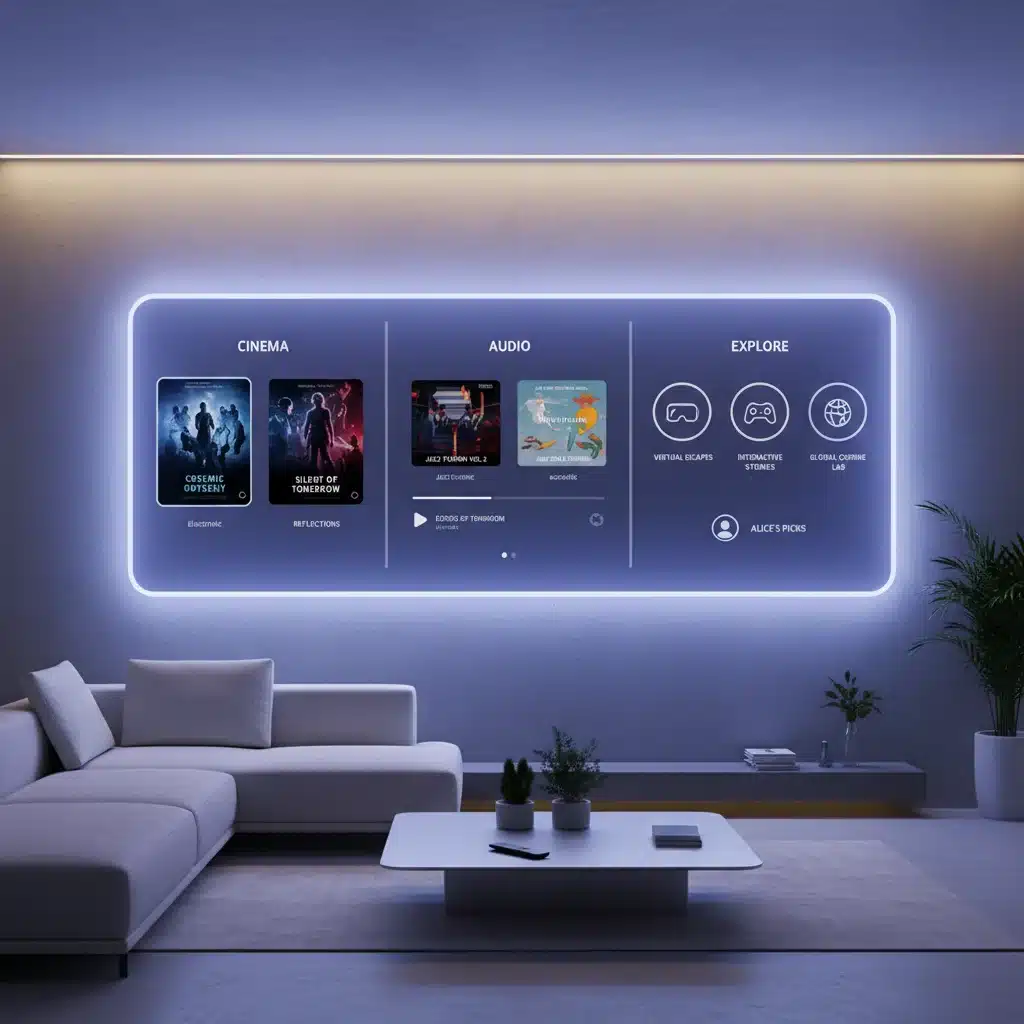
The smart home ecosystem is rapidly expanding, and by 2026, its integration with home entertainment will be so seamless that the two will be virtually indistinguishable. Your entire living environment will become an extension of your entertainment system, responding intelligently to your preferences and creating truly ambient experiences. This isn’t just about turning lights on and off with voice commands; it’s about creating a holistic, sensory-rich atmosphere that enhances whatever content you’re enjoying, making smart home integration a cornerstone of future home entertainment.
Imagine walking into your living room, and your smart home system recognizes you. Based on your profile and the time of day, it automatically dims the lights, adjusts the thermostat to your preferred comfort level, and even starts playing a curated playlist of relaxing music. When you select a movie, the system could dynamically adjust the ambient lighting to match the on-screen colors and mood, creating a truly immersive environment. Haptic feedback integrated into furniture could allow you to feel the vibrations of explosions or the rumble of a car chase, adding another layer of sensory immersion without needing specialized gear.
Advanced sound systems will move beyond traditional surround sound, utilizing object-based audio and intelligent room calibration to deliver perfect acoustics regardless of your seating position. Speakers could be virtually invisible, integrated into walls, ceilings, or even furniture, delivering pristine audio from every direction. The future home entertainment will see sound not just as an accompaniment, but as an integral part of the immersive experience, precisely tuned to your space.
Furthermore, smart home devices will anticipate your needs. Your smart TV might suggest a news brief when you wake up, or a workout video when it detects you’re ready for your morning routine. Kitchen appliances could suggest recipes based on a cooking show you just watched, or even order ingredients for you. The concept of an “ambient display” will also become prevalent, with screens seamlessly integrated into surfaces, displaying relevant information or subtle visual art when not actively used for entertainment, blending technology into the aesthetic of your home.
Security and privacy will also be paramount in this integrated smart home entertainment ecosystem. Robust encryption and user-controlled privacy settings will be essential to ensure that while your home is intelligent and responsive, your personal data remains secure. The balance between convenience and privacy will be a key consideration in the development and adoption of these integrated systems, ensuring that the future home entertainment is not just advanced, but also trustworthy.
Conclusion: A New Era of Home Entertainment Awaits
The journey towards 2026 promises a revolutionary transformation in how we experience entertainment at home. The convergence of immersive VR/AR, intelligent AI-driven personalization, advanced streaming capabilities, and seamless smart home integration will usher in an era of unprecedented engagement, customization, and sensory richness. The days of passive consumption are giving way to active participation, where our living spaces become dynamic hubs of personalized experiences.
For consumers, this means more choice, deeper immersion, and entertainment that truly understands and anticipates individual preferences. For creators and technology companies, it presents immense opportunities to innovate and redefine the boundaries of storytelling and interaction. While challenges such as accessibility, interoperability, and data privacy will need to be addressed, the trajectory is clear: the future home entertainment is set to be more exciting, more personal, and more integrated than we could have ever imagined. Get ready to upgrade your living room; the future is knocking.