NASA’s 2026 Missions: Unveiling Deep Space Secrets and Martian Discoveries

Anúncios
The year 2026 is shaping up to be a monumental period for space exploration, with NASA at the forefront, poised to launch several groundbreaking missions that promise to redefine our understanding of the cosmos. These ambitious endeavors are not just about reaching new celestial bodies; they are about pushing the boundaries of scientific inquiry, seeking answers to fundamental questions about life beyond Earth, and paving the way for future human exploration. This article delves deep into three of NASA’s most anticipated missions slated for 2026: the Europa Clipper, the Mars Sample Return campaign, and the innovative Dragonfly mission to Titan. We will explore their scientific objectives, the cutting-edge technology driving them, recent updates, and the profound implications they hold for our cosmic future. Understanding these NASA 2026 missions is crucial for anyone interested in the future of space exploration.
Anúncios
The Europa Clipper: Hunting for Habitability on Jupiter’s Icy Moon
Jupiter’s moon Europa has long captivated scientists due to compelling evidence suggesting a vast saltwater ocean hidden beneath its icy shell. This subsurface ocean, believed to contain more water than all of Earth’s oceans combined, is considered one of the most promising locations in our solar system to find extraterrestrial life. The Europa Clipper mission, a cornerstone of the NASA 2026 missions, is specifically designed to investigate Europa’s potential habitability, scrutinizing whether it possesses the necessary ingredients for life as we know it.
Anúncios
Scientific Objectives: A Deep Dive into Europa’s Secrets
The primary goal of the Europa Clipper is not to detect life directly, but to determine if Europa has the potential to harbor life. To achieve this, the mission will focus on three key scientific objectives:
- Characterize the Ocean and Ice Shell: Understanding the thickness of Europa’s ice shell and the depth, salinity, and potential for energy sources within its ocean is paramount. The spacecraft will use advanced radar instruments to penetrate the ice, mapping its structure and searching for liquid water pockets.
- Investigate Europa’s Composition: Identifying the chemical composition of Europa’s surface and any material ejected from its interior will provide clues about the ocean’s chemistry and potential biological activity. Instruments will analyze surface materials, including salts and organic molecules.
- Search for Active Plumes: Evidence from the Hubble Space Telescope suggests that Europa might periodically vent plumes of water vapor and icy particles into space. If confirmed and studied, these plumes could offer a direct way to sample the subsurface ocean without needing to land on the moon.
Cutting-Edge Instrumentation: Tools for Discovery
To accomplish these ambitious goals, Europa Clipper is equipped with a sophisticated suite of nine instruments:
- REASON (Radar for Europa Assessment and Sounding: Ocean to Near-surface): This ice-penetrating radar will measure the thickness of the ice shell and search for subsurface lakes.
- Europa Imaging System (EIS): A wide-angle and narrow-angle camera system to acquire high-resolution images of Europa’s surface, helping to map geological features and identify potential plume sites.
- Europa Thermal Emission Imaging System (E-THEMIS): Measures Europa’s surface temperature, which can reveal areas of recent geological activity or heat flow from the interior.
- Mapping Imaging Spectrometer for Europa (MISE): Identifies the composition of surface materials, including salts and organic compounds.
- Ultraviolet Spectrograph/Europa (UVS): Detects and characterizes any plumes erupting from Europa’s surface.
- Magnetometer for Europa (ECM): Measures the magnetic field around Europa, which can be used to infer the presence and salinity of its subsurface ocean.
- Plasma Instrument for Magnetic Sounding (PIMS): Works in conjunction with the magnetometer to study the interaction of Europa’s environment with Jupiter’s powerful magnetic field.
- Energetic Particle Detector (EPD): Characterizes the charged particle environment around Europa, crucial for understanding radiation hazards and their effects on surface materials.
- Mass Spectrometer for Planetary Exploration/Europa (MASPEX): Analyzes the composition of Europa’s tenuous atmosphere and any material ejected from plumes, providing direct chemical insights.
Recent Updates and Launch Profile
The Europa Clipper is currently undergoing rigorous testing and assembly at NASA’s Jet Propulsion Laboratory (JPL). Recent updates confirm that the spacecraft is on track for its launch in October 2024, utilizing a SpaceX Falcon Heavy rocket. While the initial target for data collection was closer to 2026, the spacecraft will embark on a multi-year journey to Jupiter, arriving in the Jovian system by 2030. Once there, it will perform nearly 50 close flybys of Europa, providing unparalleled views and data from various angles. The mission’s success hinges on its ability to withstand Jupiter’s intense radiation environment, a challenge that engineers have meticulously addressed in the spacecraft’s design.
Mars Sample Return Campaign: Bringing the Red Planet to Our Labs
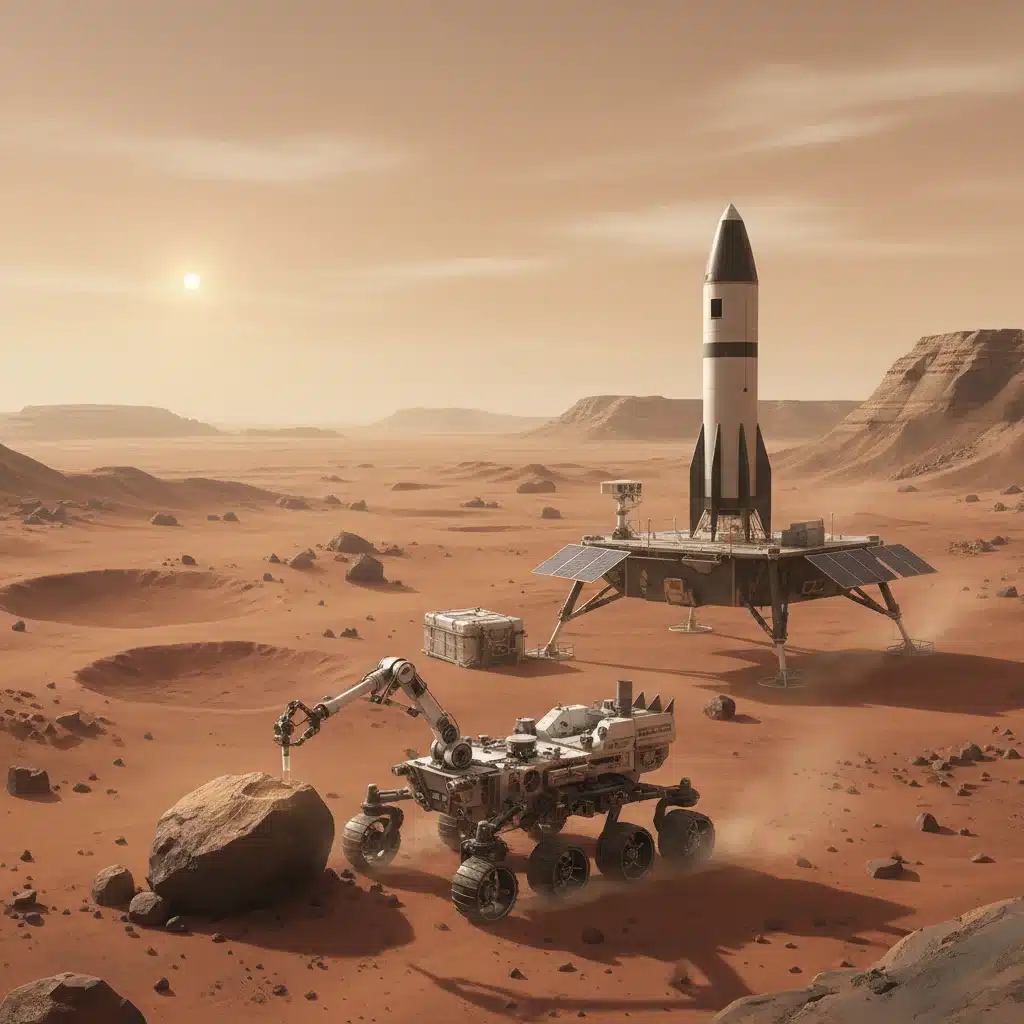
The Mars Sample Return (MSR) campaign represents one of the most ambitious robotic missions ever conceived, a multi-agency international effort involving NASA and the European Space Agency (ESA). Its overarching goal is to retrieve carefully selected rock and soil samples from the surface of Mars, collected by NASA’s Perseverance rover, and bring them back to Earth for detailed scientific analysis. This mission is a pivotal component of the NASA 2026 missions strategy, aiming to answer fundamental questions about Mars’s geological history, its potential for past life, and the evolution of planetary environments.
Why Bring Samples Back to Earth?
While rovers like Perseverance are incredibly capable, their analytical capabilities are limited by size, weight, and power constraints. Bringing Martian samples to Earth will allow scientists to:
- Utilize State-of-the-Art Laboratories: Earth-based laboratories offer a vast array of instruments and techniques far more powerful and precise than anything that can be sent to Mars. This includes electron microscopes, mass spectrometers, and advanced dating techniques.
- Conduct Long-Term Analysis: Samples can be studied over decades, using new technologies as they emerge, and by multiple generations of scientists with diverse expertise.
- Search for Biosignatures: The primary scientific driver is the search for definitive evidence of ancient microbial life on Mars. Earth-based analysis can differentiate between inorganic processes and subtle biosignatures with a higher degree of certainty.
- Refine Planetary Evolution Models: Precise dating of Martian rocks will help construct a more accurate timeline of Mars’s geological and climatic history, offering insights into how planets form and evolve.
Mission Architecture: A Complex Interplanetary Relay
The Mars Sample Return campaign is not a single mission but a series of interconnected missions, each with a critical role:
- Sample Collection (Perseverance Rover): Already underway, the Perseverance rover is collecting samples in Jezero Crater, a location believed to have once harbored a lake and a river delta, making it an ideal spot for preserving biosignatures. These samples are hermetically sealed in titanium tubes and cached on the Martian surface.
- Sample Retrieval Lander (SRL): Scheduled for a 2028 launch, the SRL will carry the Sample Fetch Rover (SFR) and the Mars Ascent Vehicle (MAV). The SFR will retrieve the cached sample tubes.
- Mars Ascent Vehicle (MAV): This small rocket, carried by the SRL, will launch the collected samples from the Martian surface into orbit around Mars – a historic first.
- Earth Return Orbiter (ERO): Launched by ESA, the ERO will rendezvous with the MAV in Mars orbit, capture the sample container, and then embark on its journey back to Earth.
- Earth Entry System: The sample container will be released from the ERO and undergo a controlled re-entry into Earth’s atmosphere, landing in a designated zone for recovery.
Challenges and Innovations
The MSR campaign faces unprecedented engineering and operational challenges, including:
- Planetary Protection: Ensuring that Martian samples are returned to Earth without contaminating our planet with potential extraterrestrial microbes, and vice-versa, is paramount. The sample container is designed with multiple layers of containment.
- Autonomous Operations: Many aspects of the retrieval and transfer in Mars orbit will require high levels of autonomy due to communication delays.
- MAV Development: Designing a rocket capable of launching from another planet’s surface is a significant engineering feat.
Recent updates indicate that while the overall architecture remains, some aspects, particularly funding and scheduling for the SRL and ERO, are under review to optimize costs and reduce complexity. Despite these adjustments, the commitment to bringing Martian samples to Earth remains a top priority for NASA 2026 missions and beyond.
Dragonfly: Soaring Through Titan’s Skies
Among the most audacious of the NASA 2026 missions is Dragonfly, a rotorcraft lander designed to explore Titan, Saturn’s largest moon. Titan is unique in our solar system, boasting a dense atmosphere, liquid methane lakes and rivers, and a complex organic chemistry that in many ways mirrors early Earth. Dragonfly will be the first mission ever to fly a drone-like vehicle on another planetary body, offering an unprecedented opportunity to study this enigmatic world.
Why Titan? A World of Possibilities
Titan is a prime target for astrobiology and planetary science for several reasons:
- Prebiotic Chemistry: Its thick, nitrogen-rich atmosphere and surface are awash with complex organic molecules, the building blocks of life. Studying these processes can shed light on how life might have originated on Earth.
- Active Methane Cycle: Similar to Earth’s water cycle, Titan has a methane cycle, with clouds, rain, rivers, and lakes of liquid methane and ethane. This provides a natural laboratory for studying hydrological processes in an extreme environment.
- Subsurface Ocean: Like Europa, Titan is also believed to harbor a subsurface liquid water ocean, potentially warmed by tidal forces, offering another potential niche for life.
- Diverse Environments: Dragonfly will explore various geological settings, from dunes of organic sand to impact craters and the shores of methane lakes.
Mission Objectives: A Multi-Site Exploration
Dragonfly’s primary scientific objectives include:
- Investigate Titan’s Organic Chemistry: Analyze the composition of surface materials, identifying complex organic molecules and searching for chemical signatures that could indicate past or present life.
- Search for Chemical Biosignatures: Specifically look for chemical evidence of water-based or hydrocarbon-based life, or the conditions that could support it.
- Characterize Surface and Subsurface Processes: Study the geological and geomorphological features of Titan’s surface, including dunes, lakes, and cryovolcanic activity, and investigate the interaction between its atmosphere and surface.
- Explore Atmospheric Properties: Measure atmospheric composition, temperature, and pressure at different altitudes, and study meteorological phenomena.
The Dragonfly Rotorcraft: An Aerial Explorer

Dragonfly is a revolutionary vehicle, an octocopter (eight rotors) designed to fly in Titan’s dense atmosphere and low gravity. This design allows it to:
- Traverse Long Distances: Unlike traditional rovers, Dragonfly can fly hundreds of kilometers over its two-year mission, hopping between scientifically interesting sites.
- Access Diverse Terrains: It can reach locations inaccessible to wheeled rovers, such as the bottom of impact craters or the middle of dune fields.
- Conduct Aerial Surveys: Flying allows for high-resolution imaging and atmospheric measurements from various altitudes.
The spacecraft is equipped with a suite of instruments, including:
- DraMS (Dragonfly Mass Spectrometer): Analyzes the chemical composition of surface and atmospheric samples, crucial for detecting organic molecules and biosignatures.
- DraGNS (Dragonfly Gamma-Ray and Neutron Spectrometer): Measures the elemental composition of the surface and subsurface, helping to understand Titan’s geological history.
- DraGMet (Dragonfly Geophysics and Meteorology Package): Studies Titan’s seismic activity, atmospheric conditions, and surface properties.
- DragonCam (Dragonfly Camera Suite): Provides high-resolution images and video for navigation, scientific observation, and studying surface features.
Launch and Journey to Titan
Dragonfly is currently slated for a 2027 launch, arriving at Titan in the mid-2030s. The long journey involves gravity assists and a meticulous approach to Saturn’s system. Once at Titan, it will descend through the thick atmosphere, land, and begin its unprecedented aerial exploration. The mission is powered by a Multi-Mission Radioisotope Thermoelectric Generator (MMRTG), ensuring a stable power supply for its operations in the cold, dark environment of Titan.
The Broader Impact of NASA 2026 Missions
These NASA 2026 missions and their successors are more than just scientific expeditions; they are catalysts for human ingenuity, technological advancement, and a deeper philosophical understanding of our place in the universe. Each mission contributes uniquely to our knowledge base:
- Europa Clipper: If Europa is found to have the conditions for life, it would fundamentally alter our perspective on the prevalence of life in the cosmos. It would also inform future missions, potentially leading to a dedicated life-detection lander.
- Mars Sample Return: Bringing Martian samples to Earth offers the best chance to definitively answer whether life ever existed on Mars. The technological advancements required for MSR will also be invaluable for future human missions to Mars, particularly in developing return capabilities and planetary protection protocols.
- Dragonfly: Exploring Titan’s unique chemistry provides a window into the origins of life and the diversity of habitable environments. Its aerial mobility concept could revolutionize planetary exploration, opening up new possibilities for accessing complex terrains on other worlds.
Technological Spinoffs and Inspiration
The challenges inherent in these missions drive innovation. Technologies developed for Europa Clipper’s radiation hardening, MSR’s autonomous rendezvous and sample containment, and Dragonfly’s atmospheric flight could have numerous terrestrial applications, from advanced robotics to environmental monitoring. Moreover, these missions inspire future generations of scientists, engineers, and explorers, fostering a global interest in STEM fields and pushing the boundaries of what humanity believes is possible.
Conclusion: A Future Forged in Exploration
The NASA 2026 missions represent a bold leap forward in humanity’s enduring quest to understand the universe. From probing the icy depths of Europa for signs of life, to meticulously collecting Martian secrets for Earth-bound analysis, and soaring over the hydrocarbon seas of Titan, these missions embody the spirit of discovery that defines NASA.
Each mission, with its unique challenges and profound scientific goals, contributes to a grander narrative of cosmic exploration. They promise not only to expand our scientific knowledge but also to ignite our collective imagination, reminding us of the vastness and wonder of the cosmos. As we look towards 2026 and beyond, the data and insights gleaned from Europa Clipper, the Mars Sample Return campaign, and Dragonfly will undoubtedly reshape our understanding of planetary habitability, the potential for extraterrestrial life, and ultimately, our own place within the grand tapestry of the universe. The future of space exploration is bright, driven by these ambitious endeavors that seek to unlock the deepest secrets of our solar system.