2026 US Labor Market: Unemployment & Wage Growth Trends
Anúncios
Understanding the 2026 U.S. Labor Market: Unemployment Rates and Wage Growth Trends
The United States labor market is a dynamic and ever-evolving entity, constantly shaped by technological advancements, global economic shifts, demographic changes, and policy decisions. As we look towards 2026, understanding the key indicators of unemployment rates and wage growth becomes paramount for businesses, policymakers, and individuals alike. This comprehensive analysis will delve into the projected landscape of the 2026 US Labor Market, offering insights into what to expect and how to prepare for the opportunities and challenges ahead.
Forecasting the future of the labor market involves a complex interplay of economic models, historical data, and expert analysis. While no prediction is absolute, examining current trajectories and anticipated influences can provide a valuable roadmap. Our focus will be on dissecting the factors that will likely drive unemployment figures and shape wage trajectories, offering a detailed perspective on the economic health and future prospects of the American workforce.
Anúncios
The Current State of the US Labor Market: A Foundation for 2026
Before peering into 2026, it’s essential to establish a baseline by understanding the current state of the US labor market. Recent years have seen significant volatility, influenced by global events, supply chain disruptions, and shifting consumer behaviors. Post-pandemic recovery efforts have largely focused on re-establishing employment levels and addressing labor shortages in critical sectors. Unemployment rates have fluctuated, often reflecting a tight labor market in many areas, while wage growth has responded to inflationary pressures and increased competition for skilled workers.
Anúncios
Key indicators such as the labor force participation rate, job openings, and initial jobless claims provide a real-time snapshot of market health. A robust labor market typically features low unemployment, steady job creation, and increasing wages. However, underlying these aggregate numbers are sectoral disparities and regional variations. Some industries, like technology and healthcare, have seen consistent demand, while others, such as certain manufacturing segments, face ongoing transformations. This nuanced understanding of the present is crucial for accurately projecting the future of the 2026 US Labor Market.
Forecasting Unemployment Rates for the 2026 US Labor Market
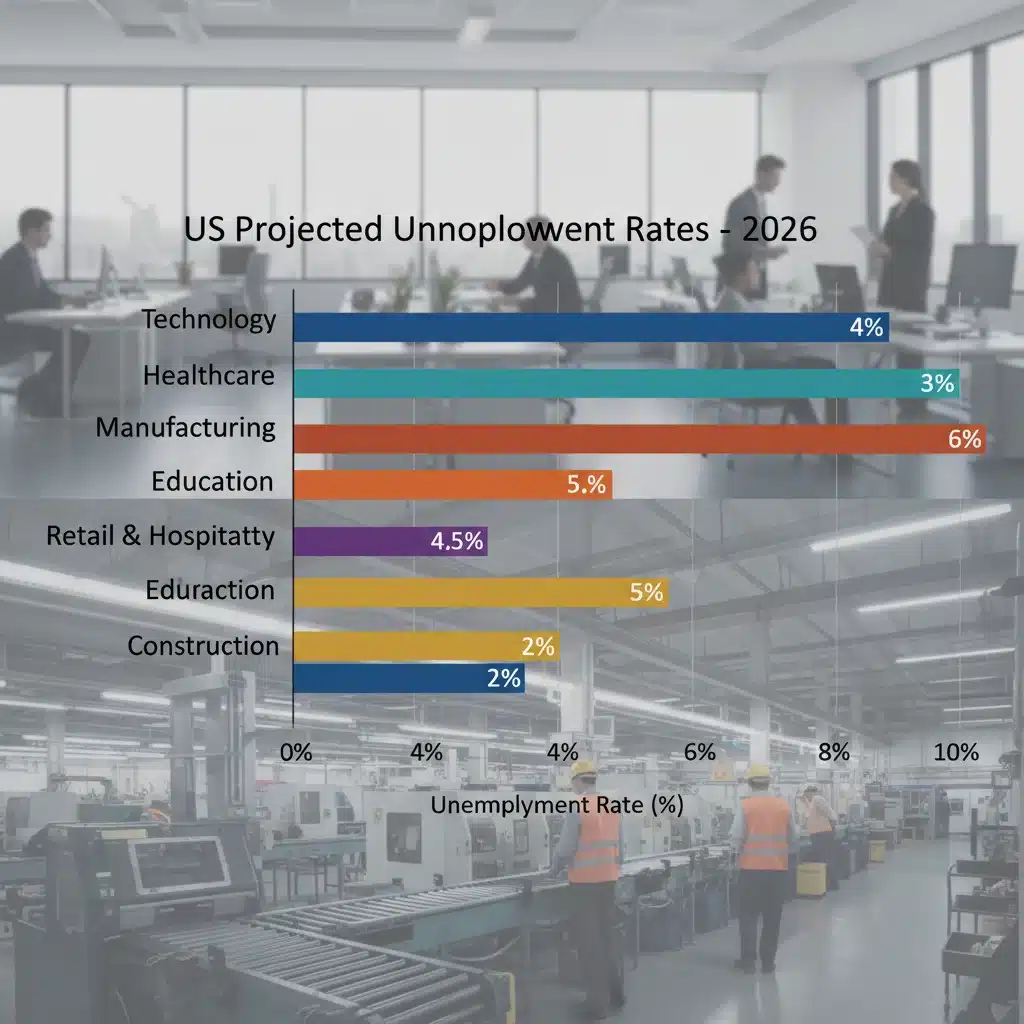
Predicting unemployment rates for 2026 requires considering several macroeconomic factors. Economic growth, technological advancements, demographic shifts, and global trade policies all play a significant role. Most economic forecasts suggest a continued trend towards full employment, although the exact rate will depend on the pace of economic expansion and the ability of the workforce to adapt to new demands.
Economic Growth and its Impact
The overall health of the US economy is the primary driver of unemployment. Sustained GDP growth typically correlates with increased business investment, expansion, and hiring. Conversely, an economic slowdown or recession could lead to higher unemployment. Experts will be closely watching indicators such as consumer spending, business confidence, and investment levels to gauge the trajectory of economic growth leading up to and through 2026. A moderate and stable growth rate is generally favorable for maintaining low unemployment.
Technological Advancements and Automation
The accelerating pace of technological innovation, particularly in artificial intelligence, automation, and robotics, presents a dual challenge and opportunity for the 2026 US Labor Market. While these technologies can displace certain jobs, they also create new roles and increase productivity. The net effect on unemployment will depend on the speed of job creation in emerging sectors and the effectiveness of workforce retraining initiatives. Industries that successfully integrate new technologies while upskilling their workforce are likely to fare better.
Demographic Shifts
Demographic trends, such as an aging population and changing immigration patterns, will continue to influence the labor supply. An increasing number of retirees can lead to labor shortages in certain fields, potentially driving down unemployment rates for younger workers or those re-entering the workforce. Understanding these shifts is vital for workforce planning and ensuring a sufficient supply of skilled labor in the 2026 US Labor Market.
Policy and Global Influences
Government policy changes related to trade, immigration, education, and social safety nets can significantly impact unemployment. Furthermore, global economic conditions, geopolitical stability, and international supply chains will continue to exert influence on the US job market. A stable global environment generally supports lower unemployment, while disruptions can have ripple effects domestically.
Wage Growth Trends in the 2026 US Labor Market
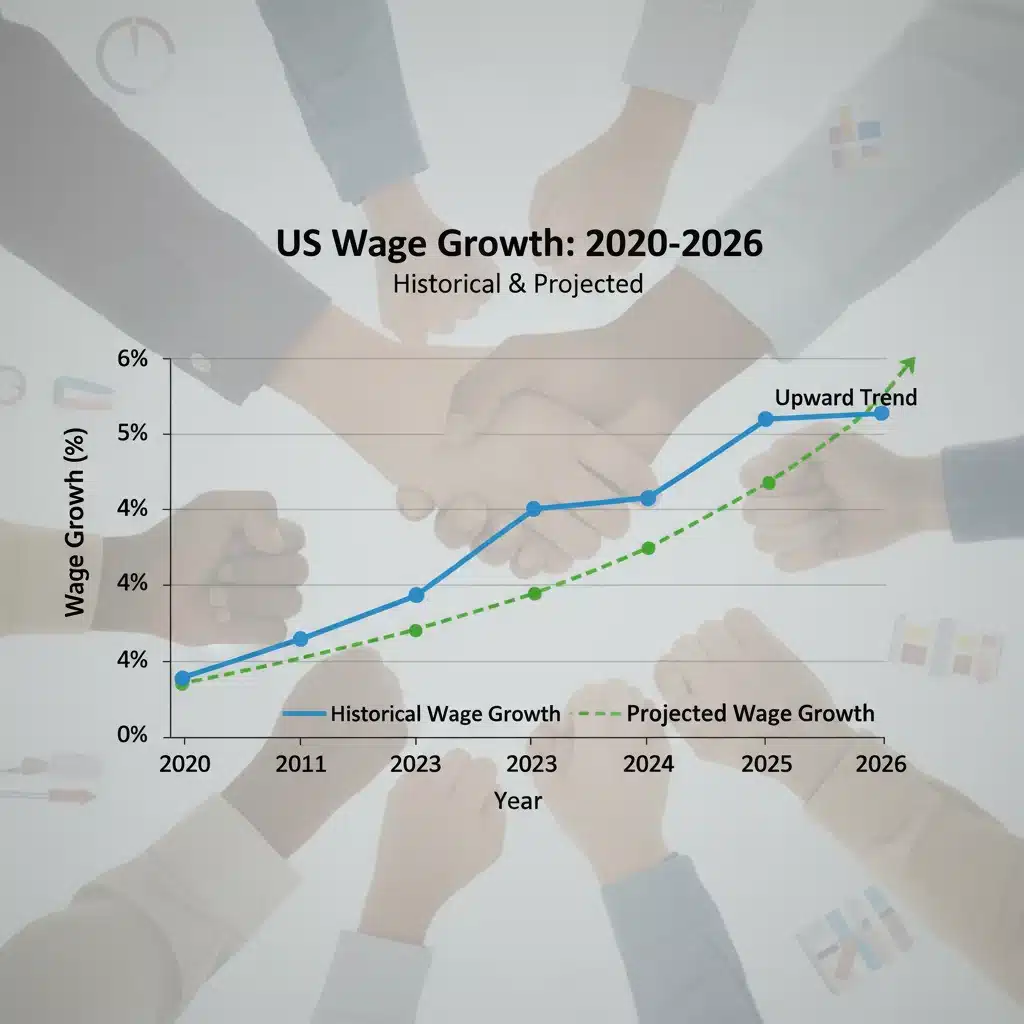
Wage growth is another critical indicator of labor market health, reflecting the bargaining power of workers and the demand for labor. Several factors will shape wage trends in the 2026 US Labor Market, including inflation, productivity gains, labor shortages, and minimum wage policies.
Inflationary Pressures and Cost of Living
Wage growth often moves in tandem with inflation. As the cost of living increases, workers demand higher wages to maintain their purchasing power. Central bank policies aimed at controlling inflation will therefore have a direct impact on wage negotiations and overall wage growth. A balanced approach is crucial to avoid a wage-price spiral while ensuring workers receive fair compensation.
Productivity Gains
Increased productivity, often driven by technological adoption and improved work processes, can support higher wages without necessarily fueling inflation. When workers produce more value, employers have a greater capacity to offer better compensation. Investments in education, training, and technology are key to boosting productivity and, consequently, sustainable wage growth in the 2026 US Labor Market.
Labor Shortages and Skill Gaps
Persistent labor shortages in specific sectors or for particular skill sets can drive up wages as employers compete for a limited pool of talent. The 2026 US Labor Market is likely to continue experiencing skill gaps, particularly in STEM fields, healthcare, and trades. This will put upward pressure on wages for highly sought-after professionals, while potentially leaving other sectors with stagnant wage growth if supply outstrips demand.
Minimum Wage Policies and Collective Bargaining
Changes in federal and state minimum wage policies can have a direct impact on the wages of lower-income workers, with potential ripple effects across the wage spectrum. Furthermore, the strength of labor unions and collective bargaining efforts can influence wage growth, particularly in industries with a strong union presence. These policy and advocacy factors will play a role in shaping overall wage trends.
Key Sectors and Industries to Watch in 2026
While the overall trends provide a broad picture, a deeper dive into specific sectors is essential for a complete understanding of the 2026 US Labor Market. Certain industries are poised for significant growth, while others may face ongoing challenges.
Technology and AI
The technology sector, particularly areas related to artificial intelligence, machine learning, data science, and cybersecurity, is expected to remain a powerhouse of job creation and wage growth. The demand for skilled professionals in these fields will likely outstrip supply, leading to competitive salaries and benefits. Companies across all industries will increasingly seek tech talent to drive digital transformation.
Healthcare and Biotech
An aging population and continuous advancements in medical science will ensure sustained demand for healthcare professionals, from doctors and nurses to specialized technicians and researchers. The biotechnology sector, driven by innovation in pharmaceuticals and medical devices, is also projected to experience robust growth, offering high-paying opportunities in research and development.
Renewable Energy and Green Jobs
With increasing global focus on sustainability and climate change, the renewable energy sector is set for significant expansion. Jobs in solar, wind, electric vehicle manufacturing, and energy efficiency are expected to grow substantially. This sector will not only create new jobs but also transform existing roles, requiring a workforce with specialized skills in green technologies.
Advanced Manufacturing
Advanced manufacturing, characterized by automation, robotics, and smart factory technologies, will continue its evolution. While some traditional manufacturing jobs may decline, new roles requiring technical expertise in operating and maintaining advanced machinery will emerge. This shift will emphasize the importance of STEM education and vocational training.
Education and Training
As the labor market evolves, the demand for education and training professionals will also grow. This includes educators at all levels, vocational trainers, and instructional designers who can equip the workforce with the skills needed for future jobs. The emphasis on lifelong learning will create opportunities in adult education and corporate training programs.
Challenges and Opportunities in the 2026 US Labor Market
Navigating the 2026 US Labor Market will involve addressing several challenges while capitalizing on emerging opportunities.
Addressing Skill Gaps
One of the most significant challenges will be bridging the widening skill gaps. As industries transform, the skills required for many jobs are changing rapidly. This necessitates continuous investment in education, vocational training, and reskilling programs for the existing workforce. Collaboration between educational institutions, businesses, and government will be crucial.
Ensuring Inclusive Growth
While overall unemployment may remain low, ensuring that the benefits of economic growth are broadly shared across all demographic groups and regions will be vital. Addressing disparities in access to education, training, and job opportunities will be a key focus for policymakers and community leaders to foster an inclusive 2026 US Labor Market.
Adapting to Remote and Hybrid Work Models
The shift towards remote and hybrid work models, accelerated by recent global events, is likely to persist and evolve. This presents both opportunities for greater flexibility and challenges related to workplace culture, employee engagement, and equitable access to technology. Businesses will need to continue adapting their strategies to optimize these new work paradigms.
Leveraging the Gig Economy
The gig economy, characterized by temporary, flexible jobs, will continue to be a significant component of the labor market. While offering flexibility, it also raises questions about worker protections, benefits, and income stability. Policies and frameworks will need to evolve to support both the flexibility and security of gig workers in the 2026 US Labor Market.
Strategies for Businesses and Job Seekers
To thrive in the 2026 US Labor Market, both businesses and individual job seekers must adopt proactive strategies.
For Businesses:
- Invest in Workforce Development: Prioritize upskilling and reskilling programs for current employees to meet evolving skill demands.
- Embrace Technology: Integrate automation and AI judiciously to enhance productivity and create new, higher-value roles.
- Foster a Flexible Work Environment: Offer remote or hybrid options where feasible to attract and retain talent.
- Diversify Talent Acquisition: Explore new pipelines for talent, including partnerships with vocational schools, community colleges, and diverse recruitment initiatives.
- Focus on Employee Well-being: Provide competitive benefits, mental health support, and a positive work culture to boost retention.
For Job Seekers:
- Continuous Learning: Commit to lifelong learning to acquire new skills, especially in high-demand areas like technology and green jobs.
- Adaptability: Be open to career transitions and new types of roles as industries evolve.
- Networking: Build professional connections and leverage online platforms to stay informed about opportunities.
- Develop Soft Skills: Emphasize critical thinking, problem-solving, communication, and collaboration, as these skills are highly valued across all sectors.
- Research Future Trends: Stay informed about emerging industries and job roles to position yourself for future success in the 2026 US Labor Market.
Conclusion: A Forward Look at the 2026 US Labor Market
The 2026 US Labor Market is projected to be characterized by continued innovation, evolving job roles, and a persistent demand for skilled workers. While unemployment rates are likely to remain relatively low, wage growth will be influenced by a complex interplay of inflation, productivity, and labor market dynamics. Key sectors like technology, healthcare, and renewable energy will drive much of the job creation and wage increases.
Both challenges and opportunities lie ahead. Addressing skill gaps, promoting inclusive growth, and adapting to new work models will be critical for ensuring a robust and equitable labor market. By understanding these trends and adopting proactive strategies, businesses can secure the talent they need, and individuals can position themselves for successful and rewarding careers in the dynamic landscape of the 2026 US Labor Market.
Staying informed and adaptable will be the hallmarks of success in the years to come. The future of work is not a fixed destination but a continuous journey of transformation, and preparedness is the best tool for navigating its complexities.