Federal Reserve’s 2026 Interest Rate Projections: Navigating Economic Stability
Anúncios
Understanding the Federal Reserve’s 2026 Interest Rate Projections: A Deep Dive into Economic Stability
The Federal Reserve, often simply referred to as the Fed, stands as the central bank of the United States. Its primary mandate is to foster maximum employment, stable prices, and moderate long-term interest rates. These objectives are pursued through various tools, with interest rates being one of the most powerful and closely watched. As we look towards 2026, the Federal Reserve’s interest rate projections offer a crucial glimpse into the future economic landscape, influencing everything from mortgage rates and consumer spending to business investments and global financial flows. Understanding these Fed Rate Projections is not merely an academic exercise; it’s a vital component of strategic financial planning for individuals, businesses, and policymakers alike.
The process by which the Fed arrives at its projections is complex, involving a meticulous assessment of numerous economic indicators, sophisticated modeling, and the collective wisdom of its Open Market Committee (FOMC) members. These projections are not set in stone; they are dynamic forecasts that evolve with changing economic realities. However, they provide a fundamental framework for anticipating future monetary policy shifts and their potential repercussions. This comprehensive article will delve into the intricacies of the Federal Reserve’s 2026 interest rate projections, exploring the underlying factors, potential impacts, and strategies for navigating the anticipated economic environment.
Anúncios
The Mandate of the Federal Reserve: Dual Objectives and Economic Stability
To fully grasp the significance of the Fed Rate Projections, it’s essential to revisit the core mandate of the Federal Reserve. The Fed operates under a “dual mandate” established by Congress: to achieve maximum employment and price stability. While seemingly straightforward, these two objectives can sometimes present conflicting challenges, requiring the Fed to carefully balance its policy decisions. Maximum employment refers to a situation where everyone who wants a job can find one, without putting undue upward pressure on wages and, consequently, inflation. Price stability, on the other hand, implies a low and stable rate of inflation, typically targeted around 2% over the long run, which ensures that the purchasing power of money remains relatively constant.
Anúncios
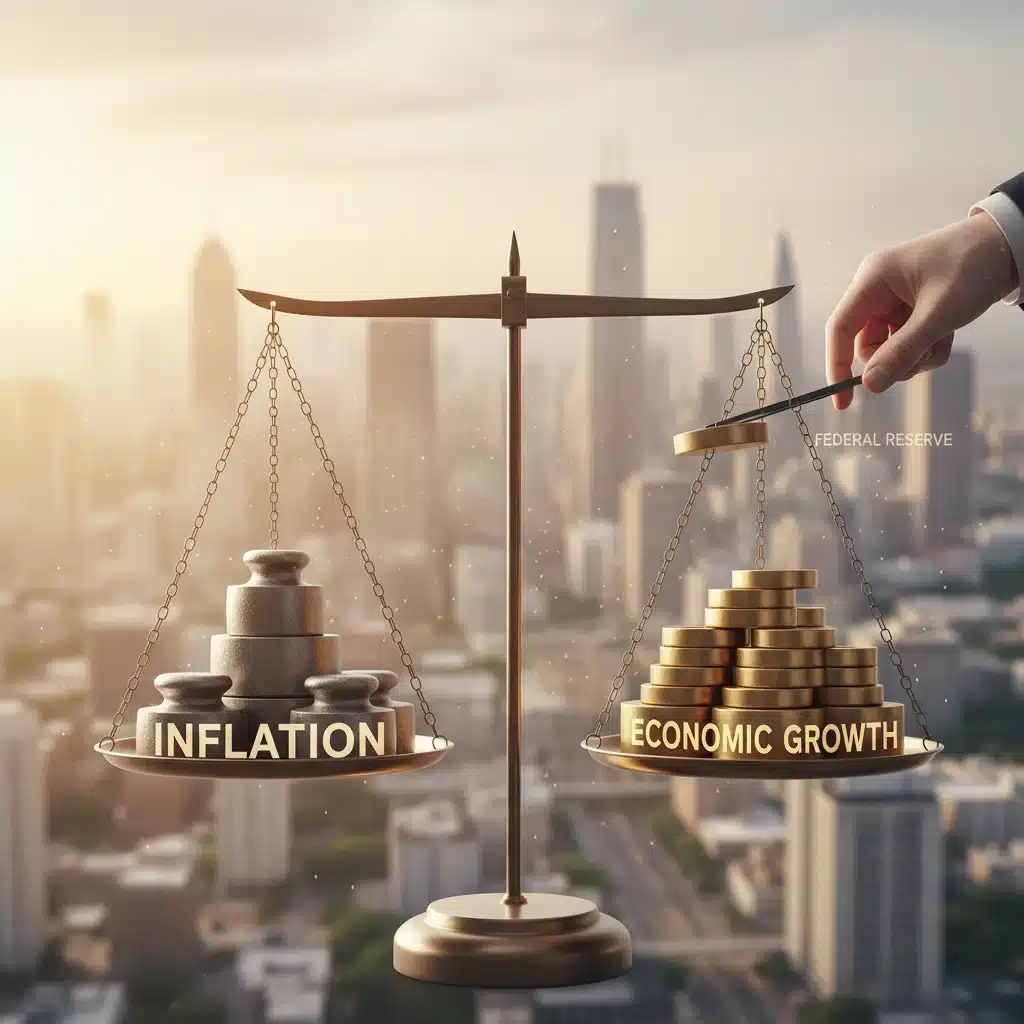
The Federal Reserve’s interest rate decisions, particularly the federal funds rate, are the primary mechanism through which it attempts to achieve these dual objectives. By adjusting this benchmark rate, the Fed influences borrowing costs throughout the economy. Lower interest rates generally stimulate economic activity by making it cheaper for businesses to invest and for consumers to borrow and spend. Conversely, higher interest rates tend to cool down an overheating economy, curbing inflation by making borrowing more expensive and encouraging saving. The challenge for the Fed lies in finding the “goldilocks zone” – an interest rate level that is not too high to stifle growth and employment, nor too low to ignite inflationary pressures. The 2026 Fed Rate Projections are a reflection of the FOMC’s best judgment on where this balance will lie in the coming years.
Key Factors Influencing Federal Reserve Interest Rate Projections for 2026
Forecasting interest rates three years out is an inherently complex task, influenced by a multitude of interconnected economic variables. The Federal Reserve’s projections are not arbitrary; they are the result of rigorous analysis of current economic conditions and forward-looking assessments. Several key factors weigh heavily on the FOMC’s decisions regarding future interest rates:
- Inflation Trends: Perhaps the most significant factor is the trajectory of inflation. If inflation remains stubbornly above the Fed’s 2% target, the central bank will likely maintain a tighter monetary policy, implying higher interest rates. Conversely, if inflation moderates or falls below the target, the Fed might consider easing policy to stimulate the economy. The components of inflation, such as core inflation (excluding volatile food and energy prices), are also closely scrutinized.
- Labor Market Conditions: The health of the labor market is another critical determinant. A strong labor market, characterized by low unemployment rates and robust wage growth, can signal a healthy economy but also potential inflationary pressures. The Fed monitors various labor market indicators, including the unemployment rate, job openings, labor force participation, and wage growth, to assess whether the economy is at or near maximum employment without overheating.
- Economic Growth (GDP): The overall pace of economic growth, measured by Gross Domestic Product (GDP), plays a crucial role. A robust and sustainable growth rate allows the Fed more flexibility in its policy decisions. However, if growth slows significantly, the Fed might be inclined to lower rates to prevent a recession. Conversely, excessively rapid growth could lead to inflationary concerns, prompting the Fed to consider higher rates.
- Global Economic Outlook: The U.S. economy does not operate in a vacuum. Global economic conditions, including growth rates in major trading partners, geopolitical events, and international financial stability, can influence domestic economic performance and, consequently, the Fed’s policy choices. For example, a global slowdown could dampen demand for U.S. exports, impacting domestic growth and inflation.
- Fiscal Policy: Government spending and taxation policies (fiscal policy) can also interact with monetary policy. Large government deficits or stimulus packages can influence aggregate demand and inflation, requiring the Fed to adjust its interest rate strategy accordingly.
- Financial Stability: The Fed also considers the stability of the financial system. Excessive risk-taking or bubbles in asset markets could prompt the Fed to act to prevent systemic risks, potentially through adjustments to interest rates or other regulatory measures.
- Supply Chain Dynamics: Recent years have highlighted the significant impact of supply chain disruptions on inflation. The Fed closely monitors the easing or persistence of these disruptions, as they directly affect the availability and pricing of goods and services.
Each of these factors is continuously monitored and evaluated by the Federal Open Market Committee (FOMC), the primary policymaking body of the Federal Reserve. Their collective assessment forms the basis for the dot plot and other forward guidance that informs the public about the likely path of Fed Rate Projections.
Interpreting the Dot Plot: A Window into Future Fed Rate Projections
One of the most anticipated releases from the Federal Reserve is the “dot plot,” which is part of the Summary of Economic Projections (SEP). The dot plot visually represents the individual FOMC members’ projections for the appropriate level of the federal funds rate at the end of the year and for the next few years, including 2026, as well as in the longer run. Each dot on the graph represents one FOMC member’s forecast. While the dot plot doesn’t represent a commitment, it offers valuable insights into the collective thinking of the committee members and the potential direction of monetary policy.
When analyzing the dot plot for 2026 Fed Rate Projections, market participants and analysts look for several key elements:
- The Median Projection: The most commonly cited figure is the median of the dots, which represents the midpoint of all individual projections. This median is often interpreted as the committee’s consensus view on the most likely path for interest rates.
- Dispersion of Dots: The spread of the dots indicates the level of agreement or disagreement among FOMC members. A tight cluster of dots suggests a strong consensus, while a wide dispersion indicates differing views and greater uncertainty about the future path of interest rates.
- Changes Over Time: Comparing the current dot plot with previous releases provides insights into how the FOMC’s outlook has evolved. A shift upwards in the median or a tightening of the dots around a higher rate suggests a more hawkish stance, while a downward shift or wider dispersion could indicate a more dovish outlook.
- Longer-Run Projections: The longer-run projections, often referred to as the “neutral rate,” represent the FOMC members’ estimates of the federal funds rate that would prevail when the economy is operating at full employment with stable inflation over the long term, and all temporary disturbances have faded. This provides a benchmark for assessing whether current or projected rates are considered accommodative, neutral, or restrictive.
Understanding the nuances of the dot plot, particularly in the context of the 2026 Fed Rate Projections, is crucial for financial institutions, investors, and businesses to anticipate future borrowing costs and make informed decisions.

Potential Economic Impacts of 2026 Fed Rate Projections
The Federal Reserve’s interest rate decisions ripple through the entire economy, affecting various sectors and stakeholders. The 2026 Fed Rate Projections, therefore, carry significant implications:
Impact on Consumers:
- Borrowing Costs: Higher interest rates translate to higher borrowing costs for consumers. This affects mortgage rates, car loans, credit card interest rates, and personal loans. If the Fed projects higher rates for 2026, consumers can expect to pay more for new debt and potentially for existing variable-rate debt.
- Savings and Investments: Conversely, higher interest rates can benefit savers, as deposit rates on savings accounts, certificates of deposit (CDs), and money market accounts tend to increase. For investors, the impact is mixed; bond yields may rise, but higher rates can also put pressure on equity markets, particularly growth stocks.
- Consumer Spending: Increased borrowing costs and potentially higher savings incentives can lead to a reduction in consumer spending, especially on big-ticket items like homes and automobiles. This can have a dampening effect on overall economic activity.
Impact on Businesses:
- Investment and Expansion: Businesses rely on borrowing for capital expenditures, expansion projects, and inventory management. Higher interest rates make these endeavors more expensive, potentially slowing down investment and job creation. Small businesses, which often have less access to diverse funding sources, can be particularly sensitive to changes in borrowing costs.
- Profitability: Companies with significant debt loads will face higher interest expenses, which can eat into their profitability. This can also affect their stock valuations.
- Hiring: A slowdown in business investment and consumer demand due to higher rates might lead companies to reduce their hiring plans or even consider layoffs, impacting the labor market.
Impact on Financial Markets:
- Bond Market: Bond prices typically move inversely to interest rates. If Fed Rate Projections indicate higher rates, existing bond prices will likely fall, as new bonds are issued with higher yields.
- Equity Market: The stock market’s reaction to interest rate projections is complex. Higher rates can be seen as negative for equities because they increase borrowing costs for companies, make bonds a more attractive alternative to stocks, and can signal a potential slowdown in economic growth. However, if higher rates are a result of a strong economy, the impact might be more nuanced.
- Currency Markets: Higher interest rates in the U.S. can make the U.S. dollar more attractive to foreign investors seeking higher returns, potentially leading to an appreciation of the dollar. A stronger dollar can make U.S. exports more expensive and imports cheaper.
Impact on Government and Public Debt:
- Debt Servicing Costs: For governments with substantial national debt, higher interest rates mean increased costs to service that debt. This can strain public budgets and potentially lead to difficult choices regarding spending or taxation.
These varied impacts highlight why the 2026 Fed Rate Projections are so closely scrutinized and why understanding them is critical for economic forecasting and personal financial planning.
Navigating the Future: Strategies for Individuals and Businesses
Given the potential implications of the Fed Rate Projections for 2026, both individuals and businesses should consider proactive strategies to navigate the anticipated economic environment.
For Individuals:
- Review Debt: If interest rates are projected to rise, consider refinancing variable-rate debt (like adjustable-rate mortgages or certain credit cards) into fixed-rate options to lock in lower payments. Prioritize paying down high-interest debt.
- Boost Savings: Higher interest rates can be an opportunity to earn more on savings. Explore high-yield savings accounts, CDs, or money market funds.
- Investment Strategy: Re-evaluate your investment portfolio. While higher rates can challenge growth stocks, value stocks or dividend-paying companies might fare better. Consider diversifying your portfolio and consulting with a financial advisor.
- Budgeting: Be mindful of potential increases in borrowing costs for new purchases like homes or cars. Adjust your budget to account for these higher expenses.
For Businesses:
- Manage Debt: Review existing debt structures. If a significant portion is variable-rate, consider hedging strategies or refinancing to fixed rates to mitigate interest rate risk.
- Capital Expenditure Planning: Factor in potentially higher borrowing costs when planning future investments and expansion projects. Prioritize projects with strong returns on investment.
- Cash Flow Management: Optimize cash flow to reduce reliance on short-term borrowing, which is often most sensitive to interest rate fluctuations.
- Pricing Strategies: Adjust pricing strategies to account for potential increases in operational costs due to higher interest rates on working capital or supplier financing.
- Hedging Strategies: Explore financial instruments like interest rate swaps or options to hedge against adverse movements in interest rates.
Proactive planning based on a well-informed understanding of the 2026 Fed Rate Projections can help mitigate risks and identify opportunities in a changing economic climate.
Challenges and Uncertainties in Forecasting Fed Rate Projections
Despite the rigorous analysis and sophisticated models employed by the Federal Reserve, forecasting interest rates, especially years in advance, is fraught with challenges and uncertainties. The economy is a complex, adaptive system, and unexpected events can quickly alter the economic landscape. Some of the key uncertainties include:
- Unexpected Shocks: Geopolitical events, natural disasters, pandemics, or unforeseen technological advancements can significantly impact economic activity, inflation, and employment, forcing the Fed to deviate from its projected path.
- Inflationary Persistence: The exact drivers and persistence of inflation can be difficult to predict. If supply chain issues resolve faster or slower than anticipated, or if wage-price spirals become more entrenched, the Fed’s response will need to adapt.
- Labor Market Dynamics: The structural changes in the labor market, such as shifts in labor force participation or the impact of automation, can affect the natural rate of unemployment and the relationship between unemployment and inflation.
- Global Economic Interdependencies: The interconnectedness of the global economy means that economic developments in other major economies can spill over into the U.S., affecting trade, capital flows, and inflation.
- Effectiveness of Monetary Policy: The precise impact of interest rate changes on the real economy can vary, depending on factors like consumer and business confidence, the level of household and corporate debt, and the responsiveness of financial markets.
- Fiscal Policy Evolution: Future government spending and taxation policies (fiscal policy) are inherently political and can be unpredictable, yet they have a substantial bearing on the overall economic environment that the Fed must navigate.
These uncertainties mean that while the 2026 Fed Rate Projections provide valuable guidance, they should always be viewed as conditional forecasts, subject to revision as new data emerges and economic conditions evolve. The Federal Reserve itself emphasizes this flexibility, noting that its policy decisions are data-dependent and will adapt as necessary to achieve its dual mandate.
The Importance of Communication and Transparency
The Federal Reserve’s communication strategy plays a crucial role in managing expectations and enhancing the effectiveness of its monetary policy. Through statements, press conferences, congressional testimonies, and the release of documents like the SEP and the dot plot, the Fed aims to be as transparent as possible about its economic outlook and policy intentions. This transparency helps market participants and the public understand the rationale behind the Fed Rate Projections and anticipate future actions, thereby reducing market volatility and uncertainty.
Clear communication allows businesses and consumers to make more informed long-term decisions, which in turn contributes to greater economic stability. When the Fed’s communication is perceived as consistent and credible, its forward guidance can itself influence economic behavior, helping to steer the economy towards the desired outcomes even before policy actions are fully implemented.
Conclusion: Preparing for the Economic Climate of 2026
The Federal Reserve’s 2026 interest rate projections are more than just numbers on a chart; they are a critical barometer of the central bank’s outlook on inflation, employment, and overall economic health. While subject to change, these Fed Rate Projections provide invaluable insights for strategic planning across all economic sectors. Understanding the factors that drive these projections—from inflation and labor market dynamics to global economic trends—empowers individuals and businesses to anticipate potential shifts in borrowing costs, investment returns, and economic growth.
As we approach 2026, staying informed about the Federal Reserve’s evolving outlook and being prepared to adapt financial strategies will be paramount. Whether it’s managing personal debt, optimizing business investments, or navigating financial markets, a deep appreciation of the Fed’s monetary policy trajectory is essential for fostering economic stability and achieving financial goals. The journey to 2026 will undoubtedly present new challenges and opportunities, and the Federal Reserve’s interest rate projections will remain a key guide in navigating the complex economic landscape.