Mortgage Rates 2026: Secure Below 6.0% in Today’s Market
Anúncios
Mortgage Rates 2026: Navigating the Future to Secure a Rate Below 6.0%
The housing market is a dynamic landscape, constantly influenced by economic shifts, Federal Reserve policies, and global events. As we look towards 2026, many prospective homebuyers and current homeowners are asking a crucial question: What will mortgage rates 2026 look like, and how can I secure a rate below 6.0%? This comprehensive guide will delve into predictions, strategies, and expert insights to help you navigate the future of home financing.
Anúncios
Understanding the Current Mortgage Rate Environment
Before we project into 2026, it’s essential to understand the forces currently shaping mortgage rates. Over the past few years, we’ve witnessed significant volatility. Post-pandemic economic recovery, coupled with inflationary pressures, led central banks worldwide, including the U.S. Federal Reserve, to implement aggressive interest rate hikes. These actions directly impact the cost of borrowing, including mortgage loans.
Anúncios
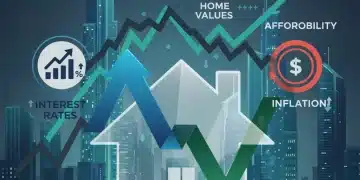
Factors influencing current mortgage rates include:
- Inflation: High inflation often prompts the Fed to raise the federal funds rate, which indirectly pushes mortgage rates higher.
- Federal Reserve Policy: The Fed’s stance on monetary policy – whether they are tightening (raising rates) or loosening (lowering rates) – is a primary driver.
- Economic Growth: A strong economy can lead to higher rates as demand for credit increases, while a weakening economy might see rates fall.
- Bond Market: Mortgage rates are closely tied to the yield on the 10-year Treasury bond. When bond yields rise, so do mortgage rates.
- Global Events: Geopolitical tensions, supply chain disruptions, and international economic shifts can all create uncertainty, influencing rates.
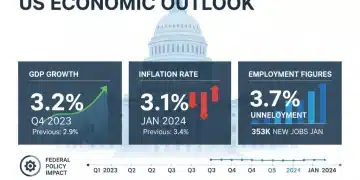
As of late 2024 and early 2025, we are seeing a complex interplay of these factors. Inflation, while moderating, remains a concern, and the Fed is carefully balancing economic growth with price stability. This delicate balance will set the stage for mortgage rates 2026.
Forecasting Mortgage Rates 2026: Expert Predictions and Economic Indicators
Predicting future mortgage rates is not an exact science, but by analyzing economic forecasts and expert opinions, we can form a reasonable outlook for mortgage rates 2026. Most economists anticipate a gradual stabilization, with a potential for rates to moderate from their recent peaks.
The Federal Reserve’s Role and Inflation Outlook
The trajectory of inflation will be the most significant determinant of the Federal Reserve’s actions. If inflation continues its downward trend towards the Fed’s 2% target, it’s highly probable that the Fed will either pause rate hikes or even begin to implement modest rate cuts. Such a scenario would create a favorable environment for lower mortgage rates.
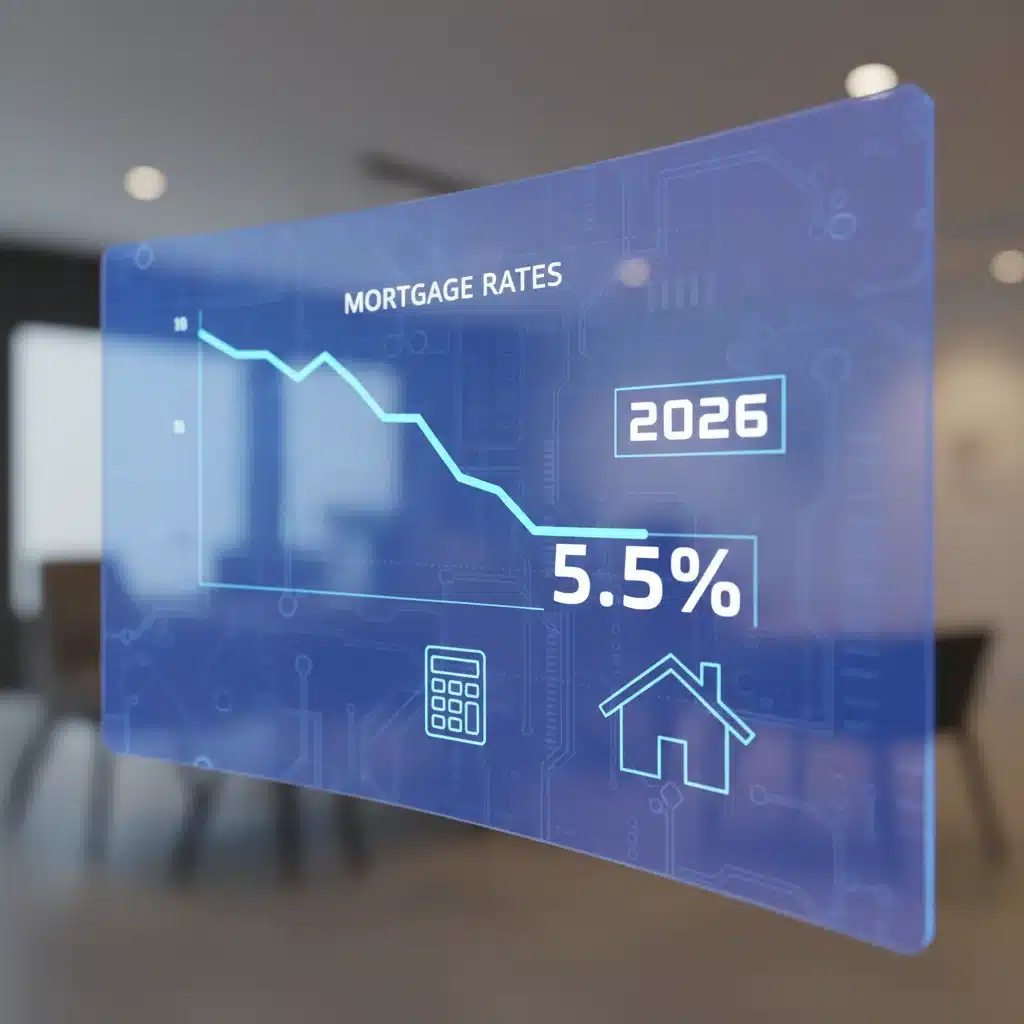
- Scenario 1: Controlled Inflation. If inflation steadily declines, the Fed might initiate a series of small rate cuts throughout late 2025 and into 2026. This could push 30-year fixed mortgage rates into the 5.5% to 6.5% range.
- Scenario 2: Stubborn Inflation. If inflation proves more persistent, the Fed might maintain higher rates for longer, keeping mortgage rates elevated, potentially above 6.5% for much of 2026.
Economic Growth and the Job Market
The health of the U.S. economy, particularly the job market, also plays a crucial role. A robust job market generally supports higher consumer spending and economic growth, which can sometimes put upward pressure on rates. However, if the economy slows down significantly, perhaps even entering a mild recession, the Fed might be compelled to lower rates to stimulate activity, which would benefit mortgage borrowers.
Most forecasts suggest a moderate economic growth trajectory for 2026, avoiding a deep recession but also not experiencing an overheated expansion. This ‘soft landing’ scenario would likely lead to more stable, and potentially slightly lower, mortgage rates compared to the peak volatility seen in previous years.
Bond Market Dynamics
As mentioned, the 10-year Treasury yield is a strong indicator for mortgage rates. Factors like government borrowing, investor demand for safe assets, and global economic sentiment will influence bond yields. If there’s increased demand for U.S. Treasuries (often seen during global uncertainty), yields may fall, pulling mortgage rates down with them. Conversely, increased government spending or reduced investor confidence could push yields, and thus mortgage rates, higher.
Expert Consensus on Mortgage Rates 2026
While no one has a crystal ball, many leading financial institutions and housing market analysts predict that mortgage rates 2026 will likely settle into a range that is more favorable than the peaks of 2023-2024. A common projection places the 30-year fixed mortgage rate somewhere between 5.75% and 6.75% for much of 2026, with opportunities to dip below 6.0% depending on economic data releases and Fed actions. The key takeaway is that securing a rate below 6.0% will be achievable, but it will require strategic planning and timing.
Strategies to Secure a Mortgage Rate Below 6.0% in 2026
Achieving a sub-6.0% mortgage rate in 2026 will likely involve a combination of proactive steps and smart financial decisions. Here’s how you can position yourself for success:
1. Strengthen Your Financial Profile
Lenders offer the best rates to borrowers who represent the lowest risk. A strong financial profile is your most powerful tool.
- Improve Your Credit Score: Aim for a FICO score of 740 or higher. Pay bills on time, reduce credit card debt, and avoid opening new lines of credit unnecessarily. A higher credit score can translate to a significantly lower interest rate over the life of the loan.
- Increase Your Down Payment: A larger down payment reduces the loan-to-value (LTV) ratio, which signals lower risk to lenders. Aim for at least 20% to avoid private mortgage insurance (PMI) and potentially qualify for better rates. Even a slightly larger down payment can make a difference.
- Reduce Your Debt-to-Income (DTI) Ratio: Lenders look at your DTI to assess your ability to manage monthly payments. Pay down existing debts, especially high-interest ones, to lower this ratio. A DTI below 36% (including your new mortgage payment) is generally ideal.
2. Monitor Market Trends and Rate Lock Opportunities
Staying informed about economic news and Federal Reserve announcements is crucial. Mortgage rates can fluctuate daily, so timing your rate lock is key.
- Watch Economic Indicators: Keep an eye on inflation reports (CPI, PCE), employment data, and GDP growth. Positive news on inflation control or signs of economic slowdown might signal a potential dip in rates.
- Consult with Mortgage Professionals: A good mortgage broker or lender can provide real-time insights and advise you on when to lock in your rate. They often have access to rate sheets that change throughout the day.
- Understand Rate Locks: A rate lock guarantees your interest rate for a specific period (e.g., 30, 45, or 60 days). If you’re confident that rates are at a favorable point and you’re close to closing, locking in can protect you from subsequent rate increases. Some lenders offer ‘float-down’ options, allowing you to secure a lower rate if market rates drop before closing, usually for a fee.

3. Explore Different Mortgage Products
While the 30-year fixed-rate mortgage is popular, other options might offer lower initial rates, especially if you plan to move or refinance within a few years.
- Adjustable-Rate Mortgages (ARMs): ARMs typically offer a lower initial interest rate for a fixed period (e.g., 5/1, 7/1, 10/1 ARM) before adjusting periodically. If you anticipate refinancing or selling before the adjustment period, an ARM could provide a significantly lower rate upfront, helping you get below 6.0%. Be aware of the risks associated with rate adjustments.
- 15-Year Fixed-Rate Mortgages: These loans usually come with a lower interest rate than 30-year fixed mortgages. While the monthly payments are higher, you’ll pay off your home faster and save substantially on interest over the life of the loan.
- Government-Backed Loans (FHA, VA, USDA): These loans often have more flexible credit requirements and can sometimes offer competitive rates, especially for eligible borrowers (e.g., veterans for VA loans). While their primary benefit is often accessibility, always compare their rates with conventional loans.
4. Consider Mortgage Points (Discount Points)
Mortgage points are fees paid directly to the lender at closing in exchange for a lower interest rate. One point typically costs 1% of the loan amount and can reduce your interest rate by about 0.25%. This strategy is most beneficial if you plan to stay in your home for a long time, as it takes time to break even on the upfront cost.
Calculate the break-even point to determine if buying down the rate makes financial sense for your specific situation and expected tenure in the home. This can be a direct way to push your rate below the 6.0% threshold.
5. Shop Around for Lenders
This is perhaps one of the most overlooked yet impactful strategies. Different lenders offer different rates and fees, even for the same borrower profile on the same day. Getting quotes from at least three to five lenders (banks, credit unions, and online lenders) can save you a significant amount.
- Compare Loan Estimates: Once you apply, lenders must provide a Loan Estimate form. Carefully compare the interest rate, APR (Annual Percentage Rate, which includes fees), closing costs, and any lender credits.
- Negotiate: Don’t be afraid to use a competitive offer from one lender to negotiate a better deal with another.
Refinancing Opportunities in 2026
For current homeowners, 2026 could present a prime opportunity to refinance if rates drop. If you secured a mortgage during a period of higher rates, refinancing to a lower rate can significantly reduce your monthly payments and total interest paid over the life of the loan.
Key considerations for refinancing in 2026:
- Current Rate vs. New Rate: Generally, refinancing makes sense if you can reduce your interest rate by at least 0.5% to 1.0%, considering closing costs.
- Break-Even Point: Calculate how long it will take for the savings from your lower monthly payment to offset the closing costs of the refinance.
- Loan Term: You can choose to shorten your loan term (e.g., from 30 to 15 years) to save on interest, or extend it to lower monthly payments, though this means paying more interest over time.
- Cash-Out Refinance: If property values remain strong, a cash-out refinance allows you to tap into your home equity while securing a lower rate.
Keep a close watch on mortgage rates 2026 throughout the year, as even small dips could create favorable refinancing windows.

The Housing Market in 2026: Supply, Demand, and Affordability
Mortgage rates don’t exist in a vacuum; they interact with the broader housing market. Understanding the supply-demand dynamics and affordability trends will provide a more complete picture for prospective buyers in 2026.
Housing Supply
The inventory of homes for sale has been a persistent challenge in many markets. While new construction is slowly picking up, it often struggles to keep pace with demand, especially for entry-level and mid-range homes. In 2026, we might see a modest increase in inventory as higher rates potentially sideline some buyers, and more homeowners feel comfortable selling. However, a significant surge in supply that would drastically lower prices is not widely anticipated.
Buyer Demand
Demand for housing remains robust, driven by demographics (millennials entering prime home-buying years) and a continued desire for homeownership. While higher rates have cooled some of the frenzied demand seen during the pandemic, any significant drop in mortgage rates 2026 could reignite buyer competition, especially in desirable areas.
Affordability Challenges
Affordability will likely remain a key concern in 2026. The combination of elevated home prices and mortgage rates (even if they dip below 6.0%) means that many buyers will need to adjust their expectations or seek more affordable markets. This underscores the importance of securing the lowest possible mortgage rate and having a strong financial foundation.
Buyers in 2026 should be prepared for a market that, while potentially less frenetic than peak pandemic times, still requires diligence, financial preparedness, and strategic decision-making. Focusing on securing a competitive mortgage rate will be paramount to making homeownership feasible and sustainable.
Long-Term Outlook and Planning for Future Rate Changes
While our focus is on mortgage rates 2026, it’s wise to think about the long-term. Mortgage rates are cyclical, and what goes up often comes down, and vice versa. Building financial resilience and flexibility can help you adapt to future market changes.
- Build an Emergency Fund: Having several months of living expenses saved provides a crucial buffer against unexpected financial setbacks or job loss, ensuring you can meet your mortgage obligations.
- Consider Prepayment: Even if you secure a great rate, making extra principal payments when possible can significantly reduce the total interest you pay and shorten your loan term.
- Stay Informed: Continue to monitor economic news and housing market trends even after you’ve secured your mortgage. This knowledge empowers you to make informed decisions about potential future refinancing opportunities or home equity utilization.
The goal is not just to secure a low rate in 2026, but to ensure your homeownership journey is financially sound and adaptable to future economic landscapes.
Conclusion: Positioning Yourself for Success with Mortgage Rates 2026
The journey to securing a mortgage rate below 6.0% in 2026 is achievable, but it demands diligence, preparation, and strategic action. While economic forecasts suggest a potential easing of rates from recent highs, the exact trajectory will depend on a complex interplay of inflation, Federal Reserve policy, and broader economic health.
By focusing on strengthening your financial profile, diligently monitoring market trends, exploring various mortgage products, and actively shopping for the best lender, you can significantly increase your chances of obtaining a favorable rate. For current homeowners, 2026 could also present valuable refinancing opportunities.
As you plan your home purchase or refinance for 2026, remember that knowledge is power. Stay informed, consult with trusted financial and mortgage professionals, and be proactive in your approach. By doing so, you can navigate the evolving landscape of mortgage rates 2026 and achieve your homeownership goals with confidence.