Investing for Beginners 2026: Start Your Portfolio Under $500

Anúncios
Are you ready to take control of your financial future but feel intimidated by the world of investing? Do you believe you need a hefty sum to even begin? Think again! In 2026, the landscape of personal finance has evolved, making investing for beginners more accessible and affordable than ever before. This comprehensive guide will walk you through a clear, 7-step plan to start building your investment portfolio with under $500. Yes, you read that right – less than $500!
Anúncios
Many aspiring investors are held back by misconceptions: that investing is only for the wealthy, that it’s too complicated, or that it’s too risky. While every investment carries some degree of risk, the key is understanding how to manage it, especially when you’re just starting. The goal of this article is to demystify the process, equip you with practical knowledge, and empower you to make informed decisions as you embark on your investment journey. We’ll explore various investment vehicles, discuss the importance of diversification, and highlight strategies tailored for those with limited capital. By the end of this guide, you’ll have a solid roadmap to confidently begin investing for beginners and lay the groundwork for a prosperous future.
The year 2026 presents unique opportunities and challenges. With technological advancements, commission-free trading platforms, and fractional share investing, the barriers to entry have significantly lowered. This means that with a strategic approach and a small initial investment, you can start harnessing the power of compounding and watch your money grow over time. So, let’s dive into the essential steps to kickstart your investment journey, proving that investing for beginners doesn’t have to be a daunting or expensive endeavor.
Anúncios
Step 1: Define Your Financial Goals and Risk Tolerance
Before you even think about where to put your money, it’s crucial to understand why you’re investing and how much risk you’re comfortable with. These two factors will be the bedrock of your investment strategy.
What Are Your Financial Goals?
Are you saving for a down payment on a house, retirement, your child’s education, or simply aiming for long-term wealth accumulation? Each goal has a different timeline and, consequently, requires a different investment approach. For instance, a short-term goal (3-5 years) might call for more conservative investments, while a long-term goal (10+ years) allows for more aggressive, growth-oriented strategies. Clearly defining your goals will help you select appropriate investments and stay motivated throughout your journey of investing for beginners.
- Short-term goals (1-5 years): Emergency fund, new car, vacation. These typically require less risky investments.
- Medium-term goals (5-10 years): Down payment on a house, further education. A balanced approach might be suitable.
- Long-term goals (10+ years): Retirement, significant wealth building. These often benefit from higher-growth, higher-risk investments.
Understanding Your Risk Tolerance
Risk tolerance refers to your ability and willingness to take on financial risk. It’s a combination of your financial capacity to absorb losses and your psychological comfort with market fluctuations. A high-risk tolerance means you’re comfortable with the possibility of significant losses in exchange for potentially higher returns. A low-risk tolerance means you prioritize capital preservation over high returns.
To assess your risk tolerance, consider these questions:
- How would you react if your investment portfolio dropped by 10-20% in a short period?
- Do you need access to this money in the near future?
- How much sleep would you lose over market volatility?
There are numerous online questionnaires designed to help you gauge your risk tolerance. Be honest with yourself. It’s better to underestimate your risk tolerance initially than to panic and sell investments during a market downturn, locking in losses. Your risk tolerance will directly influence the types of investments you choose as you navigate investing for beginners.
Step 2: Create a Budget and Build an Emergency Fund
Before you allocate a single dollar to investments, you need a solid financial foundation. This involves creating a detailed budget and establishing an emergency fund. These steps are non-negotiable for anyone serious about investing for beginners.
The Power of Budgeting
A budget is not about restricting yourself; it’s about gaining control over your money. It helps you understand where your money is going, identify areas where you can cut back, and free up funds for saving and investing. Start by tracking all your income and expenses for a month. Categorize your spending (housing, food, transportation, entertainment, etc.) and identify discretionary spending that can be reduced.
Popular budgeting methods include:
- 50/30/20 Rule: 50% needs, 30% wants, 20% savings/debt repayment.
- Zero-Based Budgeting: Assign every dollar a job so your income minus expenses equals zero.
- Envelope System: Physically divide cash into envelopes for different spending categories.
Choose a method that works for you and stick with it. The goal is to consistently find money that you can direct towards your investment goals, even if it’s just a small amount initially. Consistent budgeting is a cornerstone of successful investing for beginners.

Why an Emergency Fund is Essential
An emergency fund is a stash of readily accessible cash saved for unexpected expenses, such as job loss, medical emergencies, or car repairs. It acts as a financial safety net, preventing you from having to dip into your investments or go into debt when unforeseen events occur.
Financial experts typically recommend having 3 to 6 months’ worth of living expenses saved in an easily accessible, high-yield savings account. For investing for beginners, starting with at least one month’s expenses before you begin investing is a wise move. Building this fund provides peace of mind and protects your nascent investment portfolio from premature withdrawals.
Step 3: Pay Down High-Interest Debt
Before you start putting your money into investments, it’s often more beneficial to pay off high-interest debt. Think of it this way: if your credit card charges 20% interest, paying that off is like getting a guaranteed 20% return on your money – a return you’d be hard-pressed to find consistently in the investment world without taking on significant risk. This step is critical for sustainable investing for beginners.
High-interest debt typically includes:
- Credit card debt
- Payday loans
- Some personal loans
Focus on paying down the debt with the highest interest rate first (the “debt avalanche” method) or the smallest balance first for psychological momentum (the “debt snowball” method). While student loans or mortgages might have lower interest rates and can be managed alongside investing, high-interest debt acts as a significant drag on your financial progress. Eliminating it frees up more money for investing and improves your overall financial health, making your journey into investing for beginners much smoother.
Step 4: Choose the Right Investment Account
Once your financial house is in order, the next step in investing for beginners is to select the appropriate investment account. The type of account you choose will depend on your goals and whether you want tax advantages.
Tax-Advantaged Accounts
These accounts offer significant tax benefits and are often the best place to start for long-term goals like retirement.
- Roth IRA: Contributions are made with after-tax dollars, and qualified withdrawals in retirement are tax-free. This is an excellent choice for young investors who expect to be in a higher tax bracket in the future. You can often open a Roth IRA with very little initial capital, sometimes even $0 or $50.
- Traditional IRA: Contributions may be tax-deductible, and taxes are paid upon withdrawal in retirement. Suitable if you expect to be in a lower tax bracket in retirement.
- 401(k) or 403(b): Employer-sponsored retirement plans. If your employer offers a match, contribute at least enough to get the full match – it’s free money! While you might not have direct control over the specific investments, contributing is a powerful way to save.
Taxable Brokerage Accounts
These are standard investment accounts that don’t offer the same tax benefits as IRAs or 401(k)s, but they provide more flexibility. You can withdraw your money at any time without age restrictions (though capital gains taxes will apply). For investing for beginners, a taxable brokerage account is a good option for shorter-term goals or if you’ve already maxed out your tax-advantaged options.
When choosing a brokerage, look for:
- Low or no commissions: Many platforms now offer commission-free trading for stocks and ETFs.
- Low account minimums: Essential when you’re starting with under $500.
- User-friendly interface: Especially important for beginners.
- Access to fractional shares: Allows you to invest in expensive stocks with small amounts of money.
- Educational resources: Helpful for learning more about investing.
Popular choices include Fidelity, Charles Schwab, Vanguard, M1 Finance, and Robinhood. Do your research to find the best fit for your needs.
Step 5: Select Your Investment Vehicles (Under $500)
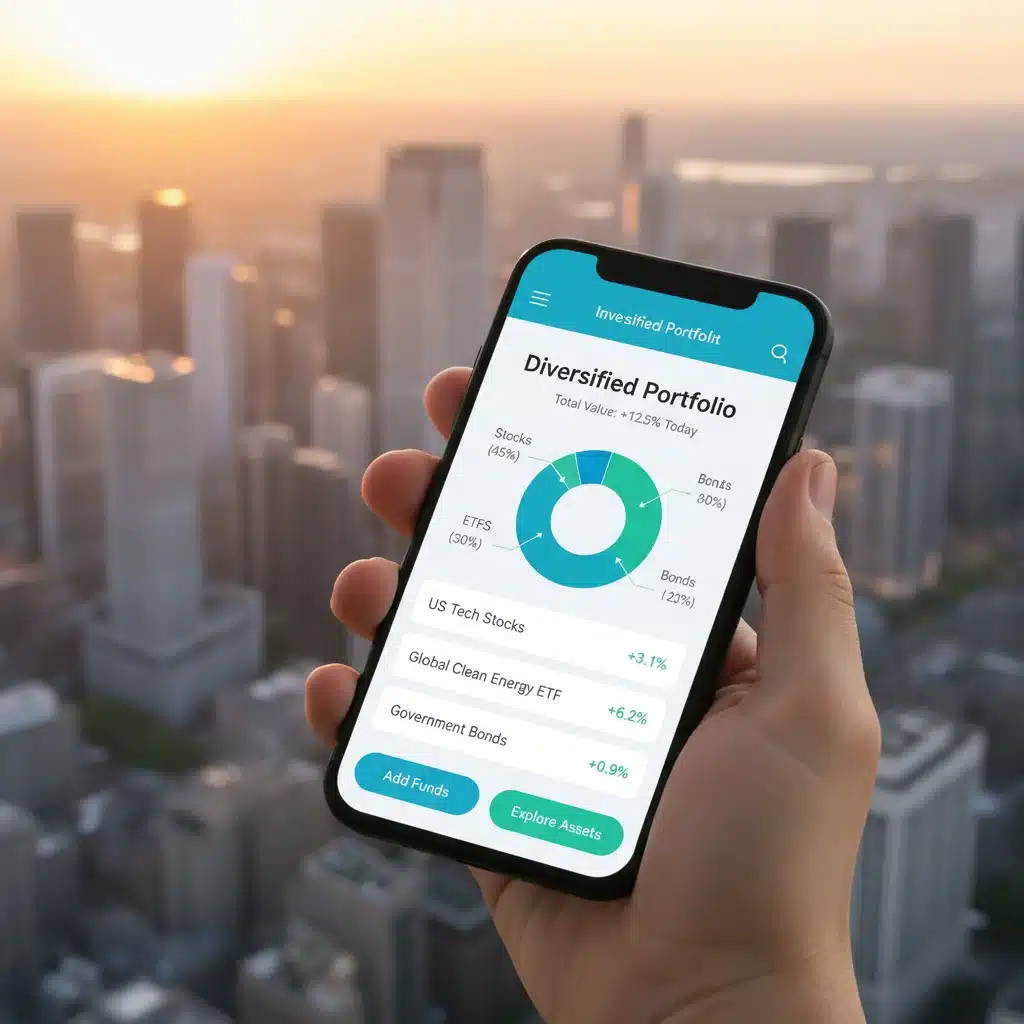
Now for the exciting part: choosing what to invest in! With under $500, your options might seem limited, but thanks to modern platforms, you still have powerful choices. The key for investing for beginners is to focus on diversification and low-cost options.
Exchange-Traded Funds (ETFs)
ETFs are collections of investments, such as stocks or bonds, that trade like individual stocks. They offer instant diversification because a single ETF can hold hundreds or even thousands of different securities. This means you’re not putting all your eggs in one basket, which is crucial for managing risk, especially with a smaller portfolio.
Why ETFs are great for beginners with under $500:
- Diversification: Reduces risk by spreading your investment across many companies or assets.
- Low Expense Ratios: Most ETFs have very low annual fees.
- Fractional Shares: Many brokers allow you to buy fractional shares of ETFs, meaning you can invest any dollar amount you choose, rather than needing to buy a full share. This is a game-changer for investing for beginners with limited capital.
- Ease of Use: Simple to buy and sell through a brokerage account.
Consider broad market ETFs that track major indices like the S&P 500 (e.g., SPY, IVV, VOO) or total stock market ETFs (e.g., VTI, ITOT). These offer exposure to the overall U.S. stock market with minimal effort.
Mutual Funds (Index Funds)
Similar to ETFs, mutual funds pool money from multiple investors to buy a diversified portfolio of stocks, bonds, or other assets. Index mutual funds, in particular, are designed to mirror the performance of a specific market index. While some mutual funds have high minimum investment requirements (e.g., $1,000 or $3,000), many major brokerages offer their own low-cost index mutual funds with no minimums or very low minimums, especially within retirement accounts.
Key benefits for investing for beginners:
- Professional Management: While index funds are passively managed, mutual funds generally have professional fund managers.
- Diversification: Like ETFs, they offer immediate diversification.
- Automatic Reinvestment: Dividends and capital gains are often automatically reinvested, accelerating growth.
Check with your chosen brokerage for their specific offerings and minimums.
Robo-Advisors
Robo-advisors are automated investment platforms that manage your portfolio based on your financial goals and risk tolerance. They use algorithms to select and rebalance a diversified portfolio of low-cost ETFs. This is an excellent option for investing for beginners who want a hands-off approach.
Benefits of robo-advisors:
- Low Minimums: Many robo-advisors like Betterment and Wealthfront allow you to start with as little as $0 or $500.
- Automated Management: They handle portfolio rebalancing, dividend reinvestment, and even tax-loss harvesting automatically.
- Low Fees: Annual management fees are typically a small percentage of your assets (e.g., 0.25% – 0.50%).
- Diversification: They build globally diversified portfolios tailored to your profile.
For someone starting with under $500, a robo-advisor often provides the most comprehensive and simplest solution for building a diversified, professionally managed portfolio.
Step 6: Automate Your Investments and Stay Consistent
One of the most powerful strategies for investing for beginners is consistency and automation. The goal is to make investing a regular habit, regardless of market conditions.
Dollar-Cost Averaging
Dollar-cost averaging (DCA) is an investment strategy where you invest a fixed amount of money at regular intervals (e.g., $50 every two weeks) regardless of the asset’s price. This strategy helps mitigate risk because you buy more shares when prices are low and fewer shares when prices are high, averaging out your purchase price over time. It removes the emotion from investing and prevents you from trying to “time the market,” which is notoriously difficult even for seasoned professionals.
For example, if you’re investing $50 per week:
- Week 1: Share price is $10, you buy 5 shares.
- Week 2: Share price is $8, you buy 6.25 shares.
- Week 3: Share price is $12, you buy 4.17 shares.
Over time, your average cost per share will be lower than if you had tried to buy all at once at a potentially high price. DCA is a cornerstone strategy for successful investing for beginners.
Automate Your Contributions
Set up automatic transfers from your checking account to your investment account on a regular basis (e.g., weekly, bi-weekly, or monthly). This ensures you consistently contribute to your portfolio without having to remember or make a conscious decision each time. “Set it and forget it” is a powerful mantra for building wealth, especially when you’re focusing on investing for beginners.
Even if you start with just $25 or $50 a month, the power of compound interest over decades can lead to substantial wealth. The earlier you start and the more consistently you contribute, the greater the potential for growth.
Step 7: Monitor, Learn, and Adjust
Investing is not a one-time event; it’s an ongoing journey. As you progress with investing for beginners, it’s important to periodically monitor your portfolio, continue learning, and make adjustments as your life circumstances or goals change.
Monitor Your Portfolio (Don’t Obsess)
While it’s good to know how your investments are performing, resist the urge to check your portfolio daily. Short-term market fluctuations are normal and can lead to emotional decisions. Instead, review your portfolio quarterly or annually. Focus on whether your investments are still aligned with your goals and risk tolerance, rather than getting caught up in day-to-day movements.
Key metrics to look at:
- Overall performance: Is your portfolio growing as expected?
- Diversification: Is your asset allocation still appropriate?
- Expense ratios: Are your investment fees still competitive?
Continuous Learning
The world of finance is constantly evolving. Make it a habit to continue learning about investing. Read reputable financial news sources, books, and blogs. Understand basic financial concepts like inflation, interest rates, and economic cycles. The more you learn, the more confident and informed you’ll become as an investor.
Resources for continuous learning:
- Books like “The Simple Path to Wealth” by JL Collins or “A Random Walk Down Wall Street” by Burton Malkiel.
- Websites like Investopedia, NerdWallet, and reputable financial news outlets.
- Podcasts on personal finance and investing.
Rebalancing and Adjustments
Over time, your portfolio’s asset allocation may drift from your target due to differing returns of various asset classes. Rebalancing means adjusting your portfolio back to your desired allocation. For example, if stocks have performed exceptionally well, you might sell a portion of your stocks and buy more bonds to restore your original balance.
Additionally, your financial goals, risk tolerance, or life circumstances might change. You might get a raise, get married, have children, or approach retirement. Each of these events could warrant an adjustment to your investment strategy. Review your plan periodically (at least once a year) to ensure it still serves your best interests. This adaptable approach is key for long-term success in investing for beginners.
Common Pitfalls for Beginner Investors and How to Avoid Them
As you embark on your journey of investing for beginners, it’s just as important to know what not to do as it is to know what to do. Avoiding common mistakes can save you significant time, money, and stress.
1. Emotional Investing
The market is driven by fear and greed. Reacting to every dip or surge by buying high and selling low is a surefire way to undermine your returns. Stick to your long-term plan, use dollar-cost averaging, and remember that market volatility is normal. Don’t let emotions dictate your investment decisions.
2. Lack of Diversification
Putting all your money into a single stock or a few related assets is incredibly risky. As we discussed, ETFs and index funds are excellent tools for instant diversification, spreading your risk across many companies and sectors. Never underestimate the power of diversification, especially when investing for beginners.
3. Trying to Time the Market
Even professional investors struggle to consistently predict market movements. For beginners, it’s a futile and often costly endeavor. Focus on time in the market, not timing the market. Consistent, automated contributions through dollar-cost averaging are far more effective.
4. Not Starting Early Enough
The biggest advantage you have as a young investor is time. Thanks to the power of compound interest, even small amounts invested early can grow into substantial wealth over decades. Don’t delay your start because you think you don’t have enough money. Every dollar invested today has more time to grow.
5. Ignoring Fees
Fees, even small ones, can eat into your returns significantly over the long term. Always be aware of the expense ratios of your ETFs and mutual funds, as well as any account maintenance fees. Opt for low-cost index funds and ETFs to maximize your returns. This is a crucial consideration for investing for beginners.
6. Investing Money You Might Need Soon
Invest only money you won’t need for at least 5-10 years. The stock market can be volatile in the short term, and you don’t want to be forced to sell your investments at a loss because of an unexpected expense. This reinforces the importance of a robust emergency fund.
The Power of Compound Interest: Your Greatest Ally
As you embark on investing for beginners, it’s vital to understand the concept of compound interest, often referred to as the eighth wonder of the world. Compound interest is simply interest earned on both the initial principal and the accumulated interest from previous periods. In simpler terms, your money starts making money, and that money then starts making even more money. It’s an exponential growth engine that works best over long periods.
Let’s illustrate with an example: If you invest $100 per month starting at age 25, earning an average annual return of 7% (a reasonable historical average for the stock market), by age 65 (40 years later), you would have contributed $48,000 of your own money. However, your portfolio would be worth over $260,000! The magic here is that over $212,000 of that total came from compound interest. If you waited until age 35 to start, with the same contributions and returns, your portfolio at age 65 would be closer to $125,000 – a significant difference of over $135,000 just for starting 10 years earlier.
This example powerfully demonstrates why even starting with a small amount, like under $500, and consistently contributing, is far more effective than waiting until you have a larger sum. The earlier you begin your journey of investing for beginners, the more time compound interest has to work its magic and build substantial wealth for your future.
Conclusion: Your Journey to Financial Freedom Starts Now
The journey of investing for beginners might seem overwhelming at first, but by breaking it down into manageable steps, you can confidently start building your financial future, even with a modest sum like under $500. Remember, the most important step is often the first one – getting started. In 2026, with the availability of commission-free trading, fractional shares, and user-friendly robo-advisors, there are fewer excuses than ever to delay your investment journey.
Recap of your 7-step plan:
- Define Your Financial Goals and Risk Tolerance: Know what you’re saving for and how much risk you can comfortably take.
- Create a Budget and Build an Emergency Fund: Establish a strong financial foundation.
- Pay Down High-Interest Debt: Eliminate financial anchors that drag down your progress.
- Choose the Right Investment Account: Opt for tax-advantaged accounts first, then a taxable brokerage.
- Select Your Investment Vehicles (Under $500): Focus on low-cost, diversified options like ETFs, index funds, or robo-advisors.
- Automate Your Investments and Stay Consistent: Embrace dollar-cost averaging and regular contributions.
- Monitor, Learn, and Adjust: Periodically review your portfolio, continue educating yourself, and adapt your plan as needed.
The future belongs to those who prepare for it. By following this guide, you’re not just investing money; you’re investing in yourself, your financial education, and your long-term security. Don’t let the fear of the unknown or the perceived lack of funds hold you back. Start small, stay consistent, and watch your wealth grow over time. Your journey into investing for beginners with under $500 begins today!