U.S. Trade Deficit 2026: Causes, Impacts, and Solutions
Anúncios
The U.S. Trade Deficit in 2026: Economic Causes and Potential Solutions
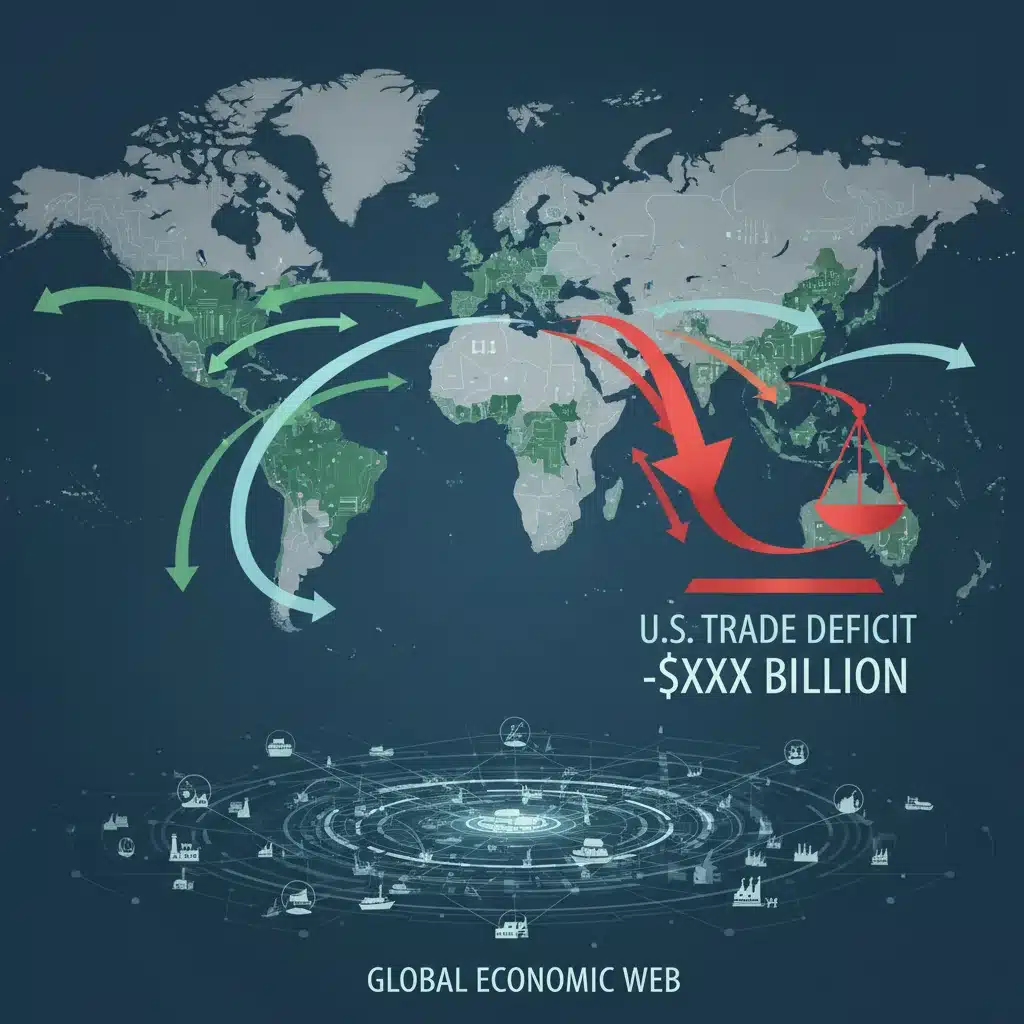
The United States, a global economic powerhouse, has grappled with a persistent trade deficit for decades. As we look towards 2026, understanding the nuances of the US Trade Deficit becomes paramount for policymakers, economists, and the general public alike. This complex economic phenomenon, where the value of a nation’s imports exceeds the value of its exports, has far-reaching implications for domestic industries, employment, currency values, and geopolitical relationships. This comprehensive article aims to dissect the multifaceted causes contributing to the US Trade Deficit in 2026, explore its economic impacts, and propose a range of potential solutions to foster a more balanced and sustainable global trade environment.
Anúncios
Understanding the US Trade Deficit: A Snapshot in 2026
Before delving into the specifics, it’s crucial to define what the US Trade Deficit entails. In simple terms, it represents the difference between the goods and services a country imports and the goods and services it exports. A deficit indicates that a country is importing more than it is exporting. While often viewed negatively, a trade deficit is not inherently good or bad; its implications depend heavily on its underlying causes and how it is financed. For the United States in 2026, the trade deficit continues to be a significant economic indicator, reflecting intricate global supply chains, consumer demand, and national economic policies.
Anúncios
The U.S. economy, characterized by its robust consumer market and high purchasing power, naturally attracts a vast array of imported goods and services. This strong domestic demand, coupled with various structural factors, contributes significantly to the ongoing US Trade Deficit. Moreover, the globalized nature of production, where components are sourced from multiple countries before final assembly, further complicates the picture, making it challenging to attribute the deficit solely to any single factor. Understanding these dynamics is the first step towards formulating effective strategies to manage or mitigate the deficit.
Primary Economic Causes of the US Trade Deficit in 2026
The US Trade Deficit is not a monolithic issue but rather a culmination of several interconnected economic factors. These causes can be broadly categorized into macroeconomic imbalances, structural issues, and global economic dynamics.
1. High Domestic Consumption and Low Savings Rate
One of the most enduring causes of the US Trade Deficit is the United States’ consistently high rate of domestic consumption relative to its domestic savings rate. Americans tend to consume a large proportion of their income, often relying on credit, while the national savings rate remains comparatively low. When domestic savings are insufficient to finance domestic investment, the country must borrow from abroad. This inflow of foreign capital is often matched by a trade deficit, as foreign investors demand U.S. assets (like Treasury bonds) which strengthens the dollar, making imports cheaper and exports more expensive.
2. Strong U.S. Dollar
A strong U.S. dollar, while beneficial for American consumers by making imported goods more affordable, simultaneously makes U.S. exports more expensive for foreign buyers. This reduces the competitiveness of American products in international markets, thereby exacerbating the US Trade Deficit. The dollar’s strength is often a reflection of its status as a global reserve currency, attracting foreign investment, especially during times of global economic uncertainty.
3. Global Supply Chains and Manufacturing Shifts
The evolution of global supply chains has significantly impacted the US Trade Deficit. Over the past few decades, many manufacturing processes have shifted to countries with lower labor costs and less stringent environmental regulations. This has led to a reliance on imported manufactured goods, even as the U.S. economy has increasingly specialized in services and high-tech industries. While some argue this is a natural progression of economic development, others contend it has hollowed out domestic manufacturing capabilities.
4. Trade Policies and Agreements
The impact of trade policies and agreements on the US Trade Deficit is a subject of ongoing debate. While free trade agreements aim to reduce barriers and promote trade, critics argue that some agreements have inadvertently favored imports over exports, particularly in specific sectors. Tariffs and other trade barriers implemented by the U.S. or its trading partners can also influence the deficit, though their effects are often complex and can lead to retaliatory measures.
5. Foreign Demand for U.S. Assets
The global demand for U.S. financial assets, particularly Treasury bonds, plays a crucial role. Foreign governments and investors often purchase these assets as safe havens or for reserve management. This capital inflow helps finance the U.S. trade deficit. Essentially, the U.S. is able to run a trade deficit because the rest of the world is willing to lend it money, often by buying U.S. government debt, which then flows back into the U.S. economy to purchase goods and services.
6. Energy Imports (Historical and Evolving)
Historically, significant energy imports contributed substantially to the US Trade Deficit. However, with the rise of domestic shale oil and gas production, the U.S. has achieved greater energy independence, lessening this particular component of the deficit. While energy is less of a factor than in previous decades, global oil price fluctuations can still have an impact, albeit a reduced one.
Economic Impacts of the US Trade Deficit
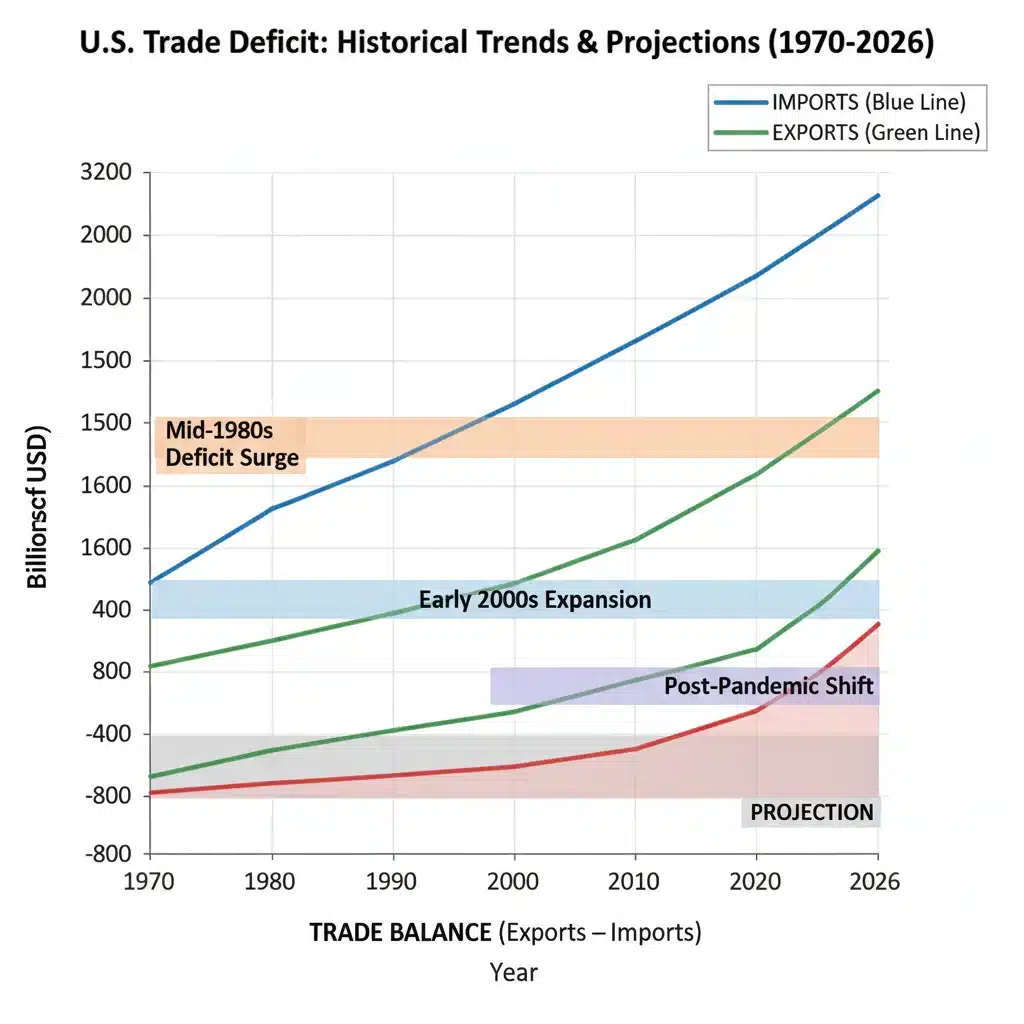
The US Trade Deficit generates a range of economic impacts, some perceived as negative and others as potentially beneficial, depending on the perspective and specific economic conditions.
1. Job Displacement in Specific Sectors
A significant concern associated with the US Trade Deficit is the potential for job displacement in domestic industries that compete with imports. Sectors such as manufacturing, textiles, and certain agricultural industries have historically faced challenges due to cheaper foreign alternatives, leading to factory closures and job losses. This impact is often localized and can have severe consequences for affected communities, contributing to calls for protectionist trade policies.
2. Accumulation of Foreign Debt
To finance the US Trade Deficit, the United States must borrow from foreign entities. This leads to an accumulation of foreign debt, primarily in the form of foreign ownership of U.S. government bonds and other assets. While the U.S. has historically been able to service this debt due to the dollar’s global reserve status, a rapidly growing debt could raise concerns about long-term financial stability and potentially increase interest rates if foreign investors demand higher returns.
3. Influence on Currency Value
As mentioned, the US Trade Deficit can influence the value of the U.S. dollar. A persistent deficit can, in theory, lead to a depreciation of the dollar as foreign demand for U.S. goods (and thus dollars to purchase them) decreases relative to U.S. demand for foreign goods. However, the dollar’s role as a safe-haven currency and its strong demand for investment purposes often counteract this, leading to a complex interplay of factors determining its value.
4. Consumer Benefits and Inflation Control
On the positive side, the US Trade Deficit often translates into lower prices for consumers. Access to a wide array of cheaper imported goods increases purchasing power and can help keep inflation in check. This allows American households to stretch their budgets further, benefiting from global competition and efficient foreign production.
5. Economic Growth and Investment
A trade deficit can also be a sign of a strong and growing economy, where domestic demand outstrips domestic supply. Foreign capital inflows, which help finance the deficit, can also fuel domestic investment, leading to job creation and economic growth in other sectors. If foreign capital is invested productively in U.S. businesses and infrastructure, it can enhance long-term economic capacity.
6. Geopolitical Implications
Persistent trade imbalances, particularly with major trading partners, can lead to geopolitical tensions. Countries with large surpluses against the U.S. may face accusations of unfair trade practices or currency manipulation. These tensions can complicate international relations and lead to trade disputes, as seen in recent years.
Potential Solutions to Address the US Trade Deficit in 2026
Addressing the US Trade Deficit requires a multi-pronged approach, encompassing domestic economic adjustments, strategic trade policies, and international cooperation. There is no single silver bullet, and the effectiveness of various solutions often depends on their implementation and broader economic conditions.
1. Boosting Domestic Savings
One of the most fundamental solutions involves increasing the U.S. domestic savings rate. Policies that encourage personal savings, such as tax incentives for retirement accounts or reforms to entitlement programs, could reduce the reliance on foreign capital. A higher savings rate would mean more domestic capital available for investment, reducing the need to borrow from abroad and thus narrowing the US Trade Deficit.
2. Enhancing Export Competitiveness
To reduce the US Trade Deficit, the U.S. needs to enhance the competitiveness of its exports. This can be achieved through several avenues:
- Investment in R&D and Innovation: Fostering innovation in high-value industries can create products and services that are highly sought after globally, increasing export demand.
- Support for Exporting Businesses: Government programs that provide financial assistance, market intelligence, and trade promotion services can help small and medium-sized enterprises (SMEs) enter and succeed in international markets.
- Infrastructure Development: Improving ports, transportation networks, and digital infrastructure can reduce the cost of exporting and make U.S. goods more competitive.
3. Targeted Industrial Policies
Some economists advocate for targeted industrial policies to rebuild domestic manufacturing capabilities in strategic sectors. This could involve government subsidies, tax breaks, and investment in workforce training to make U.S. industries more competitive against imports. Such policies, however, must be carefully designed to avoid protectionism and ensure they are economically efficient.
4. Fiscal Policy Adjustments
Fiscal policy plays a significant role in the US Trade Deficit. Reducing the federal budget deficit, for instance, can increase national savings. When the government spends less or taxes more, it reduces the need for borrowing, both domestically and internationally, which can help to curb the trade deficit. Conversely, large budget deficits can exacerbate the trade deficit by increasing overall demand and requiring more foreign capital.
5. Exchange Rate Management and International Cooperation
While the U.S. generally adheres to a floating exchange rate policy, international cooperation on currency matters can be beneficial. Dialogue with countries that actively intervene to keep their currencies undervalued could help address imbalances. A more balanced global currency market would make U.S. exports more competitive and imports relatively more expensive, helping to narrow the US Trade Deficit.
6. Reforming Trade Agreements
Re-evaluating and potentially renegotiating existing trade agreements or entering into new ones with more favorable terms for U.S. exports could be a strategy. This would involve ensuring reciprocal market access and addressing non-tariff barriers that hinder U.S. companies from competing abroad. The goal would be to create a more level playing field for U.S. businesses in global markets.
7. Addressing Global Imbalances
The US Trade Deficit is also a reflection of global imbalances, where some countries run large surpluses. Encouraging these surplus countries to boost their domestic demand and reduce their reliance on exports could help rebalance global trade flows. This requires international dialogue and coordinated efforts.

Challenges and Considerations in Addressing the US Trade Deficit
Implementing solutions for the US Trade Deficit is fraught with challenges. Economic policies often have unintended consequences, and what might benefit one sector could harm another. For example, protectionist measures like tariffs, while potentially protecting domestic industries, can lead to higher consumer prices and retaliatory tariffs from trading partners, ultimately hurting overall economic growth. Moreover, the political will to implement unpopular but necessary reforms, such as increasing national savings or reducing government spending, can be difficult to muster.
Furthermore, the global economic landscape is constantly evolving. Geopolitical shifts, technological advancements, and unforeseen crises can all impact trade flows and the US Trade Deficit. Therefore, any long-term strategy must be flexible and adaptable, allowing for adjustments based on changing circumstances. The debate also continues on whether a trade deficit is inherently problematic. Some argue that as long as foreign capital inflows are productively invested and the U.S. can service its foreign liabilities, the deficit is sustainable and reflects the attractiveness of the U.S. economy to global investors.
Conclusion: Navigating the Future of the US Trade Deficit
The US Trade Deficit in 2026 remains a complex and multifaceted economic issue, driven by a combination of domestic consumption patterns, the strength of the U.S. dollar, global supply chain dynamics, and international capital flows. Its impacts are equally diverse, affecting employment, national debt, consumer prices, and international relations.
Addressing the deficit effectively will require a comprehensive and balanced approach that goes beyond simplistic solutions. It necessitates a combination of domestic macroeconomic adjustments, strategic industrial policies, and collaborative international efforts. While completely eliminating the US Trade Deficit may not be a realistic or even desirable goal, managing it to ensure sustainable economic growth and minimize negative impacts is crucial. As the global economy continues to evolve, a nuanced understanding and adaptive policy framework will be essential for the United States to navigate its trade imbalances and secure its long-term economic prosperity.
Ultimately, the discussion around the US Trade Deficit is not just about numbers; it’s about the economic health of the nation, the competitiveness of its industries, and its role in the global economic order. By carefully considering the causes and impacts, and by implementing thoughtful, forward-looking solutions, the U.S. can work towards a more balanced and resilient trade future.