American Dance Evolution: Innovations & 2026 Performances
Anúncios
The Evolution of American Dance: Key Innovations and Performances to Watch in 2026 (RECENT UPDATES)
American dance is a vibrant, ever-evolving art form, a rich tapestry woven from diverse cultural influences, historical movements, and boundless creative spirit. From its early folk roots to the avant-garde expressions of today, the American Dance Evolution has been a continuous journey of innovation, challenging conventions, and reflecting the very soul of a nation. As we look towards 2026, the landscape of American dance promises even more groundbreaking performances and technological integrations that will redefine how we experience movement and storytelling. This comprehensive guide will take you through the fascinating trajectory of American dance, highlight pivotal innovations, and give you a sneak peek into the must-see performances on the horizon.
Anúncios
The Genesis of American Dance: From Folk to Formal
To truly appreciate the current state of American dance, one must first understand its origins. The earliest forms of dance in America were deeply rooted in the cultural traditions of Indigenous peoples, European settlers, and enslaved Africans. These diverse influences created a melting pot of movement, each contributing unique rhythms, steps, and storytelling techniques. Native American dances, often ceremonial and spiritual, provided a profound connection to nature and community. European folk dances, like jigs and reels, arrived with colonists, while African dance forms, rich in polyrhythms and improvisation, became foundational to many distinctly American styles.
Anúncios
The 19th century saw the emergence of more formalized dance, with the rise of ballet and social dances. While European ballet traditions were imported, American dancers and choreographers began to infuse them with a distinct American sensibility. Simultaneously, social dances like the waltz and polka gained popularity, reflecting changing societal norms and leisure activities. The minstrel shows, though problematic in their racial caricatures, also played a role in popularizing certain dance forms, albeit through a distorted lens.
Key Milestones in Early American Dance
- Indigenous Dance Forms: Integral to spiritual practices and cultural identity, displaying a profound connection to the land.
- African American Dance Traditions: Laying the groundwork for jazz, tap, and hip-hop with their emphasis on improvisation, rhythm, and expressive movement.
- European Influence: Introduction of formal ballet and various folk dances, which were later adapted and transformed.
- 19th-Century Social Dances: Reflecting societal changes and the growing popularity of partner dancing.
The 20th Century: A Revolution in Movement and Expression
The 20th century marked a revolutionary period for the American Dance Evolution. It was a time when dance broke free from rigid conventions, embracing individuality, emotion, and social commentary. This era saw the birth of modern dance, a radical departure from classical ballet, spearheaded by visionary artists.
Pioneers of Modern Dance
Isadora Duncan, often considered the mother of modern dance, rejected ballet’s restrictive costumes and techniques, opting for free-flowing movement inspired by nature and ancient Greece. Her emphasis on natural movement and emotional expression paved the way for subsequent generations.
Martha Graham, with her iconic contraction and release technique, created a dramatic and psychologically intense form of modern dance. Her works explored themes of human struggle, mythology, and the complexities of the human psyche, leaving an indelible mark on the American Dance Evolution.
Merce Cunningham, a student of Martha Graham, took modern dance in a new direction, emphasizing chance procedures and a detachment from narrative. His collaborations with composer John Cage challenged traditional notions of performance and choreography, focusing on movement for movement’s sake.
The Rise of Jazz and Tap Dance
Simultaneously, jazz and tap dance flourished, drawing heavily from African American cultural traditions. Jazz dance, characterized by its syncopated rhythms, improvisation, and energetic movements, became a staple of Broadway and popular entertainment. Tap dance, with its intricate footwork and percussive sounds, evolved from a blend of African rhythms, Irish jigs, and English clog dancing, becoming a uniquely American art form.
Post-Modern Dance and Beyond
The latter half of the 20th century witnessed the emergence of post-modern dance, which further pushed the boundaries of what dance could be. Artists like Trisha Brown and Yvonne Rainer questioned authorship, presentation, and the very definition of a dancer. Their work often incorporated pedestrian movements, non-traditional performance spaces, and a democratic approach to choreography, significantly contributing to the diverse American Dance Evolution.
Key Innovations Shaping Contemporary American Dance
The American Dance Evolution continues at an accelerated pace, driven by technological advancements, interdisciplinary collaborations, and a renewed focus on social justice and inclusivity. Contemporary American dance is a vibrant mosaic of styles, techniques, and philosophies.
Technological Integration in Performance
Technology has become an indispensable tool for choreographers and dancers. Projection mapping, interactive sensors, virtual reality (VR), and augmented reality (AR) are transforming performance spaces, creating immersive experiences for audiences. Dancers interact with digital landscapes, their movements influencing visual and auditory elements in real-time. This integration blurs the lines between physical and virtual realities, offering new avenues for creative expression and audience engagement.
Interdisciplinary Collaboration
Contemporary dance thrives on collaboration. Choreographers are increasingly working with musicians, visual artists, architects, scientists, and even artificial intelligence specialists to create truly multidisciplinary works. These collaborations lead to unexpected synergies, pushing artistic boundaries and expanding the scope of what dance can communicate. The American Dance Evolution is marked by these rich interdisciplinary dialogues.
Dance for Social Justice and Activism
Dance has always been a powerful medium for social commentary, and today’s American dance scene is no exception. Choreographers are using their art to address pressing social issues, including racial inequality, gender identity, climate change, and mental health. These performances serve as platforms for dialogue, empathy, and advocacy, demonstrating dance’s capacity to inspire change and foster understanding. The emotional resonance of such works is a testament to the power of the American Dance Evolution.
The Rise of Dance on Screen and Digital Platforms
The pandemic accelerated the embrace of digital platforms for dance, but this trend was already underway. Dance films, virtual performances, and online collaborations have opened up new audiences and creative possibilities. Choreographers are now creating works specifically for the camera, exploring unique perspectives and editing techniques that would be impossible in a live setting. This digital expansion is a significant chapter in the ongoing American Dance Evolution.
Performances to Watch in 2026: The Future of American Dance
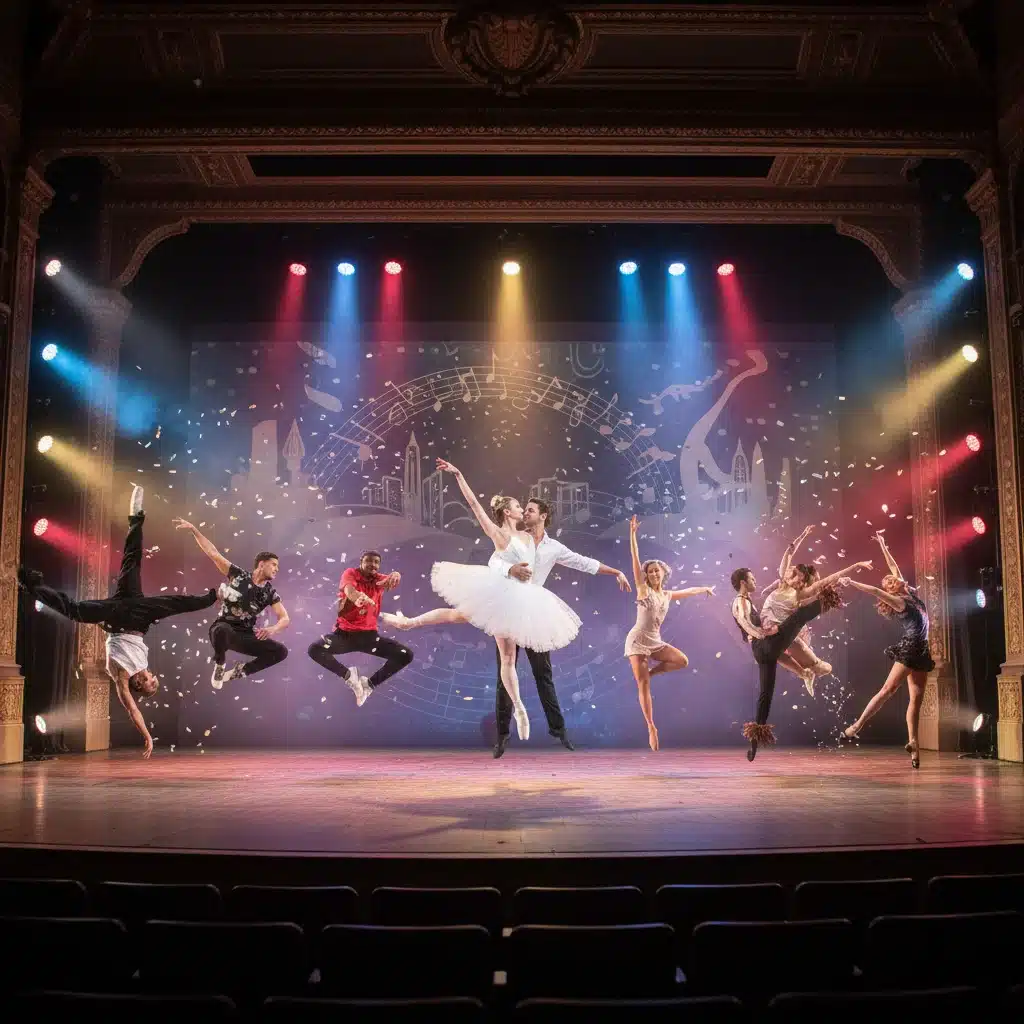
Looking ahead to 2026, the American dance scene is brimming with anticipation, promising a captivating array of performances that showcase the dynamism and innovation of the art form. These productions are set to push boundaries, engage with contemporary themes, and offer fresh perspectives on movement and storytelling. The continued American Dance Evolution will be on full display.
Anticipated Trends in 2026 Performances
- Immersive Experiences: Expect more productions that break the fourth wall, inviting audiences to become part of the performance through interactive elements and non-traditional seating arrangements.
- AI-Generated Choreography: While still nascent, AI will play an increasing role in generating movement sequences and collaborating with human choreographers, leading to unexpected and innovative dance vocabulary.
- Sustainable Dance Practices: A growing emphasis on environmentally conscious production methods, from sustainable set design to reduced travel for touring companies.
- Hybrid Performances: Seamless blending of live stage presence with virtual elements, allowing for global collaborations and extended artistic reach.
- Narrative Diversity: A continued focus on telling diverse stories, amplifying marginalized voices, and exploring complex societal narratives through movement.
Spotlight on Emerging and Established Companies
Several dance companies and choreographers are poised to deliver unforgettable experiences in 2026. Keep an eye out for:
- Company X (Contemporary Fusion): Known for their daring fusion of classical ballet, hip-hop, and avant-garde theatricality, Company X is expected to unveil a new work exploring themes of identity in a hyper-connected world. Their use of live-generated digital backdrops promises an unparalleled visual feast.
- The Kinetic Collective (Experimental): This ensemble consistently challenges perceptions of dance, often performing in unconventional spaces and incorporating elements of performance art and audience participation. Their 2026 season is rumored to include a site-specific piece set within an urban architectural landscape.
- Legacy Dance Troupe (Cultural Preservation & Innovation): Dedicated to preserving and evolving traditional American dance forms, Legacy Dance Troupe is planning a large-scale production that traces the historical lineage of jazz and tap, while integrating contemporary soundscapes and visual art. This will be a testament to the enduring American Dance Evolution.
- Digital Motion Lab (Tech-Forward): A relatively new but highly impactful group, Digital Motion Lab specializes in performances that fully integrate motion capture, real-time data visualization, and interactive sound design. Their 2026 offering is anticipated to be a fully immersive VR dance experience that allows viewers to navigate the performance space from multiple perspectives.
Training the Next Generation: Education and Accessibility
The sustained vitality of the American Dance Evolution is deeply dependent on robust dance education and increased accessibility. Dance schools, university programs, and community outreach initiatives are crucial in nurturing new talent and fostering a broader appreciation for the art form. There’s a growing emphasis on inclusive training methodologies that cater to diverse body types, abilities, and backgrounds, ensuring that dance remains a welcoming space for all.
Scholarship programs, mentorships, and public workshops are vital in democratizing access to dance, breaking down financial and social barriers. Furthermore, dance education is increasingly incorporating interdisciplinary studies, preparing dancers not just as performers but as versatile artists, choreographers, educators, and advocates. This holistic approach ensures that the future of American dance is not only technically proficient but also intellectually and creatively agile.
The Role of Dance Festivals and Residencies
Dance festivals across the United States play a critical role in showcasing new works, providing platforms for emerging artists, and fostering a sense of community. Festivals like Jacob’s Pillow, American Dance Festival, and Bates Dance Festival are not just performance venues but also incubators for creativity, offering residencies and workshops that allow choreographers to develop their ideas in supportive environments. These festivals are essential catalysts for the American Dance Evolution.
Artist residencies, whether with major companies or independent programs, provide choreographers and dancers with dedicated time and resources to experiment, research, and create without the pressures of immediate production. This sustained support is fundamental for pushing artistic boundaries and generating the innovative works that will define American dance in the years to come.
Challenges and Opportunities in the Dance World
While the American Dance Evolution is characterized by innovation and growth, the dance world also faces significant challenges. Funding for the arts remains a perennial concern, impacting the ability of companies and independent artists to produce work, pay fair wages, and reach wider audiences. The precarious nature of a career in dance often leads to burnout and limited opportunities for long-term financial stability.
However, these challenges also present opportunities for creative solutions. Crowdfunding, increased philanthropic support, and innovative business models are helping to sustain dance organizations. Advocacy for arts funding at both state and federal levels is crucial. Furthermore, the digital realm offers new avenues for revenue generation through online classes, virtual performances, and digital content creation, expanding the reach and economic viability of dance.
Another opportunity lies in fostering greater diversity and inclusion within leadership roles, choreography, and performance. Ensuring that the dance world reflects the rich multicultural fabric of America will lead to more authentic storytelling, broader audience appeal, and a more robust American Dance Evolution.
The Enduring Legacy of American Dance
The American Dance Evolution is a testament to human creativity, resilience, and the enduring power of movement. From the spiritual dances of Indigenous tribes to the experimental works of contemporary artists, American dance has consistently mirrored the nation’s complexities, celebrating its diversity and questioning its norms. It is an art form that is both deeply personal and universally resonant, capable of expressing emotions, narratives, and ideas that transcend language.
As we anticipate the performances and innovations of 2026, it is clear that American dance will continue to be a dynamic force, captivating audiences and inspiring future generations of artists. The blend of tradition and modernity, the embrace of technology, and the commitment to social relevance ensure that the story of American dance is far from over. It is a living, breathing art form, always in motion, always evolving.
Conclusion: A Future in Motion
The journey through the American Dance Evolution reveals a continuous cycle of creation, reinvention, and profound cultural impact. From the foundational steps of early folk traditions to the cutting-edge technological integrations defining today’s performances, American dance remains a powerful mirror reflecting society’s ongoing transformations. The year 2026 promises a spectacular showcase of this evolution, with performances that will challenge, entertain, and move audiences in unprecedented ways.
Whether you are a seasoned dance enthusiast or a curious newcomer, the vibrancy and innovation within American dance offer something for everyone. Stay tuned, follow the artists, and prepare to be enthralled by the relentless and beautiful progression of American dance.