Mastering Diversified Investment Portfolios: 2026 Risk Management Strategies
Anúncios
Building a Diversified Investment Portfolio in 2026: Essential Strategies for Risk Management
As we navigate the ever-evolving landscape of global finance, the year 2026 presents both unprecedented opportunities and unique challenges for investors. The cornerstone of any successful long-term financial strategy remains a well-constructed and diversified investment portfolio. Diversification isn’t merely a buzzword; it’s a fundamental principle of risk management, designed to protect your capital and foster sustainable growth across various market cycles. In an era marked by technological advancements, geopolitical shifts, and shifting economic paradigms, understanding how to effectively build and manage such a portfolio is more critical than ever.
This comprehensive guide will delve into the essential strategies for creating a robust and diversified investment portfolio tailored for the realities of 2026. We will explore the ‘why’ behind diversification, dissect key asset classes, discuss advanced risk management techniques, and provide actionable insights to help you navigate the complexities of modern markets. Whether you are a seasoned investor or just starting your financial journey, the principles outlined here will equip you with the knowledge to make informed decisions and safeguard your financial future.
Anúncios
The “Why” of a Diversified Investment Portfolio: Beyond Spreading Risk
At its core, a diversified investment portfolio aims to reduce overall risk by allocating investments across a variety of assets that react differently to market conditions. The old adage, “Don’t put all your eggs in one basket,” perfectly encapsulates this principle. While risk reduction is the primary benefit, diversification offers several other crucial advantages:
Anúncios
- Smoother Returns: By combining assets with varying risk-return profiles, a diversified portfolio can potentially achieve more consistent returns over time, mitigating the sharp swings that often accompany concentrated investments. When one asset class underperforms, another might be performing well, balancing the overall portfolio’s performance.
- Enhanced Stability: Diversification provides a buffer against unforeseen market shocks. A sudden downturn in a specific sector or region might severely impact a concentrated portfolio, but a diversified one is better positioned to absorb such shocks due to its exposure to other, less affected areas.
- Opportunity for Growth: While primarily focused on risk mitigation, diversification also ensures exposure to various growth opportunities. Different economic cycles favor different asset classes. By being diversified, investors are positioned to capture growth from whichever sectors or regions are thriving.
- Behavioral Benefits: A diversified portfolio can help investors avoid emotional decision-making. When a single investment is performing poorly, the temptation to panic sell is high. With diversification, the overall portfolio might still be performing adequately, reducing the urge to make rash decisions based on short-term fluctuations.
In 2026, with rapid technological shifts and evolving global dynamics, relying on a single industry or geographic region for investment growth can be perilous. A truly diversified investment portfolio acknowledges these complexities and builds resilience directly into its structure.
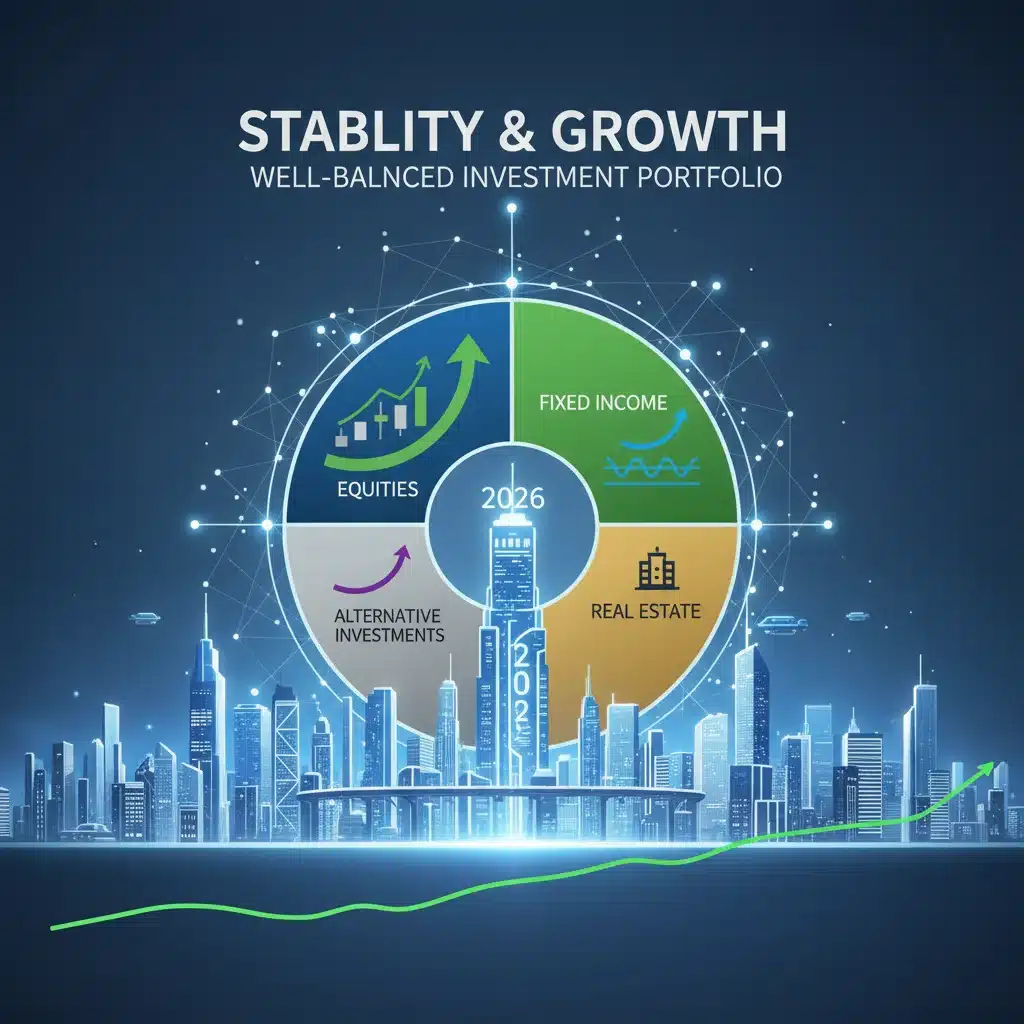
Understanding Asset Classes for 2026 Diversification
Building a robust diversified investment portfolio requires a thorough understanding of the various asset classes available and how they are expected to perform in the coming years. For 2026, consider the following:
Equities (Stocks)
Equities remain a cornerstone of long-term growth. However, “stocks” is a broad category. Diversification within equities means:
- Geographic Diversification: Don’t limit yourself to your home country. Emerging markets and developed international markets offer distinct growth potentials and risk profiles.
- Sector Diversification: Technology, healthcare, renewable energy, consumer staples – different sectors perform differently. Over-reliance on one sector, even a booming one, can be risky.
- Market Capitalization: Large-cap, mid-cap, and small-cap stocks each have unique characteristics. Large-caps offer stability, while small-caps can provide higher growth potential but come with increased volatility.
- Growth vs. Value: Growth stocks (companies expected to grow earnings at an above-average rate) and value stocks (companies trading below their intrinsic value) often perform differently depending on the economic cycle.
Fixed Income (Bonds)
Bonds traditionally provide stability and income to a diversified investment portfolio, acting as a counterbalance to equities. However, the interest rate environment in 2026 will be a key factor. Consider:
- Government Bonds: Generally considered the safest, offering lower returns but high liquidity.
- Corporate Bonds: Offer higher yields than government bonds but come with credit risk. Diversify by credit rating and industry.
- High-Yield Bonds (Junk Bonds): Offer significantly higher returns but with greater risk of default.
- International Bonds: Provide diversification from domestic interest rate movements and currency exposure.
Real Estate
Real estate can offer inflation protection, income generation, and capital appreciation. It’s an excellent component of a diversified investment portfolio. Options include:
- Physical Properties: Direct ownership of residential or commercial properties.
- Real Estate Investment Trusts (REITs): Publicly traded companies that own, operate, or finance income-producing real estate. They offer liquidity and diversification within real estate.
- Real Estate Crowdfunding: Allows investors to pool money for larger real estate projects.
Commodities
Commodities (gold, silver, oil, agricultural products) can act as a hedge against inflation and geopolitical instability. They often have a low correlation with stocks and bonds, making them valuable for a diversified investment portfolio. However, they can be volatile.
Alternative Investments
This broad category includes private equity, hedge funds, venture capital, and even cryptocurrencies. These assets often have low correlation with traditional asset classes but come with higher liquidity risk and require significant due diligence. For 2026, the evolving regulatory landscape around digital assets will be a crucial consideration.
Strategic Asset Allocation: The Art of Balancing Your Portfolio
Once you understand the various asset classes, the next step is strategic asset allocation – deciding how much of your diversified investment portfolio to allocate to each. This decision is highly personal and should be based on several factors:
- Risk Tolerance: How much volatility can you comfortably endure? Aggressive investors might allocate more to equities, while conservative investors might lean more towards fixed income.
- Time Horizon: Younger investors with a longer time horizon can afford to take on more risk, as they have more time to recover from market downturns. Those closer to retirement typically adopt a more conservative approach.
- Financial Goals: Are you saving for retirement, a down payment on a house, or your child’s education? Different goals may require different allocation strategies.
- Economic Outlook: While not a primary driver for long-term strategic allocation, a general understanding of the economic environment (e.g., inflation expectations, interest rate trends) can inform tactical adjustments.
There are various approaches to asset allocation:
- Age-Based Allocation: A common rule of thumb is to subtract your age from 100 (or 110/120) to determine the percentage of your portfolio that should be in equities. The remainder goes into fixed income. For example, a 30-year-old might have 70% in stocks and 30% in bonds.
- Risk-Based Allocation: This approach uses questionnaires and assessments to determine an investor’s specific risk tolerance and then allocates assets accordingly.
- Goal-Based Allocation: Each financial goal might have its own sub-portfolio with a specific asset allocation designed to meet that goal’s timeline and risk requirements.
Remember, asset allocation is not a “set it and forget it” strategy. It requires periodic review and rebalancing to ensure your diversified investment portfolio remains aligned with your goals and risk tolerance.
Advanced Risk Management Techniques for 2026
Beyond basic diversification across asset classes, effective risk management in 2026 demands a more nuanced approach. Here are some advanced techniques to fortify your diversified investment portfolio:
Correlation Analysis
True diversification means investing in assets that do not move in lockstep. Correlation measures how two assets move in relation to each other. A correlation of +1 means they move perfectly in the same direction, -1 means they move in opposite directions, and 0 means no relationship. For effective diversification, seek assets with low or negative correlation.
In 2026, global markets are increasingly interconnected, which can lead to higher correlations between seemingly disparate assets during times of crisis. Therefore, identifying genuinely uncorrelated assets becomes even more crucial. This might involve looking at specific alternative investments, certain commodities, or even currencies.

Stress Testing and Scenario Planning
A robust diversified investment portfolio should be stress-tested against various hypothetical market scenarios. What would happen to your portfolio if there was a major recession, a significant interest rate hike, or a sudden technological disruption? Scenario planning involves:
- Identifying Potential Risks: Geopolitical conflicts, cyberattacks, pandemics, inflation spikes, regulatory changes.
- Quantifying Impact: Estimating the potential financial impact of these risks on different parts of your portfolio.
- Developing Contingency Plans: Adjusting allocations, adding hedges, or increasing cash reserves to mitigate identified risks.
This proactive approach allows you to anticipate and prepare for adverse events, rather than reacting to them in a panic.
Hedging Strategies
Hedging involves taking an offsetting position in a related security to reduce risk exposure. While often complex, some basic hedging strategies can be incorporated into a diversified investment portfolio:
- Options and Futures: These derivatives can be used to protect against downside risk in specific stock holdings or market indices.
- Currency Hedges: If you have significant international investments, currency hedging can protect against unfavorable exchange rate movements.
- Inverse ETFs: These exchange-traded funds aim to deliver the inverse performance of an index, providing a way to profit from market downturns or hedge against them.
It’s important to note that hedging adds complexity and cost, and should be undertaken with a clear understanding of the instruments involved.
Rebalancing Your Portfolio
Over time, the market performance of different assets will cause your portfolio’s original asset allocation to drift. Rebalancing is the process of adjusting your diversified investment portfolio back to its target allocations. This involves selling assets that have performed well and buying those that have underperformed. Rebalancing is a disciplined approach that:
- Maintains Desired Risk Level: Prevents your portfolio from becoming riskier than intended due to outperforming assets.
- Enforces "Buy Low, Sell High": Naturally encourages you to sell assets that have become overweight and buy assets that are underweight, a fundamental principle of value investing.
- Reduces Emotional Investing: Provides a systematic way to manage your portfolio without letting emotions dictate decisions.
Rebalancing can be done on a time-based schedule (e.g., annually, semi-annually) or when asset class weights deviate by a certain percentage from their targets.
Navigating the 2026 Investment Landscape
The year 2026 is poised to be shaped by several key trends that will influence how investors build and manage a diversified investment portfolio:
Technological Disruption and Innovation
Artificial intelligence, quantum computing, biotechnology, and sustainable technologies will continue to drive innovation and create new investment opportunities. While exciting, these sectors can also be volatile. A diversified approach allows participation in these growth areas without overexposure to any single disruptive technology or company.
Inflation and Interest Rate Environment
The global fight against inflation and the subsequent interest rate policies of central banks will significantly impact bond yields, corporate earnings, and consumer spending. Investors need to consider assets that perform well in different inflationary scenarios, such as real estate, commodities, and inflation-protected securities, as part of their diversified investment portfolio.
Geopolitical Shifts and Global Trade
Ongoing geopolitical tensions and changes in global trade relationships can introduce volatility and impact supply chains. Geographic diversification, as well as investing in companies with resilient business models and diversified revenue streams, will be crucial.
ESG (Environmental, Social, Governance) Investing
ESG factors are becoming increasingly important for investors, not just for ethical reasons but also because companies with strong ESG practices often demonstrate better long-term financial performance and lower risk. Incorporating ESG considerations into your diversified investment portfolio can align your investments with your values while potentially enhancing returns.

Building Your Own Diversified Investment Portfolio: A Step-by-Step Approach
Creating your diversified investment portfolio for 2026 involves a structured approach:
- Define Your Financial Goals: Clearly articulate what you are investing for (retirement, house, education) and your timeline for each goal.
- Assess Your Risk Tolerance: Be honest with yourself about how much risk you can genuinely handle without losing sleep. Use online questionnaires or consult a financial advisor.
- Determine Your Asset Allocation Strategy: Based on your goals and risk tolerance, decide on the percentage allocation for each major asset class (equities, fixed income, real estate, alternatives).
- Select Specific Investments: Within each asset class, choose specific funds (ETFs, mutual funds) or individual securities that align with your strategy. For broad diversification, low-cost index funds or ETFs are often excellent choices.
- Implement and Monitor: Open accounts, make your investments, and then regularly monitor your portfolio’s performance and asset allocation.
- Rebalance Periodically: As discussed, rebalance your portfolio to maintain your target asset allocation and risk profile.
- Review and Adjust Annually: At least once a year, review your financial goals, risk tolerance, and the overall economic landscape. Make adjustments to your strategy as needed.
Common Pitfalls to Avoid in Diversified Investment Portfolio Management
Even with the best intentions, investors can fall prey to common mistakes that undermine their diversification efforts:
- "Diworsification": This term refers to over-diversifying to the point where you hold so many different assets that your returns simply mirror the market average, and the benefits of diversification are diluted by holding too many mediocre investments. Focus on quality and strategic allocation rather than simply accumulating assets.
- Performance Chasing: Investing in assets or sectors purely because they have performed well recently is a dangerous strategy. Past performance is not indicative of future results, and chasing returns often leads to buying high and selling low. Stick to your long-term diversified investment portfolio plan.
- Ignoring Rebalancing: Allowing your portfolio to drift significantly from its target allocation can expose you to unintended risks or reduce your potential returns. Regular rebalancing is crucial.
- Emotional Investing: Fear and greed are powerful emotions that can derail even the most well-thought-out investment plan. Adhere to your established strategy and avoid making impulsive decisions based on short-term market fluctuations.
- Lack of Understanding: Investing in assets you don’t understand, especially complex alternative investments, can lead to significant losses. Always educate yourself thoroughly or seek professional advice before committing capital.
The Role of Professional Guidance
For many, building and managing a truly diversified investment portfolio for 2026 can be complex and time-consuming. Financial advisors can play a vital role by:
- Assessing Risk Tolerance and Goals: Helping you clearly define your financial objectives and understand your true risk appetite.
- Developing a Personalized Plan: Creating a tailored asset allocation strategy that aligns with your unique circumstances.
- Selecting Appropriate Investments: Guiding you in choosing specific funds or securities that fit your diversification strategy.
- Providing Ongoing Monitoring and Rebalancing: Ensuring your portfolio stays on track and making necessary adjustments.
- Offering Behavioral Coaching: Helping you avoid emotional investment decisions during volatile market periods.
- Staying Updated on Market Trends: Providing insights into the evolving investment landscape of 2026 and beyond.
While self-directed investing is increasingly popular, the value of professional expertise in navigating complex markets and ensuring a truly diversified investment portfolio should not be underestimated.
Conclusion: Your Path to a Resilient Diversified Investment Portfolio in 2026
Building a diversified investment portfolio is not a one-time event but an ongoing process of planning, execution, monitoring, and adjustment. As we look towards 2026, the principles of diversification – spreading investments across various asset classes, geographies, and sectors – remain paramount for managing risk and achieving long-term financial goals. By understanding the nuances of asset allocation, employing advanced risk management techniques, and staying attuned to global economic trends, you can construct a resilient portfolio capable of weathering market storms and capitalizing on growth opportunities.
Remember to define your goals, understand your risk tolerance, and commit to regular rebalancing. Whether you choose to manage your portfolio independently or seek professional guidance, a thoughtful and disciplined approach to diversification will be your most powerful ally in securing a prosperous financial future in 2026 and beyond. Embrace the complexity, leverage the strategies outlined, and build a portfolio that truly reflects your aspirations and protects your wealth.